Quick Summary: What You Need to Know
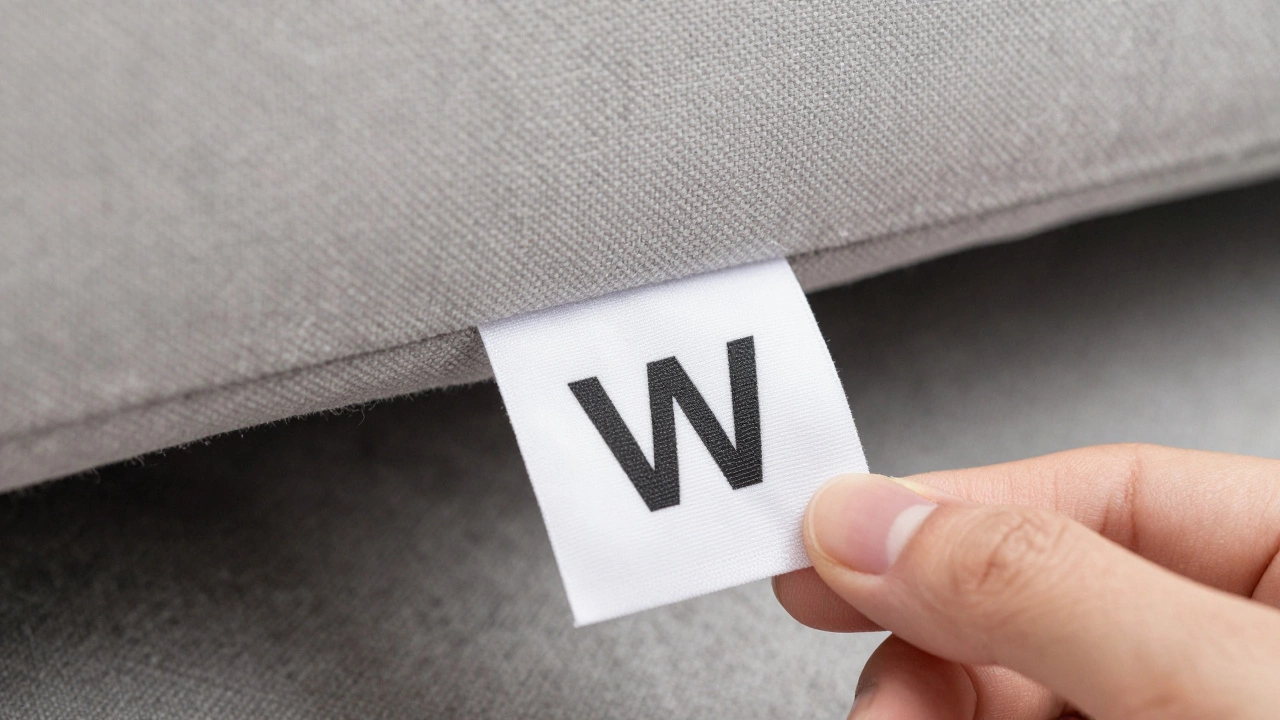
Before you even touch a machine, you have to play detective. Every piece of upholstered furniture comes with a care tag, usually hidden under the cushions or along the bottom frame. If you ignore these letters, you're basically gambling with your living room decor. Upholstery Cleaning Codes is a standardized system used by manufacturers to tell you exactly which cleaning agents are safe for a specific fabric.
If you see a 'W', you're in luck. This means water-based cleaners are a go, and you can generally steam clean a couch with this rating. A 'S' means solvent-based cleaners only. Water is the enemy here; using a steam cleaner on an 'S' fabric will likely leave permanent water spots or warp the material. Then there's 'X', which is the most restrictive. It means vacuuming only. No water, no solvents, no steam. If you try to steam clean an 'X' rated couch, you're essentially destroying it.
What about 'WS'? This is a hybrid. You can use either water-based or solvent-based cleaners. It's the most flexible option and usually handles steam cleaning well, provided you don't over-saturate the cushions.
| Code | Meaning | Steam Safe? | Recommended Action |
|---|---|---|---|
| W | Water-Based | Yes | Water, mild detergent, or steam cleaner. |
| S | Solvent-Based | No | Dry cleaning solvents or professional service. |
| WS | Water & Solvent | Yes | Either method works; always test first. |
| X | Vacuum Only | No | Vacuum only; call a specialist for stains. |
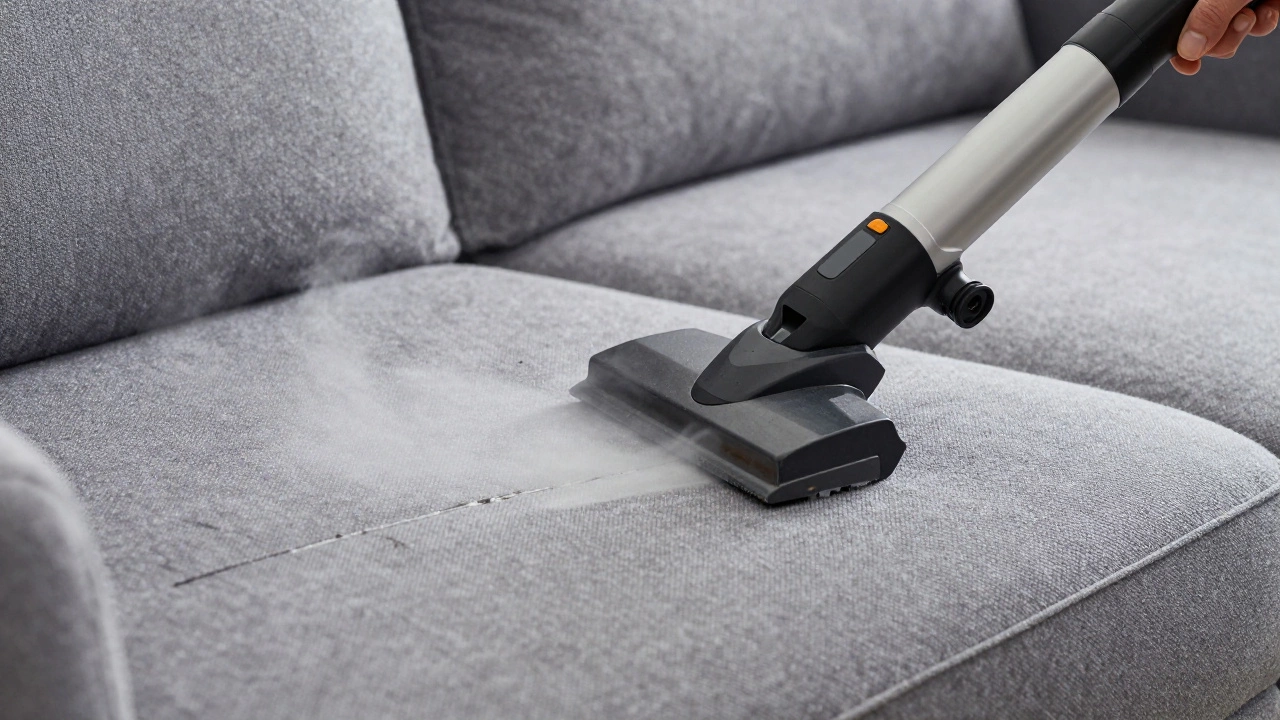
There is a common mix-up between a "steam cleaner" and a "carpet extractor." If you're talking about a small handheld wand that blows a jet of hot vapor, that's a true steamer. It's fantastic for sanitizing and lifting light surface grime. However, if you want to remove deep-seated dirt, you need Hot Water Extraction, which is a process that sprays a solution into the fabric and immediately vacuums it back out.
A handheld steamer doesn't "clean" in the sense of removing dirt; it loosens it. If you steam a couch without extracting the liquid, you're just pushing the dirt deeper into the foam. For a real deep clean, an extractor is the gold standard. It pulls the grime out of the padding and into a waste tank, which is why your water looks like swamp mud after a session. If you only have a steamer, you'll need to follow up with a microfiber cloth to wipe away the loosened debris.
Ready to start? Don't just dive in. Follow this workflow to ensure you don't leave your couch smelling like damp laundry for a week.
Some fabrics are just too precious or chemically sensitive for high heat. If your couch is made of Silk, which is a natural protein fiber produced by silkworms, keep the steam far away. Heat can shrink the fibers and cause permanent discoloration. The same goes for Velvet; while some modern synthetic velvets are okay, traditional velvet can "crush." This means the pile of the fabric gets flattened by the heat and moisture, leaving a permanent bald spot or a strange sheen.
Leather is another one to be careful with. While some people use a very light steam to remove wrinkles, too much heat can strip the natural oils from the hide, causing it to crack. For Leather, a damp cloth and a specialized conditioner are always safer than a steam machine.
One of the biggest mistakes is using too much detergent. People think more soap equals more clean, but in reality, soap residue acts like a magnet for dirt. If you leave a soapy film on your couch, it will actually get dirty faster the next time. Use the smallest amount possible, or better yet, use distilled water in your machine to avoid mineral buildup in your fabric.
Another risk is the "ring effect." This happens when you clean one specific spot instead of the whole cushion. Because the edges of your cleaning area dry differently than the rest of the fabric, you get a visible ring. To prevent this, always clean from the seam to the seam. If you have a stain on the middle of a cushion, clean the entire surface of that cushion to ensure a uniform finish.
Sometimes, the DIY route is too risky. If you have a high-end designer piece, an antique, or fabric with a complex weave (like some jacquards or brocades), a professional service is worth the money. Pro cleaners use industrial-strength extractors that have much higher suction power than home machines, meaning the furniture dries in a fraction of the time.
Moreover, pros can identify whether a stain is protein-based, oil-based, or tannin-based. Using a heat-based steam cleaner on a protein stain (like blood or dairy) can actually "cook" the stain into the fabric, making it permanent. A professional knows when to use a cold-water extraction or a chemical solvent instead.
For most households, a deep clean every 12 to 18 months is plenty. However, if you have pets or kids, you might want to do it every 6 months. Regular vacuuming in between is the best way to extend the time between deep cleans.
Yes, it is very effective. The heat breaks down the organic compounds that cause smells, and the extraction process pulls the odor-causing bacteria out of the padding. For very strong smells, an enzymatic cleaner should be used before steaming.
You can, but it's not for deep cleaning. A clothes steamer is great for removing wrinkles from a linen sofa or refreshing the surface, but since it has no vacuum suction, it won't remove dirt or stains. It's more of a "refresh" than a "clean."
If the tag is missing, assume the fabric is delicate. Start with the safest possible method: vacuuming and a damp cloth with a tiny bit of mild soap. Perform a spot test in a hidden area. If you're unsure, it's safer to hire a professional who can identify the fabric by touch and sight.
Only if you over-saturate it. Most couch foam is polyurethane, which doesn't like to be soaked. If water penetrates deep into the core and doesn't dry quickly, it can lead to mold or cause the foam to lose its shape. Always use an extractor to pull moisture back out.
If you've finished cleaning and notice a strange smell, don't panic. It's usually just a sign that the interior foam is still damp. Set up a floor fan and point it directly at the cushions. If you see a white residue after the fabric dries, you likely used too much detergent. The fix is to do a "water-only" rinse pass with your extractor to pull out the remaining soap.
For those dealing with an old couch that has accumulated years of grime, don't expect one session to make it look brand new. Sometimes it takes two or three passes, spaced a few days apart, to fully lift the embedded oils and dust. Just remember to let it dry completely between sessions to avoid damaging the internal structure.