Based on your oven's grease buildup and cleaning frequency, this tool calculates the optimal time for effective cleaning without damaging your appliance.
Recommended for effective cleaning without damaging your oven
Why this time? Baking soda needs time to penetrate grease, and vinegar needs time to fully react. Shorter times work for light buildup, but heavy grease requires 8+ hours for complete loosening.
Most people think you need harsh chemicals to get a clean oven. But if you’ve ever tried scrubbing baked-on grease with a store-bought spray, you know how much effort it takes-and how strong the fumes are. There’s a better way. Baking soda and vinegar have been used for decades to clean ovens without toxins, and it works. But how long should you actually leave the mixture in there? The answer isn’t a quick 10 minutes. It’s not even an hour. You need patience.
Baking soda, or sodium bicarbonate, is a mild alkali. It breaks down grease and grime by neutralizing acidic residues. Vinegar, which is acetic acid, reacts with baking soda to create fizzing carbon dioxide. That bubbling action helps lift dirt off surfaces. Together, they’re a chemical-free powerhouse for oven cleaning.
Unlike commercial oven cleaners that contain lye or ammonia, baking soda and vinegar won’t damage your oven’s enamel coating. They’re safe for self-cleaning ovens, gas ovens, and electric ovens. No gloves needed. No breathing mask. Just a sponge and some time.
Start by removing the oven racks and soaking them in warm soapy water. Then, take out any loose debris-crumbs, bits of food, grease splatters. This step matters. The cleaner works better on a mostly clean surface.
Make a thick paste with three parts baking soda to one part water. Add just enough water to make it spreadable, like toothpaste. Use a brush or sponge to coat the inside of the oven: bottom, sides, door, and top. Avoid the heating elements. Don’t get paste on the oven’s seals or control panel. If you do, wipe it off immediately with a damp cloth.
Now, pour white vinegar into a spray bottle. Don’t use apple cider vinegar-it’s too weak. Spray the vinegar directly onto the baking soda paste. You’ll see it bubble. That’s the reaction doing its job. Let it sit.
You might read online that 30 minutes is enough. Or that overnight is overkill. Neither is quite right. For light grease, 2 to 4 hours works. For heavy buildup-think years of splattered cheese, burnt sugar, or charred pizza crust-you need at least 8 hours. Overnight is ideal.
Why? Because grease isn’t just on the surface. It’s soaked into the oven’s enamel over time. Baking soda needs time to penetrate. Vinegar needs time to react fully. Rushing it means you’ll still be scrubbing the next day.
In the UK, where ovens often get heavy use during holidays and weekend roasts, most people leave the paste on for 12 hours. That’s the sweet spot. Apply it before bed. Wake up to a soft, loosened grime layer. No elbow grease required.
Some worry leaving baking soda and vinegar in the oven for 24 hours will damage it. It won’t. The mixture is non-corrosive. Even after 24 hours, the paste will dry out and turn powdery, but it won’t eat into the metal or enamel. You might find it harder to wipe off if it dries completely, so if you’re going longer than 12 hours, cover the oven with a towel or plastic sheet to slow drying.
Just avoid leaving vinegar in the oven for days. While baking soda is stable, vinegar can leave a faint smell if left too long. That’s easy to fix-just wipe everything down with water and a cloth after scrubbing.
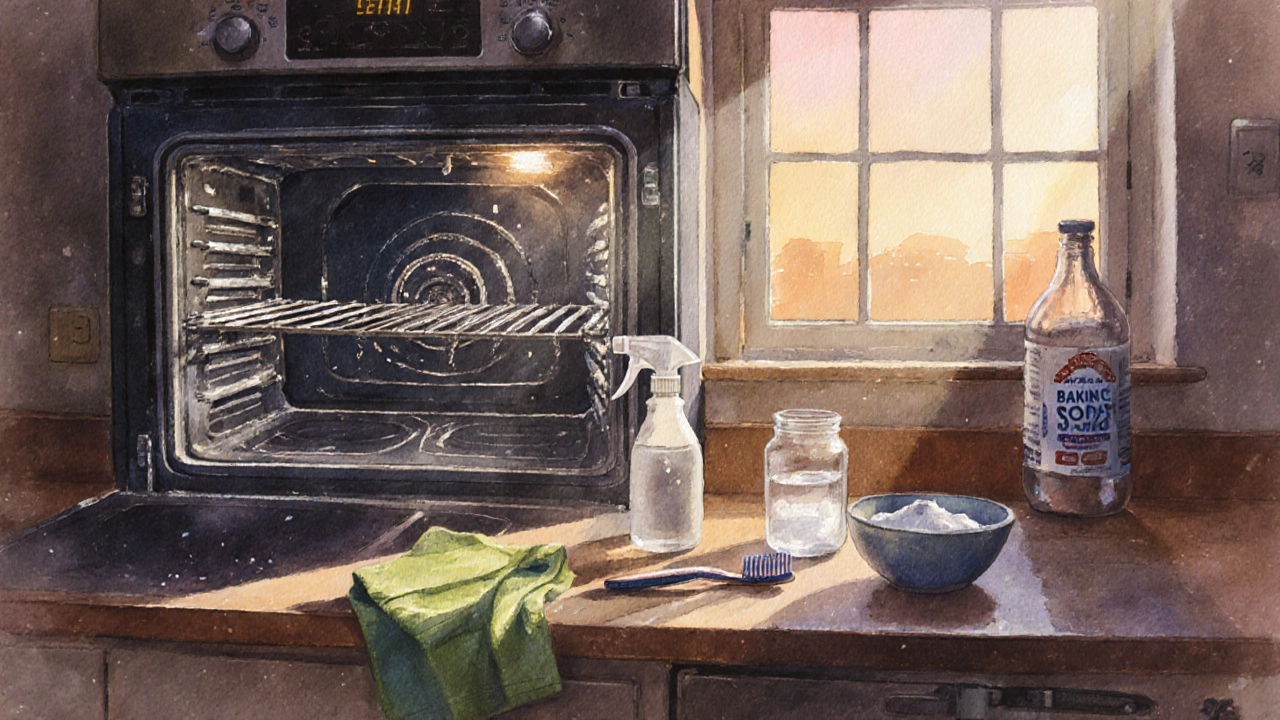
After your chosen time (8-12 hours), grab a damp sponge or microfiber cloth. Start wiping. The grime should slide off easily. If a patch resists, spray a little more vinegar and let it sit for 5 minutes. Then wipe again.
Use an old toothbrush for corners, around the door seal, and behind the oven light. Don’t use steel wool or abrasive pads. They scratch the enamel. Plastic scrubbers or even a dish brush work fine.
Once the inside is clean, wipe everything down with a damp cloth soaked in plain water. This removes any baking soda residue. Then dry the oven with a clean towel. Moisture left behind can cause rust or mildew over time.
You soaked them earlier, right? Now it’s time to scrub them. Use the same baking soda paste. Rub it on, let it sit for 2 hours, then rinse under running water. For stubborn grease, soak them in a bathtub filled with hot water, 1 cup baking soda, and 1 cup vinegar for 4 hours. Scrub, rinse, dry.
Some people skip cleaning the racks and just replace them. But that’s expensive. A good set of racks lasts years with proper care. Cleaning them this way saves money and reduces waste.
Every 3 to 6 months is ideal. If you bake or roast weekly, clean every 3 months. If you only use the oven for holidays, once a year is fine. Don’t wait until it’s covered in black crust. That’s when scrubbing turns into a full-day project.
Pro tip: After every use, wipe the oven floor with a damp cloth while it’s still warm (not hot). It stops grease from hardening. You’ll need deep cleaning less often.
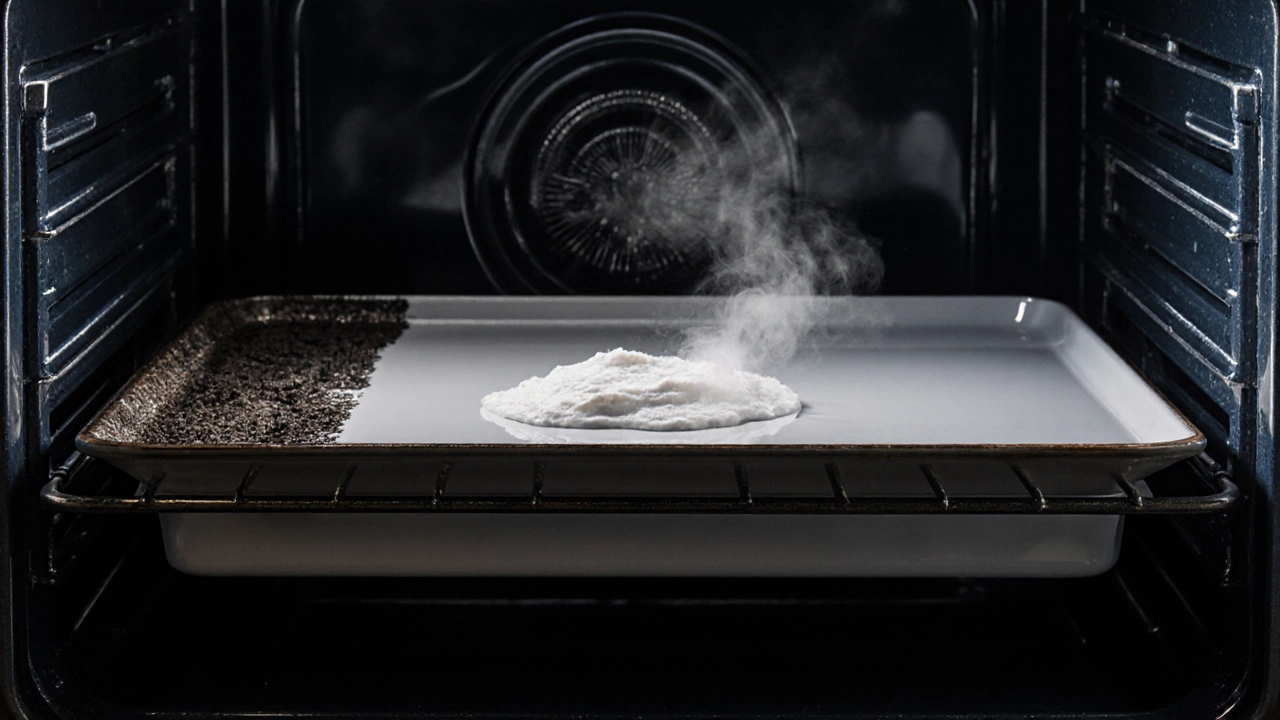
Baking soda and vinegar are great-but they’re not magic. If your oven has thick, charred carbon deposits from a self-cleaning cycle gone wrong, or if you’ve used chemical cleaners before and built up layers, this method might not remove everything in one go.
In those cases, repeat the process. Or use a gentle oven cleaner on stubborn spots after the baking soda treatment. But always start with the natural method. It’s safer, cheaper, and just as effective for most households.
Some people use lemon juice instead of vinegar. It works, but it’s less acidic and slower. Others mix in salt for extra abrasion. Don’t. Salt can scratch enamel. Commercial steam cleaners work well but cost £100+ and need storage space. Steam cleaning is faster, but baking soda and vinegar cost less than £2 and you already have them.
For those who hate the smell of vinegar, add a few drops of essential oil to the paste-lavender or tea tree. It masks the odor without affecting cleaning power.
People think oven cleaning is a chore. But it doesn’t have to be. Baking soda and vinegar turn it into a simple, weekly habit. Clean after every use. Deep clean every few months. No chemicals. No stress. No fumes.
And yes-you’ll leave it overnight. It’s not glamorous. But waking up to a sparkling oven? That’s worth it.
Yes. Baking soda and vinegar are safe for self-cleaning ovens. In fact, using them regularly reduces the need to run the high-heat self-clean cycle, which can wear out the oven’s heating elements over time. Just avoid getting the paste on the control panel or seals.
Yes. Always let the oven cool completely before applying the baking soda paste. Applying it to a warm oven can cause the mixture to dry too fast, reducing its effectiveness. Never apply it to a hot oven-it’s a safety risk and won’t work properly.
A faint vinegar smell is normal and fades within a few hours. If you still smell it after wiping everything down, run the oven on its lowest setting for 10 minutes with the door open. This evaporates any remaining moisture and odor. Adding a few drops of essential oil to the paste can help mask the smell from the start.
It’s not recommended. Apple cider vinegar has a lower acidity level (around 5%) compared to white vinegar (5-8%). It also contains sugars and color that can leave residue. White vinegar is clearer, stronger, and more effective for cutting through grease.
No. Baking soda and vinegar won’t remove rust. Rust forms when metal is exposed to moisture over time. If you see rust on the oven walls or racks, gently scrub with a soft brush and dry thoroughly. For minor rust spots, apply a thin layer of food-grade mineral oil to prevent further corrosion. Severe rust may require replacing parts.