Select your oven's condition and available time to get an estimated cleaning duration.
Select your oven's condition and available time to see the estimate.
There’s nothing quite like opening your oven after months of neglect and seeing a black, crusty mess that looks like it’s been there since the last century. Burnt-on grease, caramelized sugar, charred food particles - it all sticks like concrete. You’ve tried the spray cleaners. You’ve scrubbed with a sponge. Nothing works. And now you’re staring at a oven that looks more like a science experiment gone wrong than a kitchen appliance. This isn’t about laziness. It’s about knowing how to clean the dirtiest oven ever without damaging it, without spending a fortune, and without breathing in toxic fumes.
Ovens are designed to handle high heat, not neglect. Every time you bake something with sugar, oil, or dairy - cookies, roasted chicken, lasagna - tiny particles splatter onto the walls and floor. Over time, those particles bake into a hard, sticky layer. Heat turns them into carbonized gunk. That’s why a light wipe-down every few weeks matters. But if you haven’t cleaned in over a year? You’re dealing with what professionals call a level 5 oven - the kind that requires serious intervention.
Most people think chemical oven cleaners are the answer. And sometimes, they are. But those sprays? They work best on light to moderate buildup. For a truly filthy oven? They’re too weak. And they’re full of lye and other harsh chemicals that leave fumes lingering for days. Plus, they can damage the enamel coating on your oven’s interior if used too often. You need a method that’s stronger than the grime - without being destructive.
Here’s what most professional cleaners use when they’re called in for a nightmare oven: baking soda, water, and vinegar. It’s cheap, non-toxic, and surprisingly powerful. You don’t need gloves, masks, or ventilation - just time and patience.
Start by removing the oven racks. Soak them in a bathtub or large sink filled with hot water and half a cup of dish soap. Let them sit overnight. The grease will loosen up on its own.
Now, mix a thick paste: 3/4 cup baking soda with enough water to make the consistency of toothpaste. Spread it over every interior surface - walls, floor, ceiling - but avoid the heating elements and the door seal. Don’t worry about the corners; just get it as thick as you can. This paste works like a chemical-free scrubber. It breaks down grease through a slow chemical reaction with moisture and heat.
Let it sit for 12 hours. Overnight is ideal. While you sleep, the baking soda paste is softening the worst of the buildup. In the morning, grab a damp sponge or cloth. Don’t scrub yet. Just wipe gently. You’ll see the grime lifting like dried mud. For stubborn spots, spray white vinegar directly onto the paste. The fizzing reaction helps lift the remaining residue. Wipe again. Repeat if needed.
This method won’t remove every trace of carbonized grease in one go - but it removes 80% of it. And what’s left? That’s where the heat comes in.
After you’ve wiped down the paste, turn the oven on to 200°F (93°C). Let it run for 20 minutes. Not to cook anything - just to warm the interior. Heat makes the last bits of grease soft and pliable. Turn it off. Let it cool slightly, then go back in with a damp microfiber cloth. The remaining gunk should wipe away like it was never there.
This step is critical. Without heat, you’re left with patches of stubborn residue that will burn again the next time you use the oven. The heat doesn’t burn off the grime - it just loosens it enough for a simple wipe. It’s the final touch that turns a half-cleaned oven into a sparkling one.
Let’s clear up some myths.
What if you’ve tried the baking soda method twice and it still looks like a charcoal briquette? You’ve got two options.
First: Try a paste of baking soda and hydrogen peroxide. Mix 1/2 cup of each. Apply it thickly. Leave it for 24 hours. The peroxide adds oxidation power, which helps break down carbonized layers. It’s stronger than plain baking soda and works on oven walls that have been neglected for years.
Second: If you’re in the UK and you’re renting, your landlord is legally required to provide a clean oven at the start of the tenancy. If yours is beyond repair, ask for a professional clean - or a replacement. Many local councils offer free advice on tenant rights. You’re not alone.
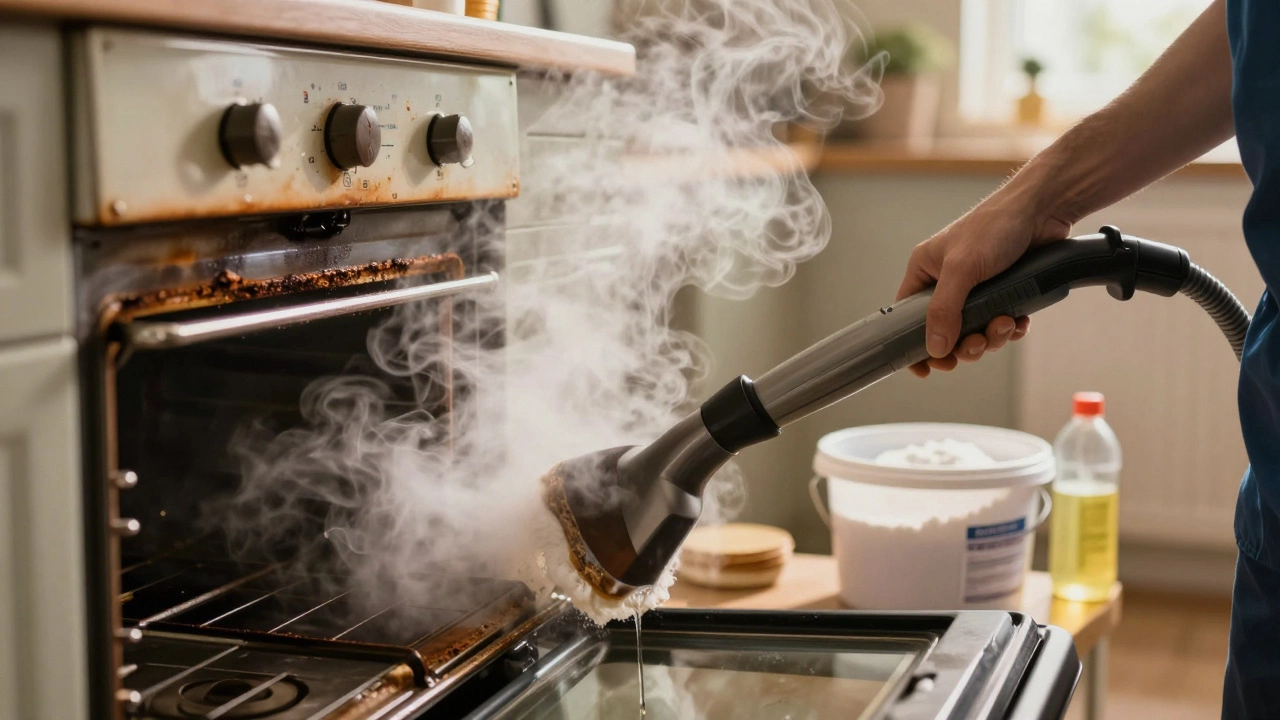
For homeowners? Consider hiring a deep-cleaning service. It’s not expensive - typically £60-£90 - and they use steam cleaners that blast away decades of buildup without chemicals. They’ll also clean the hood, the hob, and the extractor fan while they’re at it. It’s worth it if you’re tired of scrubbing.
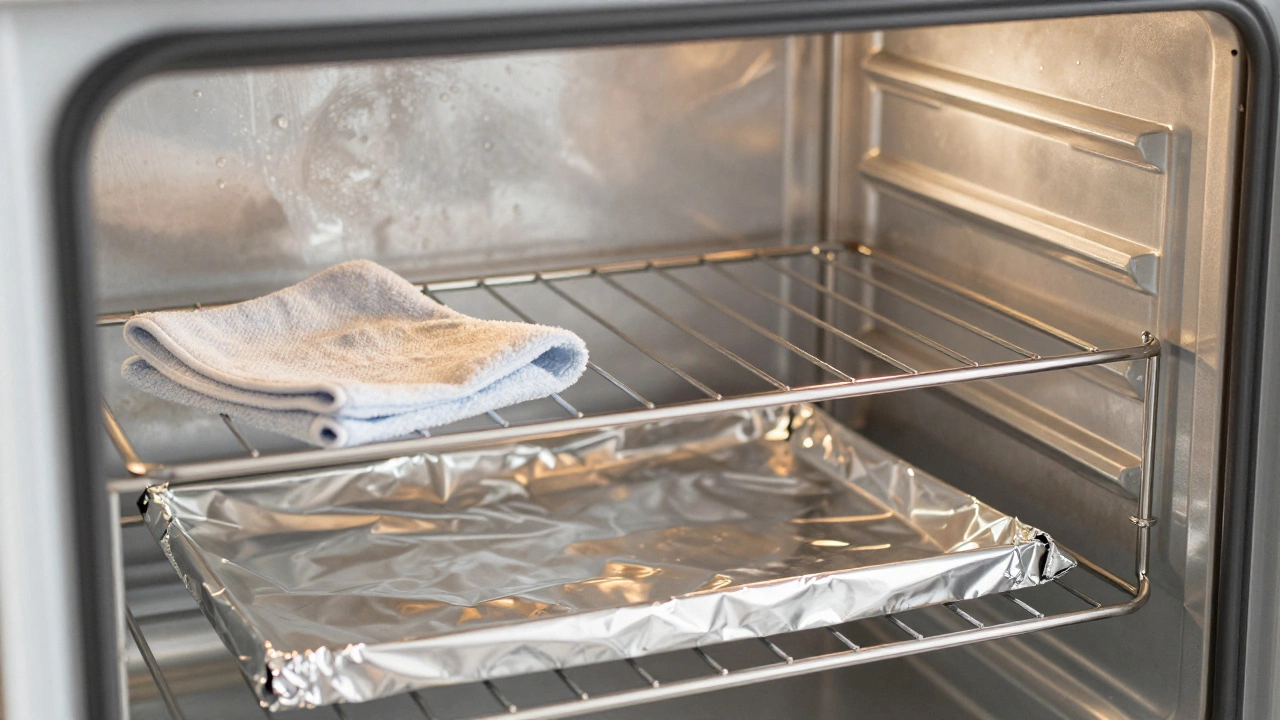
The key to never dealing with a filthy oven again? Consistency.
That’s it. No magic. No expensive gadgets. Just smart habits.
You don’t need a mirror-shine oven. You need one that works, smells clean, and doesn’t smoke when you turn it on. If you can wipe the interior with a damp cloth and it comes away clean? You’re done. Don’t obsess over every speck of residue. Focus on function, not appearance.
And if you’ve got a truly monstrous oven? Start with the baking soda paste. Leave it overnight. Let the heat do the rest. You’ll be surprised how much you can fix with just three ingredients and a little time.
No. Vinegar alone won’t cut through heavy grease. It’s acidic, which helps dissolve mineral deposits, but it doesn’t have the abrasive or alkaline power needed for burnt-on food. Vinegar works best when paired with baking soda - the fizzing reaction lifts grime, and the paste holds it in place. Use vinegar as a final rinse, not a primary cleaner.
For light use, clean it every 3 months. If you bake often - especially sugary or fatty foods - clean it every 6 weeks. A quick wipe-down after each use prevents buildup. Waiting longer than 6 months means you’re risking a full-on clean that takes hours.
Yes - but only occasionally. Self-cleaning cycles heat the oven to over 900°F (480°C), burning off grease and food particles. It’s effective, but it stresses the heating elements and can shorten the oven’s lifespan. Use it no more than twice a year. Always open windows and turn on the extractor fan. The fumes can be strong.
That smell? It’s leftover carbon from old, burnt-on grease. Even after cleaning, some residue remains deep in the enamel. Run the oven at 200°F for 15 minutes with a bowl of water inside. The steam helps neutralize lingering odors. If the smell persists after 2-3 uses, you may need a professional steam clean.
Yes. Mix baking soda and water into a paste. Apply it to the inside of the glass. Let it sit for 1 hour. Then use a plastic scraper (not metal) to gently lift off the grime. Wipe with vinegar-dampened cloth. Avoid abrasive pads - they scratch the glass and make it harder to see through.