How to Get Urine Smell Out of Mattress: Step-by-Step Guide
Urine Stain Severity Calculator
Assess Your Urine Stain Severity
Your Results
Recommended Cleaning Approach
Your stain severity requires this specific cleaning method.
Severity Level
Mild
Estimated Time
1-2 days
Recommended Steps
Step 1: Remove bedding & air out✓
Step 2: Blot up moisture✓
Step 3: Apply vinegar solution✓
Step 4: Sprinkle baking soda✓
Step 5: Vacuum thoroughly✓
Step 6: Optional hydrogen peroxide✓
Step 7: Dry completely✓
Important Note
Wait until the mattress is completely dry before using it. Moisture trapped inside can cause mold and bring back the odor.
If you’ve ever woken up to a sour, ammonia-like smell coming from your mattress, you know how hard it is to ignore. Urine doesn’t just leave a stain-it leaves a lingering odor that standard vacuuming or surface wiping won’t touch. The problem gets worse over time as bacteria and salts sink deeper into the foam and padding. But don’t panic. You can get rid of it. Not just mask it-eliminate it. This guide walks you through exactly how, using tools you already have at home.
Why Urine Smell Lingers in Mattresses
Urine isn’t just water and salt. It contains urea, uric acid, and bacteria. When it soaks into a mattress, the uric acid crystals form deep inside the foam, especially in memory foam or innerspring padding. These crystals don’t dissolve with water alone. They bond to fibers and re-activate when humidity rises-like when you sleep on it at night. That’s why the smell comes back even after you clean the surface.
Regular cleaning products? They often make it worse. Bleach can yellow the fabric. Fabric fresheners just cover the smell temporarily. You need to break down the crystals, kill the bacteria, and dry the mattress thoroughly-all at once.
What You’ll Need
White vinegar
Hydrogen peroxide (3%)
Baking soda
Distilled water (optional, but better than tap)
Measuring cup
Spray bottle
Clean cloths or paper towels
Soft-bristle brush or old toothbrush
Box fan or dehumidifier
Don’t use essential oils, carpet cleaners, or enzyme cleaners marketed for pet urine unless they’re 100% natural and non-toxic. Many contain chemicals that react badly with mattress materials.
Step 1: Remove Bedding and Air Out the Mattress
Take off all sheets, mattress protectors, and pillowcases. Wash them in hot water with a cup of vinegar added to the rinse cycle. That kills lingering odor-causing bacteria. Then, prop the mattress upright against a wall or place it on a clean surface where air can circulate all around it. Open windows. Turn on a fan. Let it breathe for at least an hour before you start cleaning.
Step 2: Blot Up Fresh Moisture (If Still Wet)
If the urine is recent and still damp, grab a stack of paper towels or clean rags. Press down firmly-not scrubbing-over the area. Change towels as they soak up moisture. The goal is to lift as much liquid as possible before it soaks deeper. Don’t rub. Rubbing pushes the urine further into the padding.
Step 3: Apply Vinegar Solution
Mix one part white vinegar with one part distilled water in a spray bottle. Spray the affected area generously until it’s damp but not soaking. Vinegar breaks down uric acid crystals and neutralizes odor. Let it sit for 10-15 minutes. You’ll smell vinegar-but that’s normal. It’s doing the work.
Step 4: Scrub Gently with a Brush
Use a soft-bristle brush or toothbrush to lightly scrub the stained area. Focus on edges and corners where urine tends to pool. This helps lift the crystals from the fabric. Don’t press hard. You’re not trying to damage the mattress surface-just loosen the buildup.
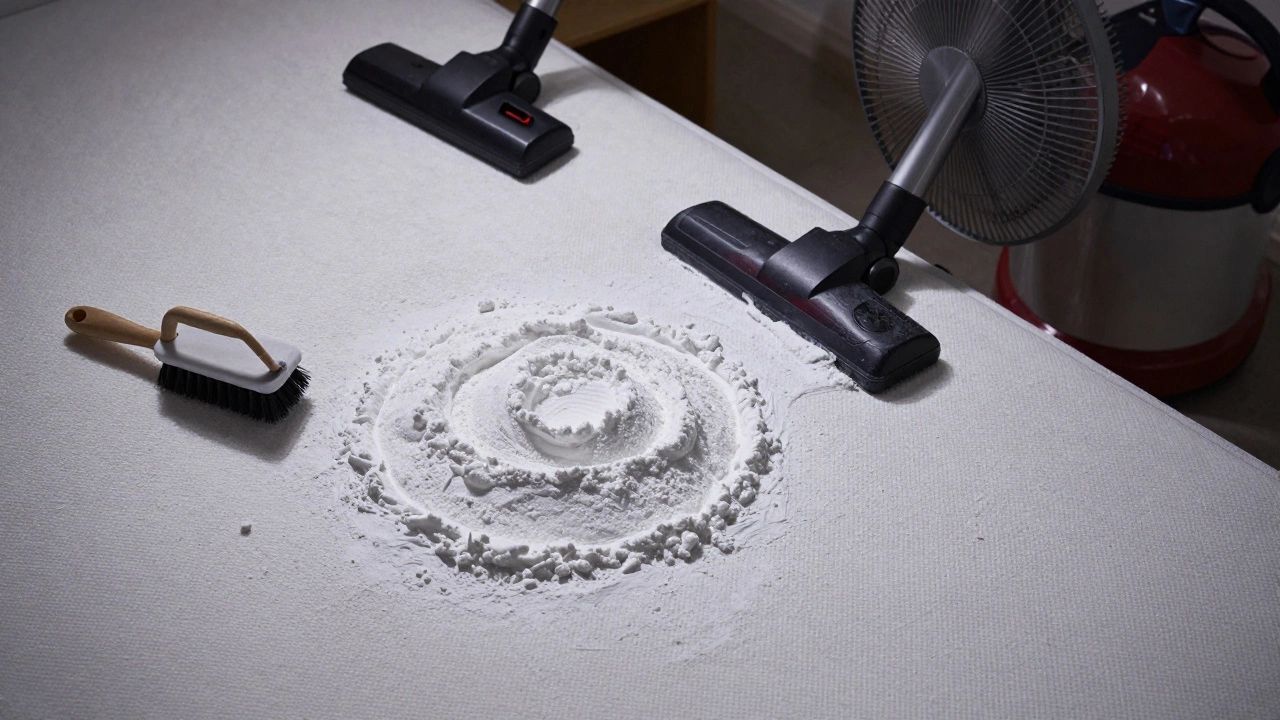
Step 5: Sprinkle Baking Soda
After the vinegar has sat, blot up excess liquid with clean cloths. Then, cover the entire wet area with a thick layer of baking soda. Use your hands to spread it evenly. Baking soda absorbs moisture and odor. It also helps neutralize any remaining acid. Let it sit for at least 8 hours-overnight is best. If the smell is strong, leave it for 24 hours.
Step 6: Vacuum Thoroughly
Use a vacuum cleaner with a brush attachment. Go over the baking soda-covered area slowly and repeatedly. You want to remove every last grain. If your vacuum has a HEPA filter, use it. This traps odor particles instead of releasing them back into the air. If you don’t have a good vacuum, you can use a dry cloth to sweep up the powder-but vacuuming is far more effective.
Step 7: Optional Deep Clean with Hydrogen Peroxide (For Stubborn Odors)
If the smell still lingers after baking soda, mix:
1 cup hydrogen peroxide (3%)
1 tablespoon baking soda
1 drop of mild dish soap
Stir gently until the baking soda dissolves. Pour into a spray bottle. Spray lightly over the area-just enough to dampen it. Let it bubble for 5 minutes. Blot with a clean cloth. Then, repeat the baking soda step above. Don’t skip drying after this. Hydrogen peroxide can bleach fabric if left too long.
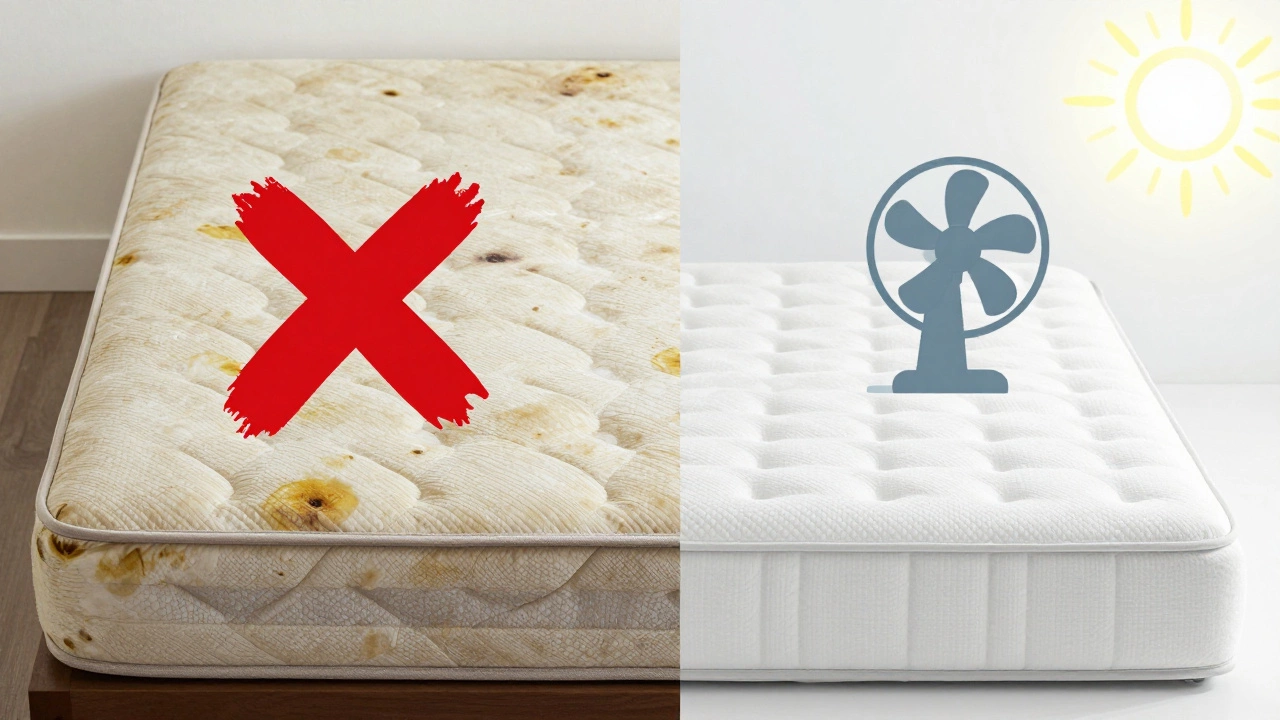
Step 8: Dry Completely
This is the most important step. A damp mattress breeds mold and brings the smell back. Use a box fan to blow air across the mattress from multiple angles. If you have a dehumidifier, run it nearby. Leave the fan running for at least 6-8 hours. If it’s still slightly damp after that, flip the mattress and dry the other side. Never put sheets back on until the mattress is completely dry to the touch.
Prevent Future Odors
Once the smell is gone, protect your mattress. Use a waterproof, breathable mattress protector. Wash it every month. Avoid drinking liquids in bed. If someone has accidents regularly (children, elderly, pets), consider a mattress with removable, washable layers. Also, air out your mattress every few months-even if nothing’s happened. Just flip it and let it breathe for a day.
What Doesn’t Work
Febreze or air fresheners-they mask, not remove
Boiling water-it damages foam and spreads odor deeper
Commercial carpet cleaners-they’re too harsh for mattress fabric
Essential oils-they don’t break down uric acid
Just vacuuming-it pulls surface dust, not deep odor
Some people try bleach. Don’t. It reacts with ammonia in urine and creates toxic chloramine gas. And it turns the stain yellow. You’ll end up with a stained, smelly, damaged mattress.
When to Replace the Mattress
If you’ve tried all these steps and the smell still comes back after a week, the urine has likely soaked into the core foam or springs. In that case, replacement is your best option. A mattress that holds odor for months isn’t just unpleasant-it’s a health risk. Mold and bacteria can trigger allergies and respiratory issues. A good mattress lasts 7-10 years. If yours is older than that and has a persistent odor, it’s time to upgrade.
Can I use vinegar and baking soda together?
No, mixing vinegar and baking soda directly creates a fizzing reaction that neutralizes both. Use them separately. First, apply vinegar to break down the odor. Let it dry. Then sprinkle baking soda to absorb what’s left. Using them together cancels out their effectiveness.
Will hydrogen peroxide damage my mattress?
Used correctly, no. Stick to 3% hydrogen peroxide-the kind you buy at pharmacies. Higher concentrations can bleach fabric. Always test on a hidden corner first. Apply it lightly, let it bubble, then blot immediately. Don’t soak the mattress. If your mattress is white or light-colored, it’s safer. Dark fabrics may lighten slightly.
How long does it take to remove urine smell completely?
For light stains, 1-2 days. For deep, old stains, it can take up to a week. The key is patience. Don’t rush drying. If you put sheets back on too soon, moisture gets trapped and the smell returns. Let the mattress dry fully before testing.
Can pets cause recurring urine smell?
Yes. Pets often return to the same spot because they can still smell urine. Even after cleaning, trace crystals remain. That’s why using a waterproof mattress protector is essential. Also, train pets to use a designated area. If accidents continue, consider a pet-safe enzymatic cleaner for the floor underneath the mattress.
Is it safe to sleep on the mattress while it’s drying?
No. Even if it feels dry on top, the inside may still be damp. Sleeping on it before it’s fully dry can trap moisture, promote mold, and bring back the odor. Wait until you’re sure it’s dry all the way through-usually 8-12 hours with good airflow.