Answer a few questions to find the right treatment for your mattress.
If the spill just happened, you have a massive advantage. Fresh blood hasn't bonded with the fibers yet. Your goal here is to lift the liquid out without spreading it. Grab a clean, white cloth or some paper towels. Dampen them with cold water-not soaking, just damp-and press them firmly onto the stain. You'll see the blood transfer from the mattress to the cloth. Keep switching to a clean part of the cloth so you aren't just rubbing the blood back in.
Once the bulk of the liquid is gone, it's time to bring in the chemistry. Hydrogen Peroxide is a mild oxidizing agent that breaks down the hemoglobin in blood. It's the gold standard for blood removal. Apply a small amount of 3% hydrogen peroxide directly to the spot. You'll see it start to fizz-that's the peroxide reacting with the organic material. Let it bubble for a few minutes, then blot it away with a cold, damp cloth. Repeat this until the red hue is completely gone.
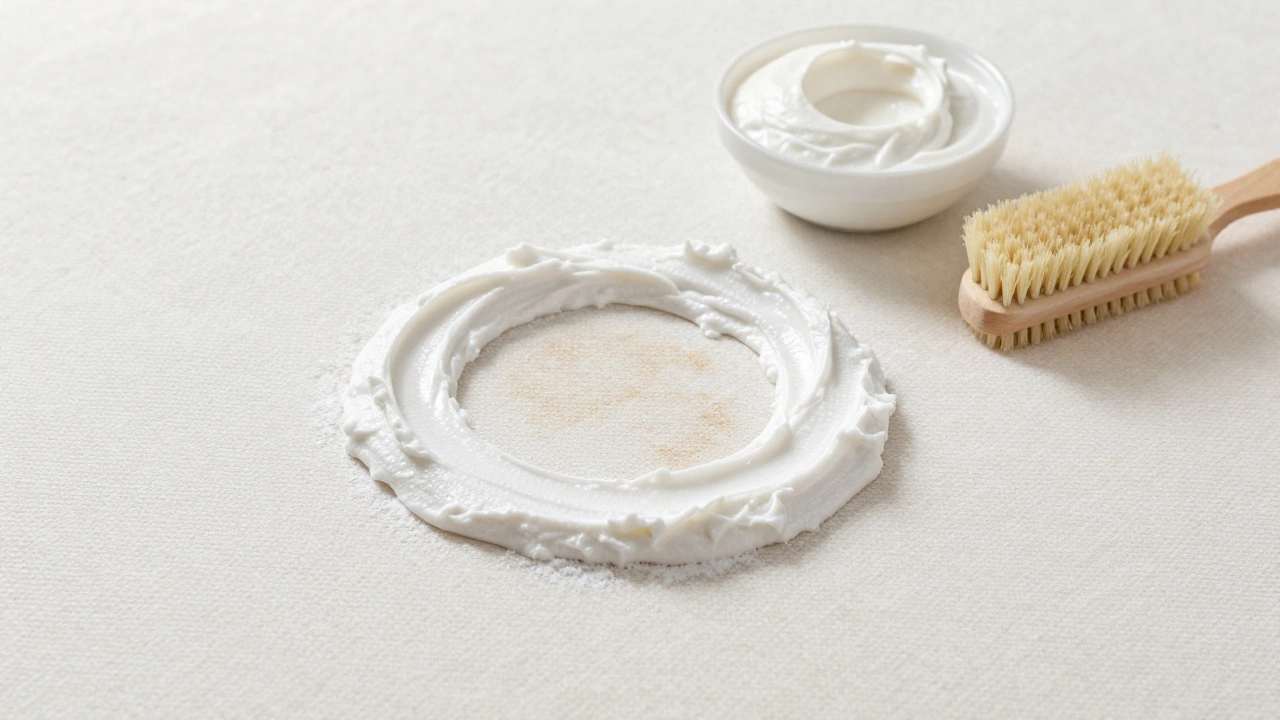
Dried blood is a different beast because the proteins have hardened. Cold water alone won't do much here. You need something that can break those bonds. This is where Baking Soda (sodium bicarbonate) and Dish Soap come into play. Mix a tablespoon of baking soda with a few drops of clear dish soap and a bit of cold water to create a thick paste. This paste acts as both a chemical cleaner and a mild abrasive to lift the dried particles from the fabric.
Apply the paste to the stain and let it sit for about 30 minutes. As it dries, it draws the remaining pigment out of the mattress. Once it's dry, use a vacuum cleaner with a brush attachment to suck up the powder. If a faint shadow remains, you can move to a more powerful solution like an enzymatic cleaner.
When household staples fail, you need a biological approach. Enzymatic Cleaners are cleaning agents that use proteins called enzymes to "eat" organic stains like blood, urine, or pet accidents. These are incredibly effective because they don't just move the stain; they break the molecular structure of the blood apart.
To use these, spray the cleaner onto the stain and let it dwell. Most enzymatic cleaners need time to work-sometimes up to an hour. Check the bottle for specific instructions. After the dwelling time, blot the area with a clean cloth. Because these cleaners are often liquid, be careful not to saturate the mattress, as moisture trapped in the inner foam can lead to mold.
| Method | Best For | Pros | Cons |
|---|---|---|---|
| Cold Water & Blotting | Fresh spills | Safe, readily available | Ineffective for dried blood |
| Hydrogen Peroxide | Fresh to mild stains | Fast acting, highly effective | Can bleach some fabrics |
| Baking Soda Paste | Dried blood | Gentle, lifts debris | Takes longer to work |
| Enzymatic Cleaners | Old or deep stains | Breaks down proteins | Requires more drying time |
The biggest risk during blood stain removal isn't the stain itself-it's the moisture you leave behind. A mattress is like a giant sponge. If you soak the center of your bed and then put sheets back on, you're creating a perfect breeding ground for mildew. You need to ensure the mattress is bone-dry before you rebuild your bed.
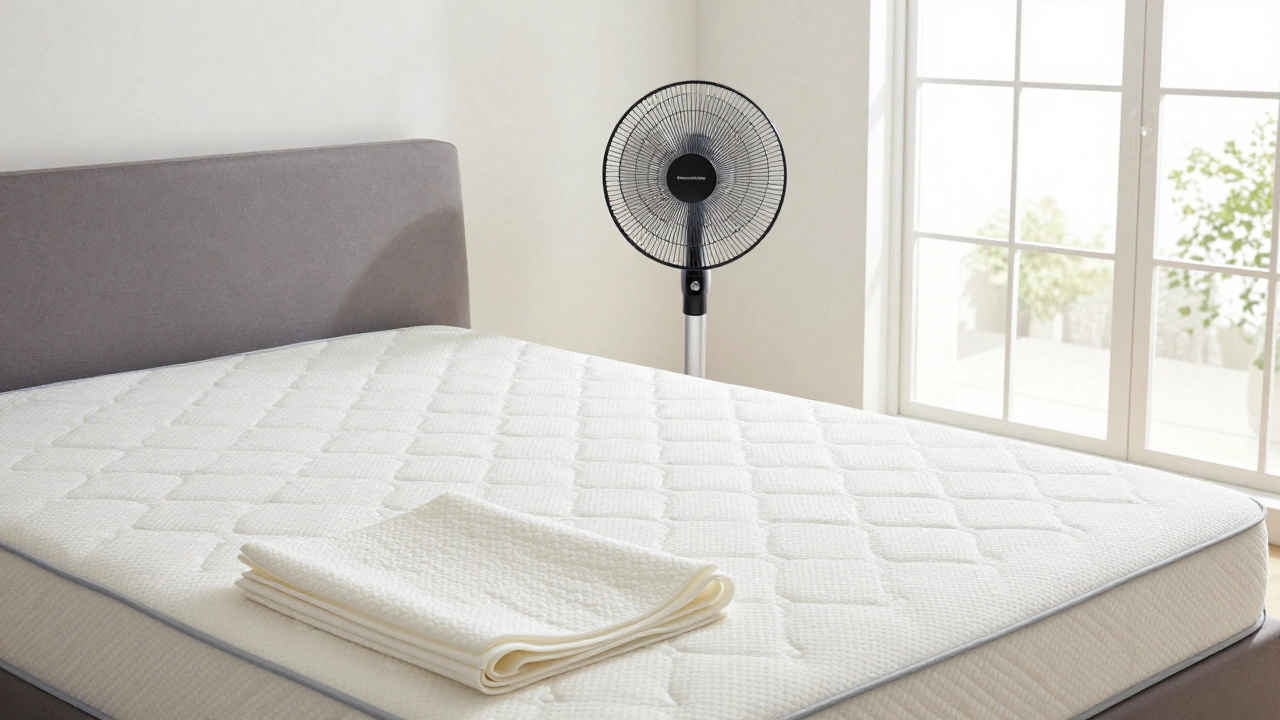
Open the windows to get a cross-breeze going. Use a desk fan or a floor blower pointed directly at the wet spot. If you have a dehumidifier, run it in the room for a few hours. Avoid using a hairdryer on a hot setting, as we already established that heat is the enemy of blood stains. If you accidentally set the stain with heat, you might find that only a professional cleaner with a high-powered extraction machine can remove it.
Once you've spent an hour scrubbing your mattress, you'll probably want to make sure it never happens again. The most effective solution is a Mattress Protector. Look for a waterproof, breathable cover. These act as a barrier that keeps liquids from ever reaching the actual mattress foam. If another accident happens, you simply strip the protector and throw it in the washing machine on a cold cycle.
Another pro tip is to keep a "stain kit" handy-a small bottle of hydrogen peroxide and some microfiber cloths. The faster you react to a spill, the higher the chance of a total recovery. If you wait until the next morning to deal with it, your success rate drops significantly.
I would strongly advise against it. Bleach is far too harsh for most mattress fabrics and can permanently discolor the material. More importantly, bleach can damage the internal foam or spring structure of the mattress. Hydrogen peroxide is a much safer and more effective alternative for breaking down blood proteins.
Memory foam is more absorbent than traditional springs, meaning the blood sinks deeper. Avoid using too much liquid, as memory foam takes forever to dry. Use the blotting method with cold water, and then apply a dry-cleaning foam or a very small amount of hydrogen peroxide. Be extremely careful not to "over-wet" the core of the foam.
Salt can be used as a paste with cold water for fresh stains, similar to baking soda. It helps draw the liquid out. However, baking soda is generally preferred because it also helps neutralize odors and is easier to vacuum away once it dries.
Check the area under a bright light. If there is a yellow or brown ring left behind, that's usually a sign that the protein has been removed but a residue of the cleaner or the blood's iron remains. A final rinse with a damp, cold cloth and a bit of white vinegar can often clear up these remaining shadows.
No, not initially. Steam cleaners use extremely hot water, which will "cook" the blood into the fabric. You should only use a steam cleaner AFTER you have successfully removed the pigment with cold-water methods and are simply doing a final deep-clean of the mattress for hygiene purposes.
If you've tried everything above and the stain is still there, you might be dealing with a "permanent" set. This usually happens if the mattress was put through a dryer or treated with hot water. In this case, your best bet is to call a professional upholstery cleaning service. They have chemical solvents and high-pressure vacuums that can reach deeper into the mattress than you can with a cloth.
For those who struggle with chronic nosebleeds or have pets that might cause messes, investing in a high-quality, waterproof mattress enclosure is the only foolproof way to prevent the stress of deep-cleaning your bed. It turns a potentially expensive mattress replacement into a simple laundry task.