Find out if your item can safely be steam cleaned. Input your item type and material to receive immediate safety guidance based on the article content.
Steam cleaning sounds like magic. Hot vapor, no chemicals, deep clean - it’s no wonder so many people reach for the steam cleaner after a spill, a pet accident, or just because their sofa looks tired. But here’s the truth: not everything can handle steam. Pushing a steam cleaner over the wrong surface doesn’t just leave it wet - it can ruin fabric, warp wood, or even create mold. If you’re cleaning upholstery, carpets, or furniture at home, knowing what steam cleaning can’t touch is just as important as knowing how to use it.
Silk, wool, and satin aren’t just fancy fabrics - they’re fragile. Steam can shrink, stiffen, or leave water spots on these materials. A wool sofa might look fine after a quick pass, but the heat can cause fibers to felt together, making the fabric feel rough and look uneven. Silk drapes? They’ll lose their drape. Satin cushions? They’ll turn dull and develop permanent water marks. These materials need gentle, dry cleaning methods or professional care. If your upholstery label says "Dry Clean Only," don’t ignore it. Steam cleaning won’t fix the problem - it’ll make it worse.
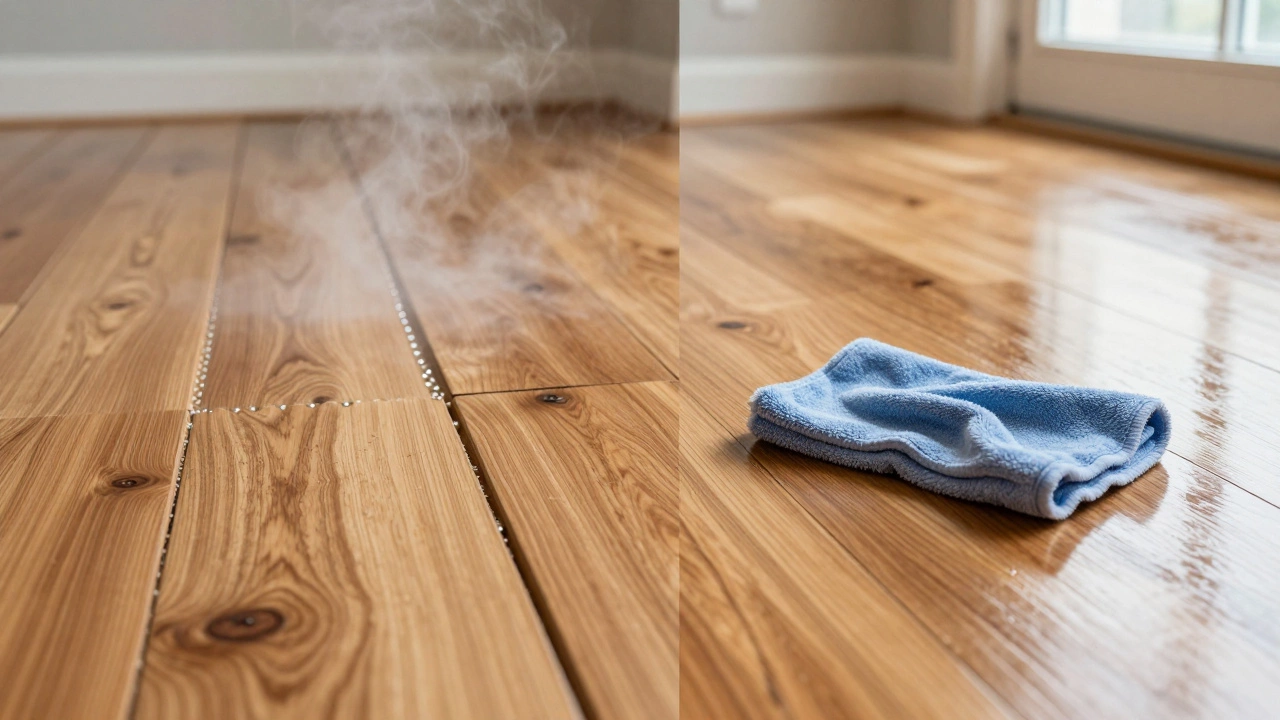
You might think steam is great for floors, but unsealed wood is a no-go. The moisture from steam can seep into the grain, causing swelling, warping, or even lifting planks. Laminate flooring is especially vulnerable. Even though it looks like wood, it’s made of compressed layers with a plastic surface. Steam can break down the glue between layers, leading to bubbling or peeling. If you’ve got hardwood floors, check if they’ve been sealed with polyurethane. If not, skip the steam. A damp mop and a wood-safe cleaner are your best friends here.
Steam might remove grease from your stovetop, but it’s a disaster for walls. Painted walls, especially older ones with latex or oil-based paint, can blister or peel under steam pressure. The heat softens the paint’s bond with the drywall, and moisture gets trapped behind it. Wallpaper? Forget it. Steam will loosen the adhesive, causing the paper to bubble, peel, or fall off in chunks. If you’ve got stains on walls, try a mild soap solution and a soft sponge. Save the steam for surfaces built to handle it.
Steam and electricity don’t mix. Never point a steam cleaner at a TV, stereo, lamp, or even a power outlet. Moisture can get into seams, ports, or vents and cause short circuits. Even if the device is turned off, residual moisture can corrode internal wiring over time. If your remote or speaker is grimy, use a microfiber cloth lightly dampened with water and a drop of isopropyl alcohol. Let it dry completely before plugging it back in.
Leather is natural, breathable, and sensitive. Steam can dry it out, crack the surface, or strip away protective coatings. A steam cleaner might remove surface dirt, but it’ll also remove the oils that keep leather soft. Over time, your leather sofa will feel stiff and look faded. Instead of steam, use a leather-specific cleaner and conditioner. A quick wipe with a damp cloth and a leather balm every few months keeps it looking rich and lasts longer than any steam session ever could.
Many couches and chairs have foam, batting, or spring systems underneath the fabric. Steam can oversaturate these materials, trapping moisture for days. That dampness doesn’t just sit there - it invites mold and mildew. You won’t see it right away, but after a few weeks, you might notice a musty smell or dark spots deep in the cushion. If you’re dealing with a spill on upholstery, blot it with towels first. Then use a low-moisture upholstery cleaner. If you must use steam, go light, move quickly, and follow up with a fan to dry everything out.
It’s tempting to steam clean a child’s favorite teddy bear after a spill. But stuffed animals aren’t built to handle heat and moisture. The stuffing inside - usually polyester fiberfill - can clump, shift, or hold water. The fabric might shrink, and the eyes or buttons could loosen or melt. If your toy needs cleaning, check the tag. Most can be hand-washed in cold water with mild detergent. Air dry them flat, away from direct heat. No steam required.
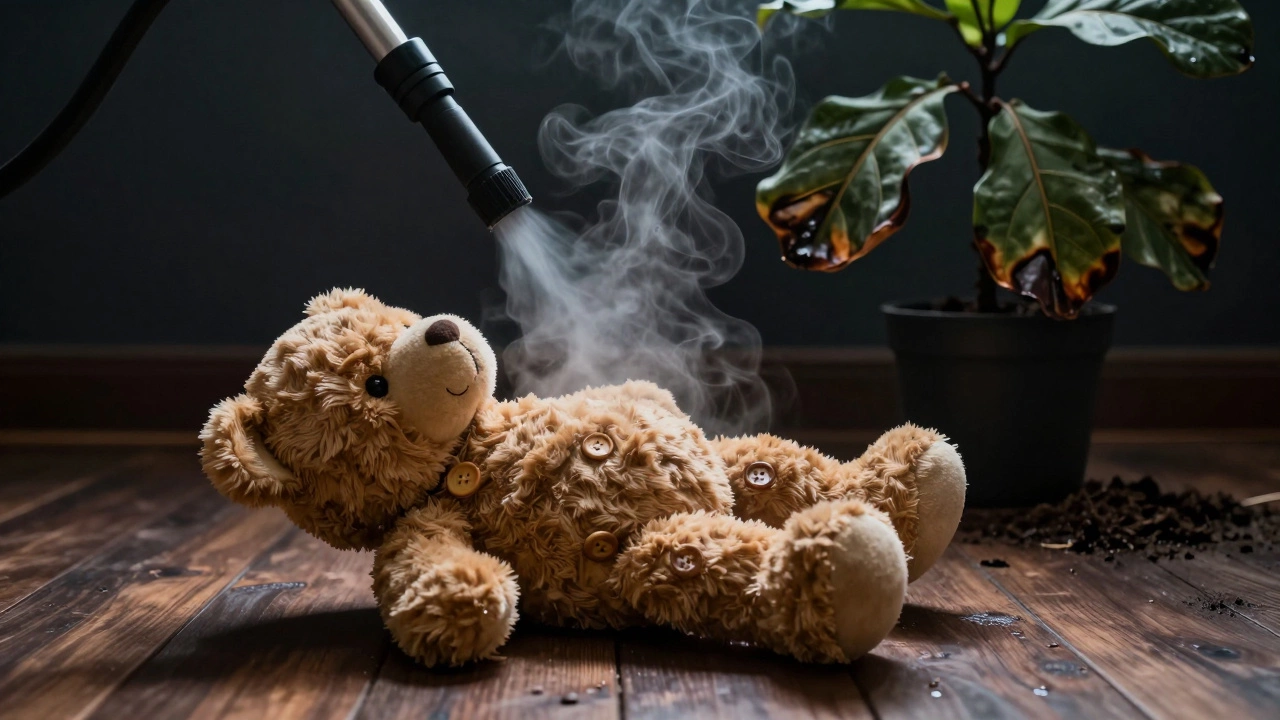
Don’t steam clean your fiddle-leaf fig or snake plant. The high heat and moisture can scorch leaves, cause rot at the base, or encourage fungal growth. Plants need airflow and controlled humidity - not a blast of 212°F vapor. If dust is building up on leaves, use a soft brush or a damp cloth. Mist them lightly if they like humidity, but never point a steam cleaner at them.
Carpet is tricky. Steam cleaning works well on synthetic fibers like nylon or polyester if done right. But natural fibers like wool or sisal? Not so much. Wool carpets can shrink, and sisal (a plant-based fiber) can turn brittle or stain badly when wet. Also, if your carpet has a rubber backing, steam can break it down, causing bubbling or lifting. Always test a hidden corner first. Let it dry completely for 24 hours. If it looks fine, proceed. If not, call a pro.
The safest rule? Always test on a hidden spot. Pick a corner behind the couch, under a cushion, or inside a closet. Apply steam for just 3 seconds. Wait 24 hours. Look for color fading, texture changes, or warping. If anything looks off, don’t proceed. It’s better to clean a little less than to ruin something you can’t replace.
Not everything needs steam. For delicate fabrics, use a dry cleaning powder or a foam upholstery cleaner. For wood, go with a microfiber cloth and a pH-neutral cleaner. For leather, stick to conditioner. For electronics, use compressed air and a lint-free cloth. Sometimes, the best cleaner is the one that doesn’t use heat or water at all.
No. Velvet is extremely sensitive to heat and moisture. Steam can flatten the pile, leave water marks, or cause shrinkage. Use a vacuum with a brush attachment and a velvet-specific cleaner. Always test in a hidden area first.
Moisture seeps into the wood grain, causing swelling, warping, or gaps between planks. In severe cases, the wood can permanently buckle. If you’ve already done this, dry the area immediately with towels and a fan. If damage is visible, you may need to sand and refinish the floor.
It can be - if the carpet is synthetic and not too old. But steam alone won’t remove odor. You need an enzymatic cleaner first to break down urine proteins. Then, use steam lightly to rinse. Let it dry fully to prevent mold. For wool or natural fiber carpets, skip steam and use a professional cleaner.
Only if they’re labeled machine washable and made of cotton or polyester. Avoid steam on silk, linen, or blackout curtains with plastic backing. Always check the care label. If unsure, hang them in the bathroom while you run a hot shower - the steam will help loosen dust without direct contact.
That smell usually means moisture is trapped in the padding or frame. Steam oversaturated the material, and now mold or mildew is growing inside. Use fans, open windows, and a dehumidifier to dry it out fast. If the odor lingers after 48 hours, you may need professional extraction or even padding replacement.
If you’re unsure whether something can handle steam, it’s safer to leave it alone. Steam cleaning is powerful - but power without knowledge leads to damage. Stick to the rules, test first, and your furniture will thank you.