Click on each step below to mark it as active. When you reach the waiting phase, use the timer on the right.
Remove sheets and wash in hot water. Spot clean stains with mild detergent. Let dry completely.
Use upholstery attachment to remove dust, skin cells, and debris before adding powder.
Sprinkle generously over the entire surface. Add essential oils if desired (mix in bowl first).
Wait for odors to absorb. Use the timer tool for mild (30 min) or strong (8+ hours) smells.
Go slow with overlapping strokes. Ensure all powder is removed to avoid grit.
You wake up, roll over, and hit that patch of the bed that smells faintly like stale sweat or old dust. It’s a gross feeling, but it happens to everyone. Your mattress is a large upholstered bedding component designed for sleeping comfort absorbs moisture, skin cells, and oils every single night. Over time, this buildup creates odors that standard vacuuming just won’t touch. You’ve probably heard that baking soda is sodium bicarbonate, a common household chemical used for cleaning and deodorizing can fix this. But before you dump an entire box onto your sheets, you need to know if it actually works, if it’s safe for your specific mattress type, and how to do it without making a bigger mess.
The short answer is yes. You can put baking soda on your mattress. In fact, it is one of the most effective, low-cost ways to neutralize odors naturally. However, it requires patience and proper technique. If you leave it on too long or don't vacuum it up correctly, you might end up with a gritty, uncomfortable sleep surface. This guide breaks down exactly how to use baking soda to refresh your bed, what mistakes to avoid, and when you might need a stronger solution.
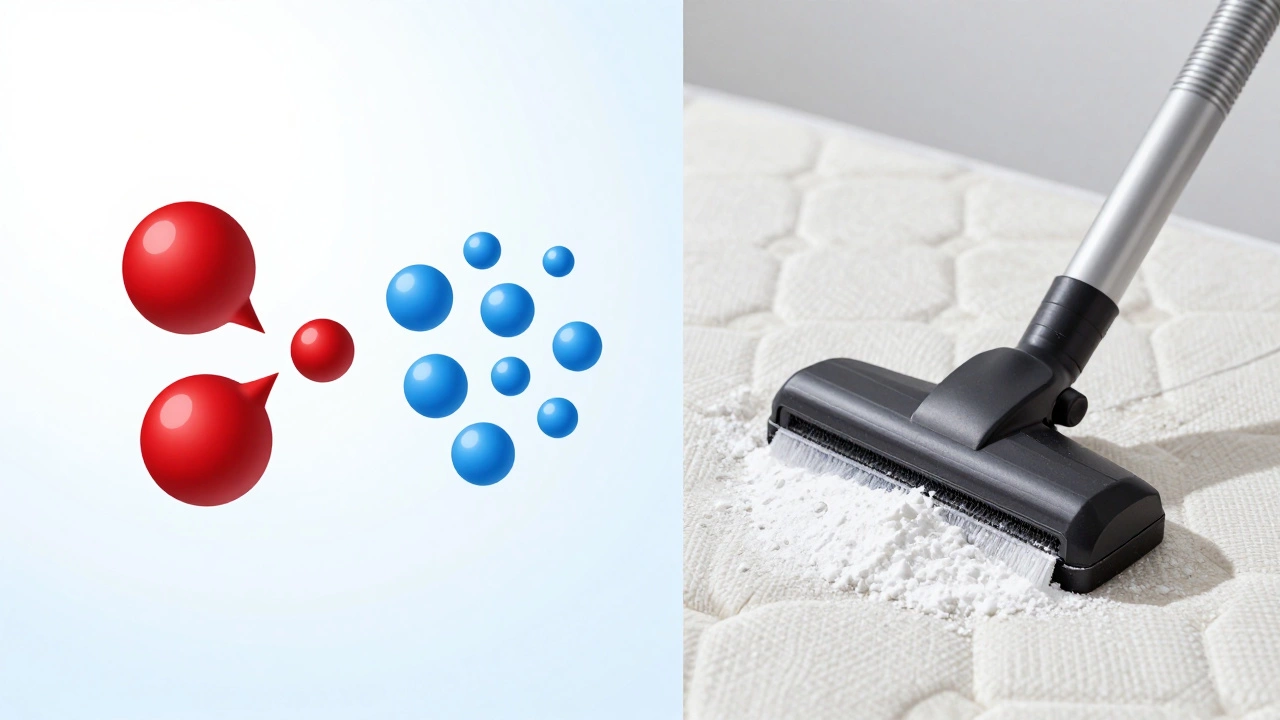
To understand why this white powder is so popular in cleaning circles, you have to look at the chemistry. Sodium bicarbonate has alkaline properties that neutralize acidic odor molecules. Most bad smells-like sweat, urine, or body oils-are acidic. When baking soda comes into contact with these acids, it undergoes a chemical reaction that neutralizes them rather than just masking the smell with perfume.
Unlike air fresheners that coat your nose in synthetic fragrance, baking soda absorbs the volatile organic compounds (VOCs) causing the stink. It also acts as a mild abrasive and desiccant, meaning it pulls moisture out of the fabric. Since mold and bacteria thrive in damp environments, drying out your mattress helps stop the root cause of many musty smells. It’s not a disinfectant, so it won’t kill viruses, but it significantly reduces the bacterial load by removing their food source and moisture.
Before you start sprinkling, check your mattress tag. While baking soda is generally gentle, different materials react differently to moisture and abrasion.
| Mattress Type | Safety Level | Key Considerations |
|---|---|---|
| Innerspring | Safe | Cotton covers handle powder well. Vacuum thoroughly to prevent clogging coils. |
| Memory Foam | Safe (with caution) | Foam is porous. Do not wet the foam. Use light pressure when vacuuming to avoid damaging the surface. |
| Latex | Safe | Natural latex is durable. Ensure the powder is fully removed to maintain breathability. |
| Hybrid | Safe | Combines foam and springs. Treat the foam layers gently and vacuum deep into the spring zones. |
The biggest risk isn’t the baking soda itself; it’s the moisture you might introduce if you mix it with water or vinegar incorrectly. Never soak your mattress. Liquid can seep into the core, leading to mold growth inside the foam or springs, which is a nightmare to fix. Stick to dry applications or very light misting on the surface only.
Doing this right takes about an hour, plus waiting time. Here is the proven method to get the best results.
Even simple tasks can go wrong if you rush them. Here are the pitfalls that turn a good idea into a headache.
Should you spend money on specialized mattress cleaners? It depends on your needs.
Baking soda is cheap, accessible, and eco-friendly. It’s perfect for routine maintenance every 3-6 months. It handles everyday body odor and general mustiness well. However, it lacks enzymatic action. If you have pet urine stains, baking soda will mask the smell temporarily, but the uric acid crystals remain. Enzymatic cleaners break down the protein structure of urine, eliminating the scent permanently. For biological stains, buy an enzymatic cleaner. For general freshness, baking soda wins on cost and safety.
Cleaning once isn’t enough. To keep your mattress smelling great between deep cleans, adopt these habits.
If your mattress still smells after multiple baking soda treatments, or if you see visible mold spots (black or green specks), it’s time to stop DIYing. Mold spores can penetrate deep into the core. Professional steam cleaning uses high heat to kill mold and bacteria, followed by industrial extraction to remove moisture. If your mattress is older than 7-10 years and smells persistently, replacement might be the healthier option than cleaning.
Aim for every 3 to 6 months for routine maintenance. If you have pets, allergies, or tend to sweat heavily while sleeping, you may want to do it every 1 to 2 months. Regular application prevents odors from setting in deeply.
Baking soda does not kill dust mites directly. However, it absorbs moisture, creating a less hospitable environment for them. To kill dust mites, you need heat (above 130°F/54°C). Washing bedding in hot water and using a steam cleaner are more effective methods for mite control.
Cornstarch is better for absorbing grease and oil, not odors. It can also feed mold and bacteria if left moist. Baking soda is superior for deodorizing because of its alkaline pH, which neutralizes acidic smells. Stick to baking soda for mattress freshness.
Pure baking soda will not stain. However, if you mix it with essential oils or other liquids and let it sit, the oil components could potentially leave a spot. Always apply pure baking soda or mix oils into the powder in a separate container before sprinkling to ensure even distribution and no wet spots.
Yes, it is generally safe to leave baking soda on your mattress overnight (8-12 hours). This extended time allows it to absorb deeper odors. Just ensure you vacuum it up thoroughly before getting back into bed to avoid skin irritation from residual powder.