Most people think the higher the PSI, the better the clean-especially when it comes to driveways. But cranking up your pressure washer to max won’t give you a better result. It might just crack your concrete, strip paint off your garage door, or send gravel flying into your neighbor’s yard. So how much PSI do you actually need for a driveway? The answer isn’t one number-it depends on your surface, your dirt, and the tool you’re using.
For standard concrete driveways, 3000 PSI is the sweet spot. It’s strong enough to blast away grease, oil stains, algae, and years of built-up grime without damaging the surface. Most homeowners’ pressure washers fall between 2000 and 3000 PSI, which is perfectly fine if you use the right nozzle and technique.
Concrete isn’t as tough as it looks. Even though it’s hard, it’s porous. Too much pressure-like 4000 PSI or higher-can erode the top layer, leaving it rough and pitted. That’s not just ugly; it makes the surface trap dirt faster next time. I’ve seen driveways ruined by people using commercial-grade machines meant for stripping paint off steel, not cleaning a family driveway.
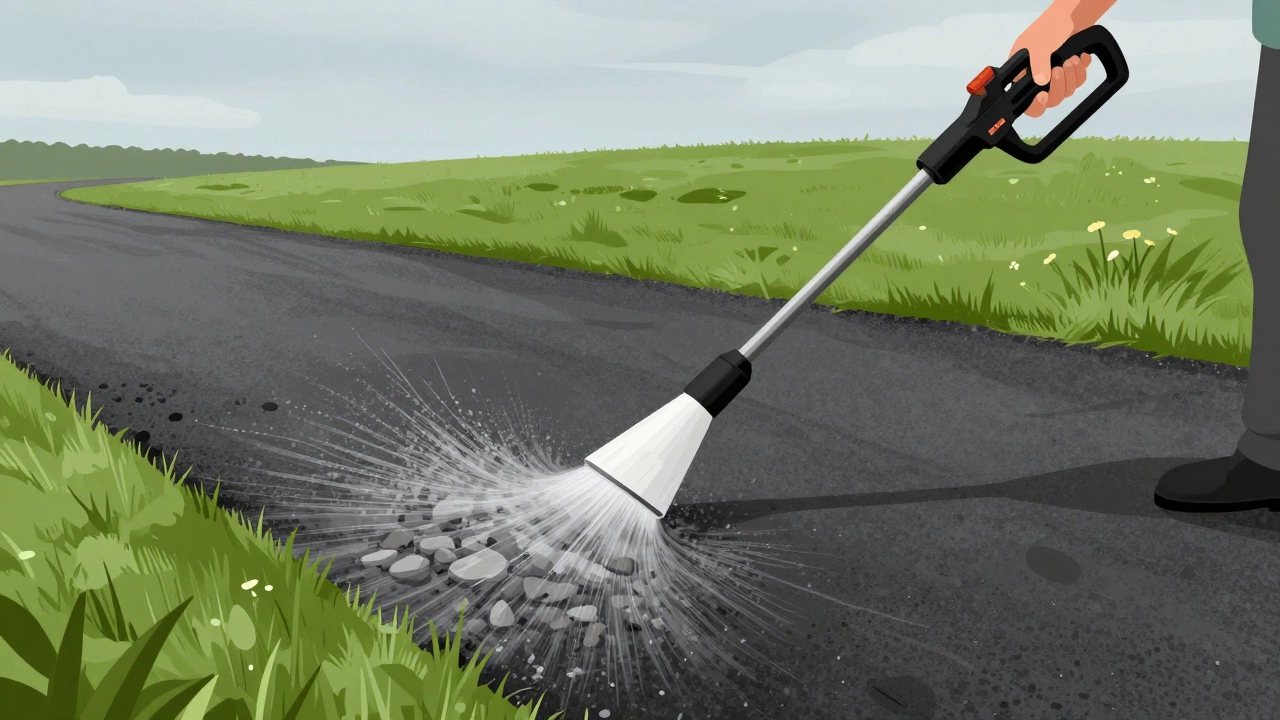
Asphalt is softer than concrete. It’s made of bitumen and crushed stone, and it expands and contracts with temperature changes. That means you need to be gentler. Stick to 1500 to 2000 PSI for asphalt. Anything over 2500 PSI risks pulling out the aggregate stones or creating divots. You’ll end up with a bumpy surface that collects water and turns into a mud trap after rain.
Don’t forget: asphalt needs a different cleaning approach. A wide-angle nozzle (25° to 40°) is better than a narrow one. Hold the wand at least 12 inches away from the surface and move slowly. Let the water do the work, not brute force. If you see the surface starting to look fuzzy or sandy, you’re going too hard.
PSI isn’t the whole story. The nozzle tip determines how that pressure is delivered. A 0° nozzle (red tip) is for stripping paint off metal-not driveways. It’s like using a nail gun to hang a picture. It’ll work, but you’ll wreck the wall.
For driveways, use:
Even with 3000 PSI, a 40° nozzle spreads the water out, reducing impact. That’s why professionals often use lower PSI with wider nozzles-they clean better and safer.
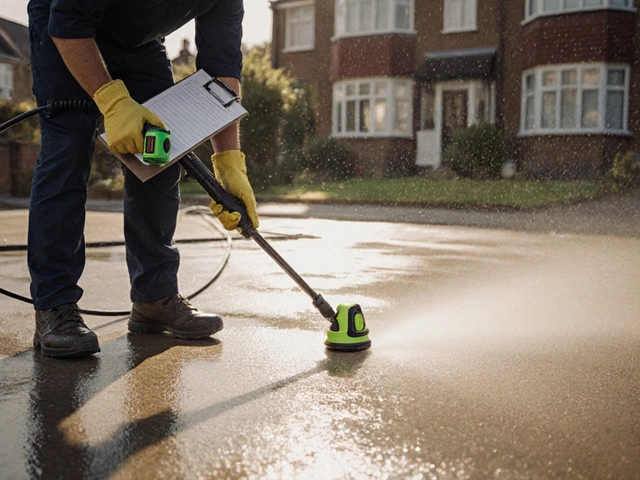
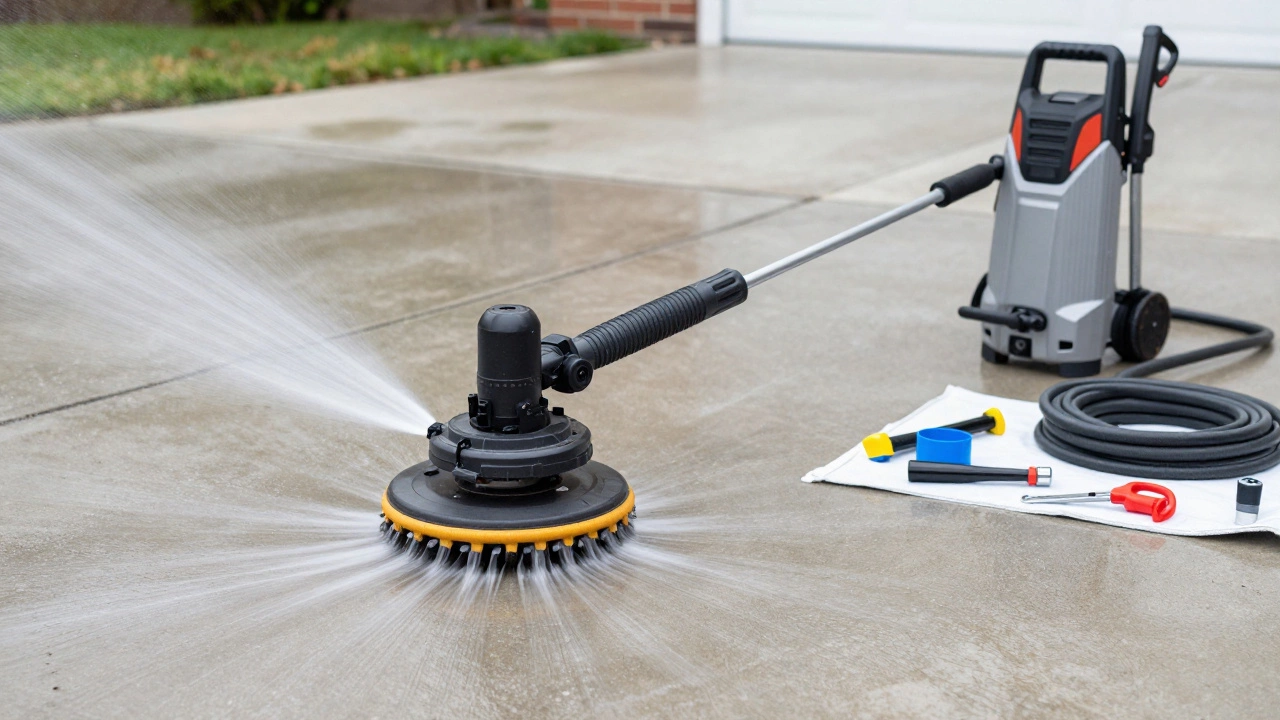
If you’re serious about driveway cleaning, invest in a surface cleaner. It’s a rotating attachment that looks like a wide, flat wheel with spray jets underneath. It covers 12 to 18 inches in one pass and evenly distributes pressure. No streaks, no missed spots, no gouges.
Surface cleaners work best with 2500 to 3000 PSI and a 25° nozzle. They’re not cheap-around £100 to £200-but if you clean your driveway twice a year, they pay for themselves in time and results. I’ve used one on over 50 driveways in Brighton alone. The difference is night and day compared to a standard wand.
Electric models usually max out at 2000 PSI. That’s fine for light cleaning-moss, leaves, light dirt-but if your driveway has thick oil stains or algae buildup, you’ll struggle. Gas-powered units hit 2800 to 3500 PSI and are better for serious jobs.
But here’s the catch: gas washers need fuel, maintenance, and more space to store. If you only clean your driveway once a year and it’s not too dirty, a good electric model with 2000 PSI and a surface cleaner can still get the job done. Just don’t expect miracles on old, greasy concrete with a 1300 PSI electric unit.
PSI gets the job started, but detergent finishes it. For driveways, use a concrete cleaner with surfactants that break down oil and grease. Look for products labeled for driveways or garage floors. Avoid bleach-based cleaners-they kill moss and algae, but they also kill grass and damage concrete over time.
Apply detergent with a low-pressure setting or a separate sprayer. Let it sit for 5 to 10 minutes. Then rinse with your pressure washer on a 25° nozzle. The chemical does most of the work. The water just washes it away.
One homeowner in Hove tried to save money by using a 4000 PSI machine from a rental shop. He cleaned his driveway in 10 minutes. But two weeks later, the surface was full of tiny cracks. He had to resurface the whole thing. That cost him £1200. A proper clean with the right tools would’ve been £80.
If your driveway has deep stains, uneven surfaces, or you’re not sure what material it’s made of, hire someone. Professionals have the right equipment, experience, and insurance. They know how to adjust pressure based on the concrete’s age, sealant, and weather exposure.
Also, if you’re dealing with moss on a sloped driveway near your garden, a pro can use biodegradable cleaners that won’t harm plants. DIY bleach or strong chemicals can run off into soil and kill roots. I’ve seen entire flower beds die because someone thought pressure washing meant dumping whatever was in the bottle.
Once a year is enough for most homes. If you live near trees or have heavy vehicle traffic, twice a year helps. Clean in spring or early autumn-avoid freezing temperatures. Water trapped in cracks will freeze and expand, making them worse.
Regular cleaning doesn’t just look good. It prevents algae from turning into thick, slippery mats. It stops oil from soaking in. It extends the life of your driveway by keeping it free of abrasive debris.
For concrete: 3000 PSI, 25° nozzle, 2.5+ GPM, detergent, and a slow, even pass.
For asphalt: 1500 to 2000 PSI, 40° nozzle, no harsh chemicals, gentle approach.
Never go higher than you need. Pressure washing isn’t about power-it’s about precision. You’re not trying to blast the driveway into oblivion. You’re trying to bring it back to life.
You can, but you shouldn’t. A 4000 PSI machine is designed for industrial use-stripping paint off steel, cleaning brick walls, or removing graffiti. On concrete, it can erode the surface and leave it pitted. On asphalt, it will pull out stones and create permanent damage. Stick to 3000 PSI for concrete and under 2000 PSI for asphalt.
Yes, if you’re cleaning a lightly soiled concrete driveway or any asphalt driveway. For oil stains, moss, or heavy grime, 2000 PSI will take longer and may need detergent to help. It’s not ideal for stubborn stains, but it’s safe and effective for regular maintenance.
Absolutely. PSI gives you the force, but GPM (gallons per minute) gives you the cleaning power. A machine with 3000 PSI and only 1.5 GPM will struggle to rinse away dirt. You need at least 2.5 GPM to effectively flush debris off the surface. That’s why professionals prioritize both numbers-not just PSI.
Avoid bleach. It kills algae and moss temporarily, but it doesn’t remove the stains. It also damages concrete over time, kills nearby plants, and can be dangerous if mixed with other cleaners. Use a concrete-specific detergent instead. It’s safer, more effective, and won’t harm your garden.
Concrete is usually gray, has a smoother finish, and feels harder. Asphalt is black, has a rougher texture, and may smell like tar when it’s warm. If you see small stones sticking out, it’s likely asphalt. If it’s solid and uniform, it’s concrete. If you’re unsure, test a small area with low pressure first.