Follow the "Ceiling-to-Floor" method to avoid cleaning the same spot twice. Check off each task as you complete it!
Most people forget the ceiling and the tops of cabinets. In a kitchen, dust isn't just dust-it's a mixture of airborne oil and particles that creates a sticky film. Use a microfiber cloth a synthetic cleaning cloth made from polyester and polyamide that traps dirt more effectively than cotton dampened with a mixture of warm water and a drop of dish soap. Start with the ceiling corners and the tops of the cupboards. If you have a range hood, this is where the real battle begins.
The range hood filter a metal or synthetic mesh designed to capture grease and steam during cooking is usually the filthiest part of the room. Remove these filters and soak them in a basin of boiling water mixed with a heavy-duty degreaser. Avoid using a scrub brush on aluminum filters, as you can tear the mesh. Instead, let the chemicals do the work for 20 minutes, then rinse with hot water.
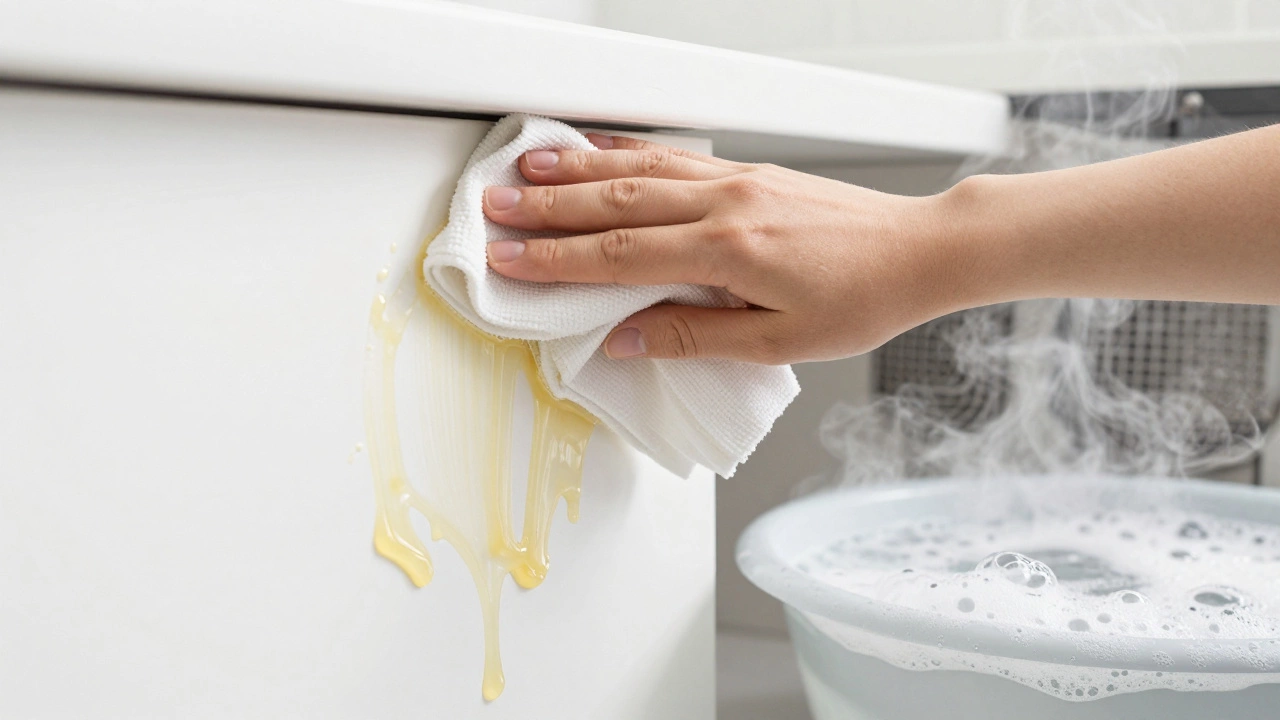
If your cupboard doors feel tacky to the touch, you're dealing with polymerized grease. Standard surface cleaners often just push this grease around. You need something that breaks the molecular bond of the oil. A solution of White Vinegar a dilute acetic acid solution often used for descaling and degreasing and water is a great start, but for truly filthy kitchens, a concentrated dish soap paste works better.
Apply the soap paste to the most affected areas-usually around the stove and handles. Let it sit for ten minutes. Use a damp cloth to wipe away the grime in a downward motion. If you're dealing with wooden cabinets, be careful not to over-saturate the wood, or you'll warp the panels. Use a barely damp cloth and dry the surface immediately after cleaning to preserve the finish.
The stove is the heart of the filth. To deep clean kitchen surfaces here, start by removing the grates and burner caps. Soak these in the sink. For the stovetop surface, avoid using steel wool on glass or ceramic tops, as you'll leave permanent scratches. Instead, use a specialized cream cleaner or a paste of baking soda and water.
The oven interior requires a different approach. If you have a self-cleaning oven, use that first, but be warned: the smell of burning food residue can linger for hours. For manual cleaning, avoid those caustic oven cleaners that make you wear a respirator unless it's an absolute emergency. A thick layer of baking soda mixed with a bit of water creates a paste that you can spread across the oven walls. Let it sit overnight. The next morning, spray it with vinegar-it will bubble up, lifting the carbonized food right off the metal.
| Agent | Best For | Risk Factor | Effectiveness |
|---|---|---|---|
| Dish Soap | Light surface grease | Very Low | Moderate |
| White Vinegar | Water spots & mild oils | Low | Low/Moderate |
| Baking Soda Paste | Burnt-on food/Ovens | Low | High |
| Commercial Degreaser | Heavy industrial grime | Medium (Fumes) | Very High |
Open the fridge and pull out every single item. You'll likely find a few jars of condiments that expired during the last decade. Wipe down the shelves with a mixture of water and mild soap. Avoid using strong bleach inside the fridge, as the porous plastic can absorb the smell, making your milk taste like a swimming pool. Use a damp cloth to clean the rubber seals-this is where mold likes to hide.
For the microwave, don't scrub the dried-on tomato sauce. Instead, put a bowl of water with a few slices of lemon inside and run it on high for five minutes. The steam will loosen the food particles, allowing you to wipe the interior clean with a single pass of a cloth. If there are still stubborn spots, a bit of baking soda on a damp sponge will take them off without scratching the plastic liner.
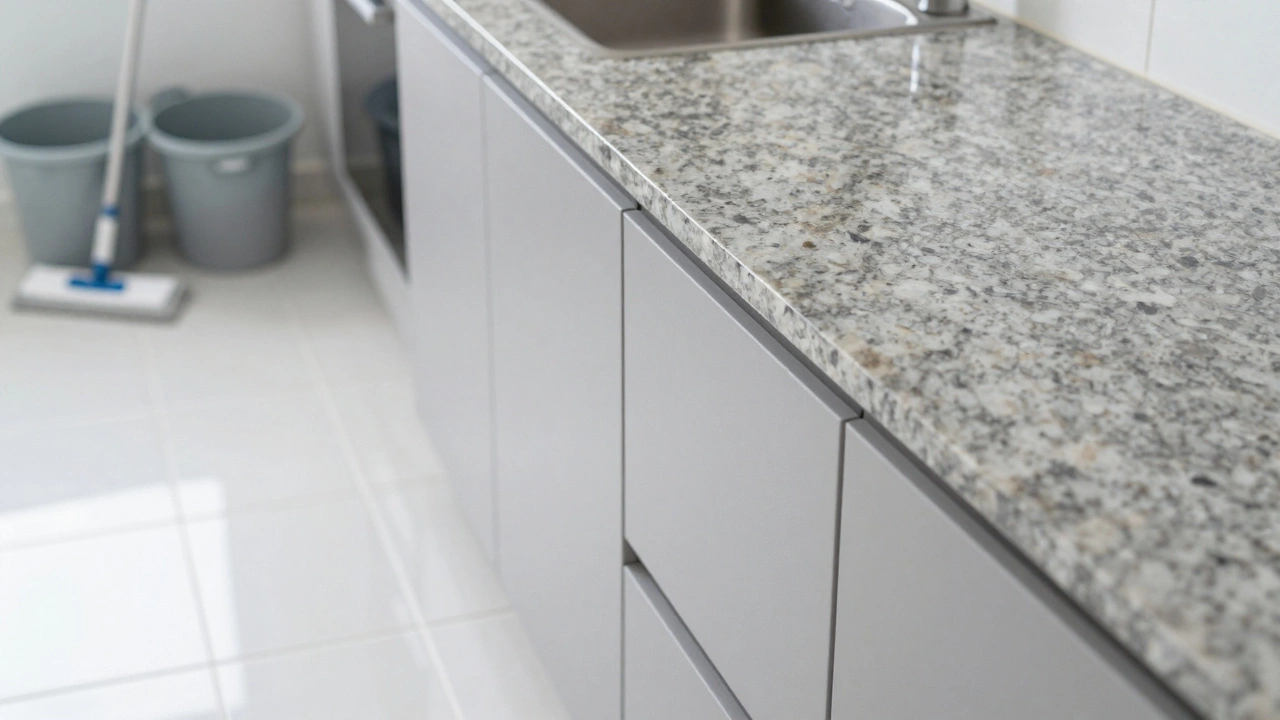
Now that everything above the floor is clean, you can address the counters. Use a cleaner appropriate for your material. Granite a coarse-grained igneous rock commonly used for luxury countertops and marble are sensitive to acids. Never use vinegar or lemon juice on them, as it will eat through the sealant and leave a dull, etched mark. Use a pH-neutral stone cleaner instead.
The floor is the last stop. Start by vacuuming or sweeping everything-including the edges and under the toe-kicks of the cabinets. Mop the floor using a two-bucket system: one for the cleaning solution and one for rinsing the dirty mop. If you have tile, focus on the grout lines. Use a stiff brush and a baking soda paste to scrub the grout, then rinse with water. This removes that "grey" look and brings back the original color of the tiles.
Deep cleaning is a massive project, but you can avoid doing it every year by implementing a few habits. The most effective rule is "clean as you go." While your pasta is boiling, wipe the counter. While the microwave is running, empty the dishwasher. If you spend just five minutes every night wiping down the high-touch surfaces, you prevent grease from polymerizing into that hard, sticky shell that requires heavy chemicals to remove.
That stickiness is oxidized cooking oil. The best way to remove it is with a concentrated dish soap and warm water solution. Apply the soap, let it sit for 10 minutes to break down the oils, and wipe with a microfiber cloth. For extreme cases, a specialized alkaline degreaser works best.
Only if you have laminate or sealed porcelain. Never use bleach or harsh acids on granite, marble, or quartz, as it can strip the sealant and damage the stone's natural structure. Always check the manufacturer's guidelines for your specific countertop material.
A full deep clean is usually recommended every 6 to 12 months. However, high-use areas like the range hood filter and the oven should be checked and cleaned every 3 months to prevent grease buildup and fire hazards.
Use a non-abrasive cream cleaner or a baking soda paste. Avoid steel wool or scrubbing pads that can scratch the glass. For burnt-on food, use a razor scraper held at a 45-degree angle while the surface is wet to gently lift the debris.
After scrubbing the interior with soap and water, place an open box of baking soda on a shelf. Baking soda is an amphoteric substance, meaning it can neutralize both acidic and basic odor molecules, effectively absorbing the smell rather than masking it.