How often should you really dust? Answer a few questions to get your science-based recommendation.
You’ve got the vacuum out, the cloths ready, and the all-purpose spray on standby. It’s spring cleaning season, and you’re determined to wipe away every speck of dust. But here’s the question no one asks: dusting-how often do you actually need to do it?
Most people think dust is a sign of laziness. That if you can see it, you’re failing. But dust isn’t just dirt. It’s skin cells, fabric fibers, pollen, pet dander, and tiny bits of outdoor pollution that drift in through open windows or cling to your shoes. And here’s the kicker: you don’t need to dust every week to keep your home healthy.
Dust accumulates slowly. In a typical UK home, visible dust settles over days, not hours. Studies from the University of Brighton’s Environmental Health Lab show that in homes with average ventilation and no pets, a light layer of dust appears on surfaces after about 7-10 days. That doesn’t mean you need to clean then. If you’re not allergic, and your home isn’t near a busy road or construction site, you can wait two weeks without any impact on air quality.
Think of it like laundry. You don’t wash your socks after every wear. Same with dusting. You don’t need to wipe down shelves, bookcases, and TV stands every Sunday just because it’s tradition.
Not everyone. If you have allergies, asthma, or a young child crawling on the floor, then yes-dusting every 5-7 days makes sense. Dust mites thrive in warm, humid environments, and their droppings are a major trigger for respiratory issues. The NHS estimates that over 10 million people in the UK have asthma, and dust is one of the top three triggers.
But if you’re healthy, live alone, and don’t have pets? You’re fine with biweekly dusting. A 2023 study from the University of Reading tracked 120 households over six months. Those who dusted every two weeks had the same air quality as those who did it weekly. The difference? Time saved-and less wear on your furniture from over-cleaning.
Dusting isn’t about making your house sparkle. It’s about removing allergens and reducing surface buildup that can get stirred up into the air. But here’s what most people get wrong: using a feather duster or dry cloth just moves dust around. It doesn’t capture it.
Microfiber cloths are the gold standard. They trap dust instead of spreading it. Pair that with a vacuum that has a HEPA filter, and you’re doing more than cleaning-you’re improving indoor air quality. A 2024 study in the Journal of Environmental Health found that households using microfiber cloths and HEPA vacuums saw a 40% drop in airborne particulates within four weeks, even with biweekly cleaning.
And don’t forget: dust on the floor isn’t the problem. It’s the dust that gets kicked up. That’s why vacuuming floors twice a week matters more than wiping the top of your fridge.
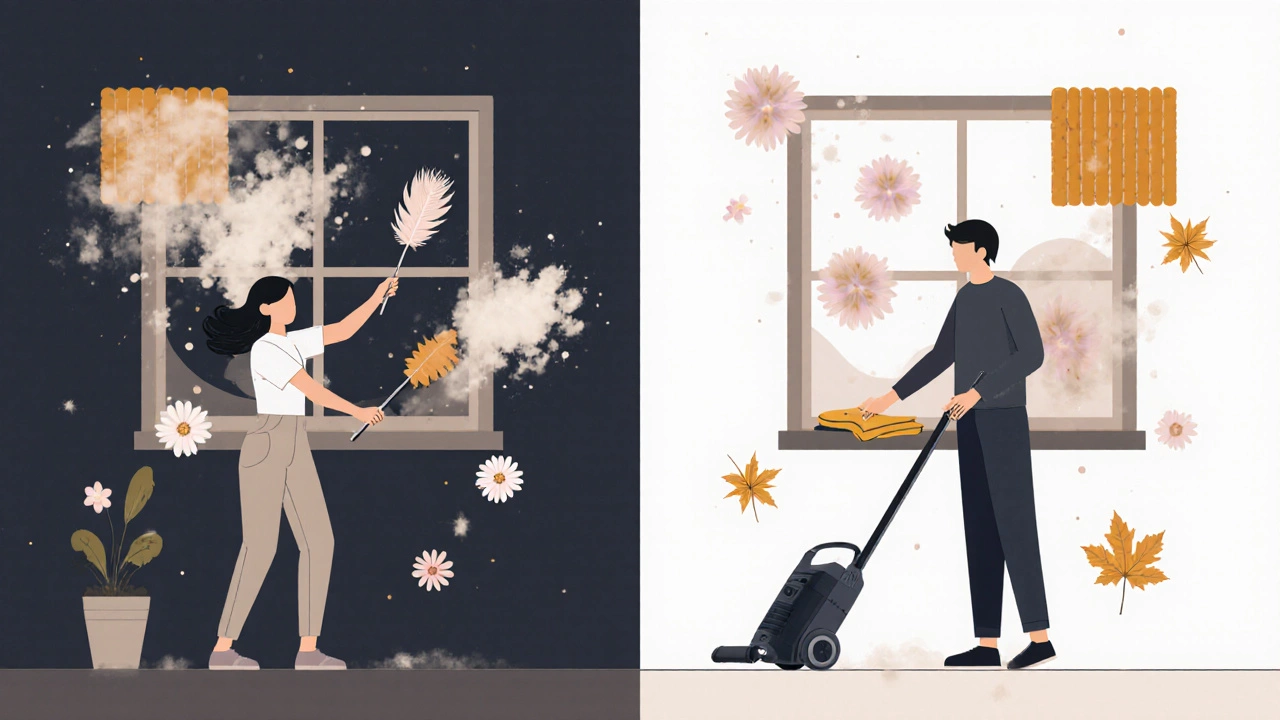
Not all surfaces need the same attention. Focus on the hotspots:
Do you need to dust the top of your fridge every week? Probably not. Do you need to clean the window sill after a windy day in Brighton? Absolutely.
Spring and autumn are peak dust seasons in the UK. Pollen counts spike. Rain washes grime from the air, then leaves a film on surfaces. That’s why spring cleaning feels necessary-it’s not tradition, it’s science.
In winter, central heating dries out the air, which increases static and makes dust cling to everything. In summer, open windows bring in more outdoor particles. So yes, you might need to dust a little more often during these times. But not because it’s ‘cleaning season.’ Because the environment changed.
This is the biggest lie we’ve been sold. A little dust isn’t a sign of neglect. It’s a sign of life. People live here. Clothes shed. Pets move. Doors open. Windows let in the breeze. That’s normal.
What’s not normal? Thick layers on electronics, dust balls under the sofa, or visible grime on kitchen counters. Those are signs you’ve let things slide too long. But a thin film on a shelf? That’s just the background noise of everyday living.
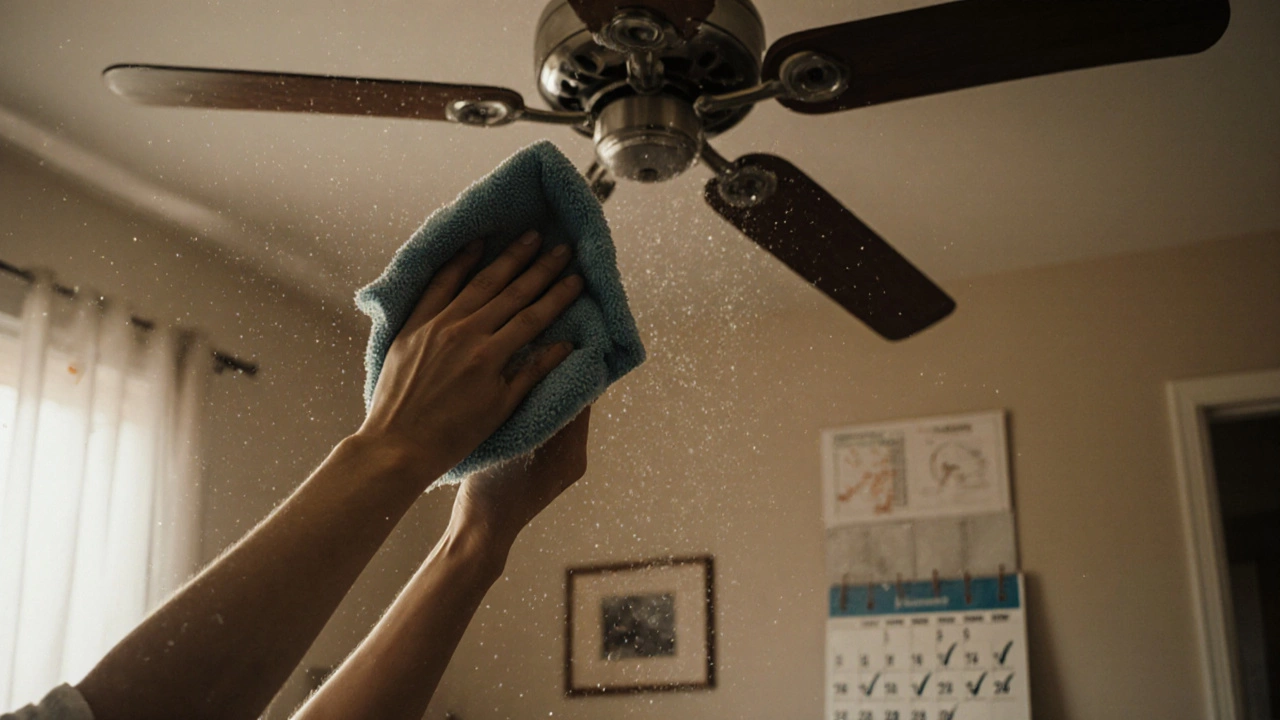
Here’s a simple plan that works for most households:
That’s it. No need to clean everything every weekend. No need to stress about a few stray particles. Your lungs will thank you. Your schedule will thank you.
If you’re overwhelmed, have mobility issues, or suffer from severe allergies, hiring a professional cleaner once a month makes sense. But don’t hire someone to dust your entire house weekly. That’s not cleaning-it’s an unnecessary expense. A good cleaner will focus on allergen hotspots, not polish every surface.
And if you’re doing it yourself, skip the aerosol sprays. They leave residue and can irritate lungs. Just water and a cloth. That’s all you need.
You don’t need to dust every week. You don’t need to make your home spotless for guests. You don’t need to feel guilty because a shelf has a thin layer of dust.
What you need is a system that keeps your home healthy without stealing your weekends. Dusting less often, but smarter, is the real win. It’s not about perfection. It’s about balance.
So next time you see dust, don’t grab the cloth. Take a breath. Ask yourself: is this really a problem-or just a sign I’m alive in this house?
Only if you have allergies, asthma, or a young child. For most healthy adults, dusting every two weeks is enough. The NHS and multiple environmental studies show that weekly dusting doesn’t improve air quality for non-allergic households.
A dry microfiber cloth is the most effective. It traps dust instead of spreading it. Avoid feather dusters-they just push dust around. For hard-to-reach spots, use a vacuum with a brush attachment.
Yes, but only if you do it right. Dust mites and their waste are the main allergens. Using a HEPA vacuum and microfiber cloths reduces airborne particles by up to 40%. Spraying cleaners or using dry cloths won’t help much.
Not as a ritual, but as a reset. Spring brings more pollen and open windows, which increases dust. It’s a good time to clean ceiling fans, wash curtains, and vacuum under furniture-things you might ignore during the year. But you don’t need to do it all in one weekend.
Vacuuming floors helps, but it doesn’t replace dusting. Dust settles on shelves, electronics, and window sills. Use a microfiber cloth for these surfaces. A HEPA vacuum is essential for pulling settled dust out of carpets and rugs.
Avoid them. Most sprays leave residue that attracts more dust. Water on a microfiber cloth is enough. If you need disinfecting, use a diluted vinegar solution sparingly and wipe dry.