How to Clean a Stinky Sofa - Fast DIY Upholstery Tips
Sofa Cleaning Solution Calculator
Your Sofa Information
Recommended Cleaning Solution
Select your sofa information to see your customized cleaning solution
Important: Always spot test first and avoid harsh chemicals on leather or delicate fabrics.
When a sofa starts smelling like a locker room, you can’t just ignore it - the whole room feels off. Below is a step‑by‑step plan that turns a foul‑smelling couch back into a fresh, inviting spot without calling in a pro.
Quick Takeaways
Vacuum first to lift loose debris.
Use baking soda as a natural deodorizer.
Choose a mild acidic cleaner (vinegar) or an enzyme‑based solution for deeper odor removal.
Test any liquid on an inconspicuous area before full application.
Allow the sofa to dry completely to prevent mildew.
Upholstery cleaning is the process of removing dirt, stains, and odors from fabric or leather furniture-a task that feels overwhelming only if you skip the basics. Let’s break it down into bite‑size actions you can do with household items.
Why Does a Sofa Smell Bad?
Spills, pet accidents, sweat, and everyday dust all settle into the fibers. Over time, bacteria and mold feed on that organic matter, releasing volatile compounds that you notice as a sour or musty odor. Even a clean‑looking couch can hide a microbial nest.
Gather Your Supplies
Before you start, pull together a small toolbox of cleaning allies. Each one gets a quick intro with microdata so you remember why it matters.
Baking soda is a natural deodorizer that neutralizes acidic odor molecules
White vinegar is a gentle acid that breaks down grime without damaging most fabrics
Enzyme cleaner is a bio‑active solution that digests protein‑based stains like urine or food residue (optional but great for pet owners)
Vacuum cleaner is a machine equipped with a hose and brush attachment to pull out dust and loose debris
Upholstery brush is a soft‑bristled tool for working cleaning solutions into fabric without tearing it
Steam cleaner is a device that emits hot vapor to lift dirt and kill microbes (you can rent one if you don’t own it)
Clean white towels or microfiber cloths
Two buckets - one for clean solution, one for rinse water
Step 0: Spot Test (Don’t Skip This)
Before you splash any liquid, dip a corner of a white cloth in your chosen cleaner, dab a hidden spot, and wait five minutes. If the fabric color stays the same and no stiffening occurs, you’re good to go. This quick check saves you from a disastrous color bleed.
Step 1: Vacuum the Surface
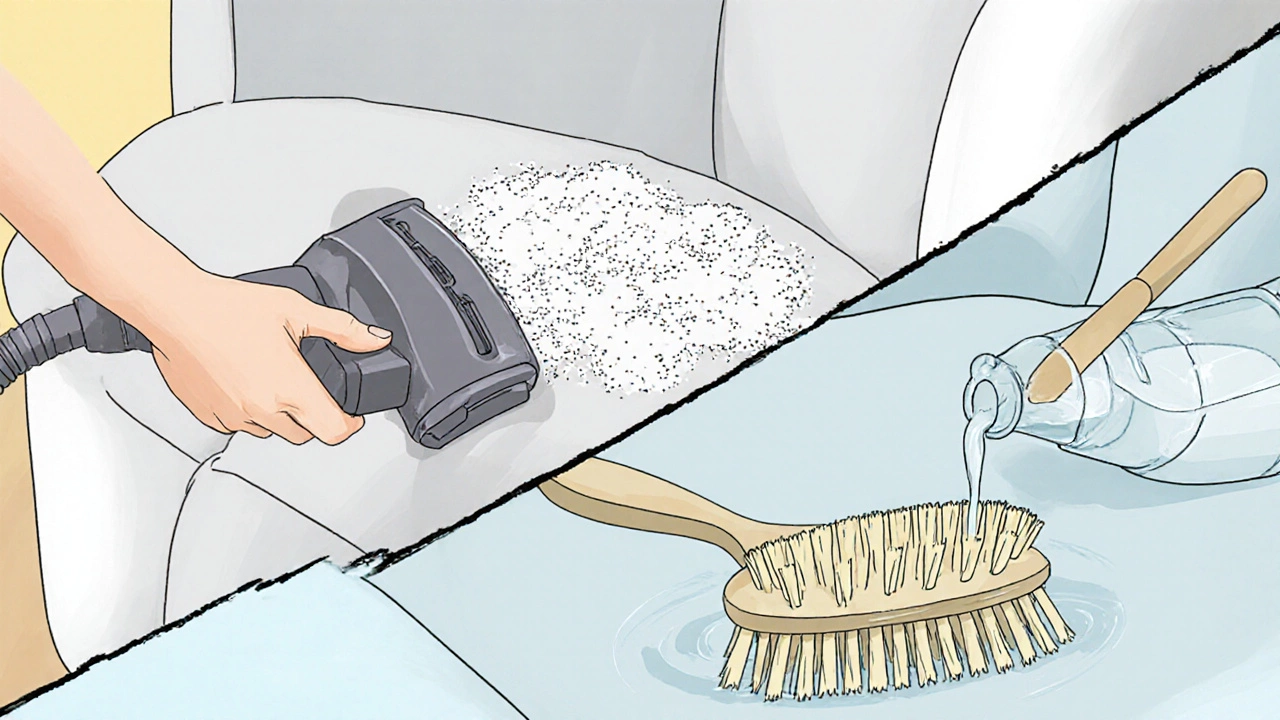
Attach the upholstery head to your vacuum cleaner.
Move slowly across the entire sofa, overlapping passes.
Pay extra attention to seams, crevices, and the cushion edges where dust loves to hide.
Vacuuming removes the loose particles that would otherwise get trapped under the cleaning solution, turning a stain‑removal job into a deep‑cleaning mission.
Step 2: Deodorize with Baking Soda
Sprinkle a generous, even layer of baking soda over the whole couch.
Let it sit for 15‑30 minutes. The powder will absorb moisture and neutralize odor molecules.
Vacuum again, using the upholstery head, to pull the powder out along with the captured smells.
If the stink persists after the first round, repeat the process. Baking soda is cheap, non‑toxic, and works wonders on both synthetic and natural fabrics.
Step 3: Apply the Cleaning Solution
You have two solid options depending on what’s causing the odor.
White vinegar mix: Mix one part vinegar with three parts warm water. Add a few drops of mild dish soap for extra lift.
Enzyme cleaner: Follow the label’s dilution ratio. Enzymes break down organic matter that vinegar can’t fully digest.
Dip your upholstery brush into the solution, shake off excess, and gently work it into the fabric. Work in small sections (about a foot square) to avoid oversaturating the couch.
Step 4: Light Scrub with the Upholstery Brush
Using circular motions, scrub each section for 30‑45 seconds.
Do not scrub hard enough to fray fibers; the goal is to push the cleaner into the weave.
If you notice stubborn spots, apply a few more drops of solution directly and repeat the gentle scrub.
Those microscopic motions lift trapped grime and let the cleaning agents reach the odor‑causing bacteria.
Step 5: Rinse or Extract Moisture
Two routes work well:
Steam cleaner: Run the steam head over the cleaned area. The hot vapor lifts any remaining solution and kills microbes on contact.
Manual rinse: Dampen a clean towel in plain water, wring it out, and blot the fabric to pull excess cleaner out. Follow with a dry towel to soak up remaining water.
The key is to avoid a soggy sofa - excess water can seed mold, which brings a new, worse smell.
Step 6: Dry Thoroughly
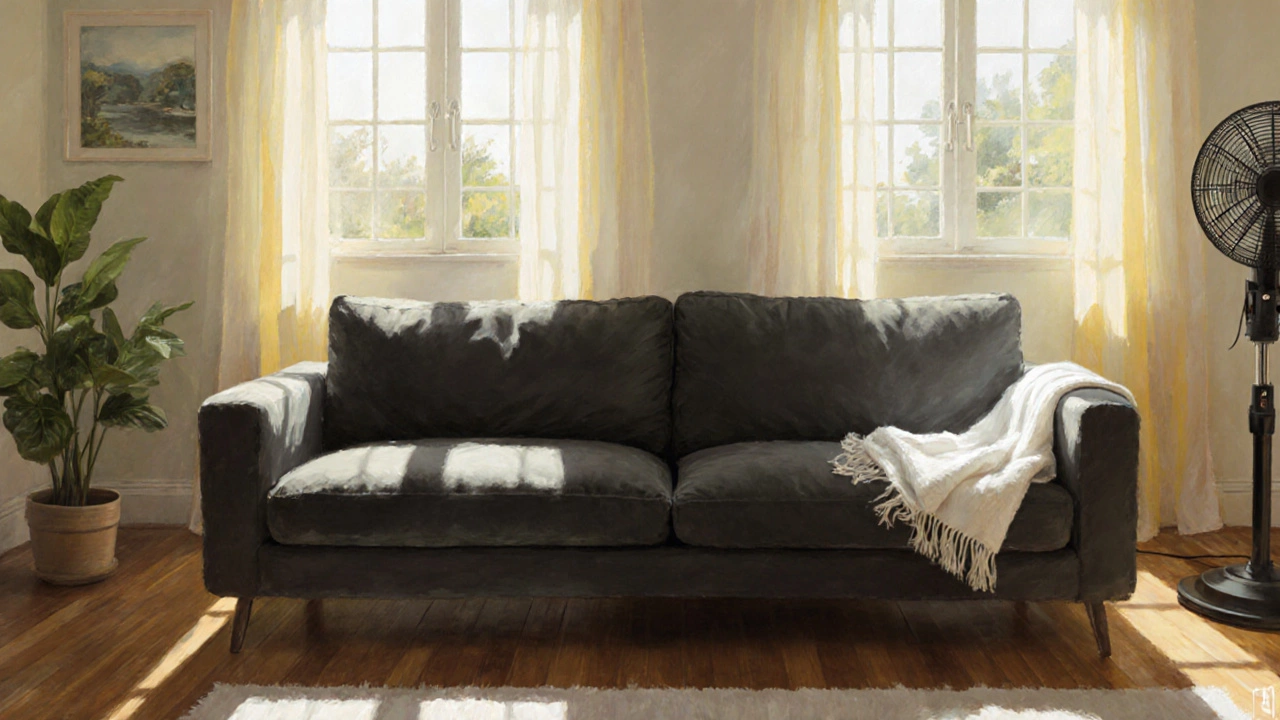
Open windows and set up a fan to circulate air across the couch.
If you have a dehumidifier, run it in the room for a few hours.
Leave the cushions upright; don’t flatten them, as airflow needs space.
Give the sofa at least four hours to dry, preferably overnight. Once dry, give it a final vacuum pass to lift any loosened fibers.
Pro Tips & Common Pitfalls
Don’t saturate. A little liquid goes a long way. Over‑wetting is the fastest way to create mildew.
Use a brush with soft bristles. Hard‑spiked brushes can rip the fabric and expose the stuffing.
Test for colorfastness. Spot‑testing saves you from an irreversible bleach‑like effect.
Rotate cushions regularly. Even wear helps prevent odor buildup in one spot.
Address pet accidents immediately. Enzyme cleaners work best when applied right after the accident, before the odor sets.
Troubleshooting
Odor still lingers after drying? Try a second round of baking soda, this time leaving it on overnight. If the smell is from a specific spill (e.g., coffee), treat that area with a targeted stain remover before repeating the whole process.
Stains remain visible? Lightly dampen a cloth with a mixture of hydrogen peroxide (3%) and a drop of dish soap, blot the spot, then rinse with water. Test first to avoid discoloration.
Fabric feels stiff? A light mist of distilled water followed by a brief vacuum can fluff the fibers back to normal.
Next Steps - Keep Your Sofa Fresh
Make a habit of vacuuming once a week and sprinkling baking soda every month. If pets share the couch, place washable throws that you can launder regularly. A quick 5‑minute wipe‑down with a vinegar‑water spray after each major spill will keep odors at bay.
Frequently Asked Questions
Can I use bleach on a stinky sofa?
Bleach is too harsh for most upholstery fabrics and can cause yellowing or weakening of fibers. Stick to milder options like vinegar, baking soda, or enzyme cleaners.
How often should I deep‑clean my sofa?
A full deep‑clean every six months works for most households. If you have pets or kids, aim for every three months.
Is steam cleaning safe for leather sofas?
Steam can dry out leather and cause cracks. Use a leather‑specific cleaner and a soft cloth instead of steam.
What’s the best way to remove pet urine odor?
First, blot up any liquid, then apply an enzyme cleaner specifically formulated for pet waste. Follow with a baking soda soak to neutralize any remaining smell.
Can I rent a steam cleaner from a hardware store?
Yes, most big‑box hardware shops offer steam cleaners for a day or weekend. It’s a cost‑effective way to give your sofa a professional‑grade clean.
With the right tools and a few simple steps, a foul‑smelling couch can become the centerpiece of a fresh living room again. Happy cleaning!