How to Clean Windows Cheaply: Simple Tools, No Store-Bought Cleaners
Window Cleaning Cost Calculator
Cost Comparison
Homemade Cleaner
Cost per clean:
$0.20
Total cost:
$0.20
Store-Bought Cleaner
Cost per clean:
$5.00
Total cost:
$5.00
Your Savings
Total:
$4.80
Per year:
$28.80
Using homemade cleaner saves you $4.80 per clean compared to store-bought solutions. That's 24 times cheaper!
Dirty windows don’t have to cost a fortune. You don’t need fancy sprays, squeegees, or professional services to get streak-free glass. Most people spend $50 or more on window cleaning products and tools they never use again. But the truth? You can clean every window in your house for under $5 using things you already own.
Why store-bought window cleaners are a waste of money
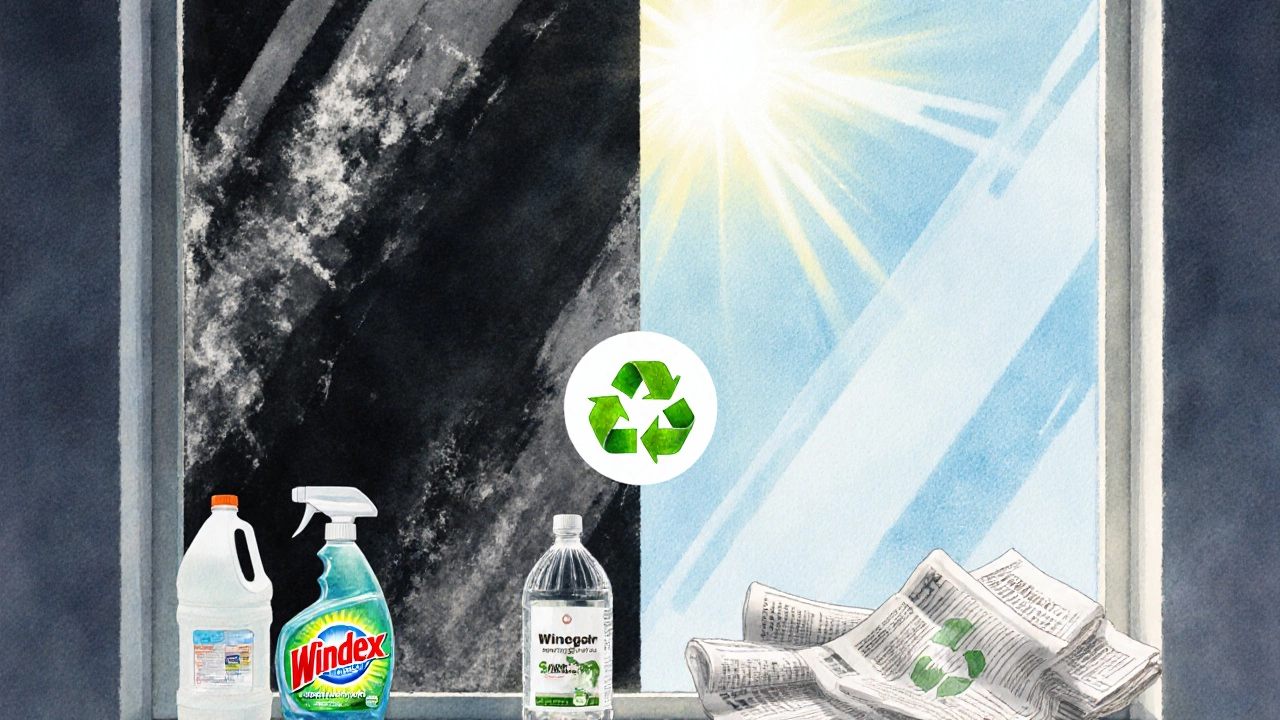
Most commercial window cleaners contain ammonia, alcohol, and synthetic fragrances. They work okay, but they’re overpriced and often leave behind a greasy film. A 32-ounce bottle of Windex costs $3-$5, but you can make the same cleaning power at home for less than 25 cents per batch. And it’s safer-no harsh fumes around kids or pets.
Plus, those plastic bottles add up. If you buy one every few months, you’re throwing away dozens of containers over time. Homemade cleaner? Pour it into a reused spray bottle. No waste. No guilt.
What you actually need (and what you don’t)
You don’t need a $40 professional squeegee. You don’t need microfiber cloths bought from a specialty store. Here’s the real list:
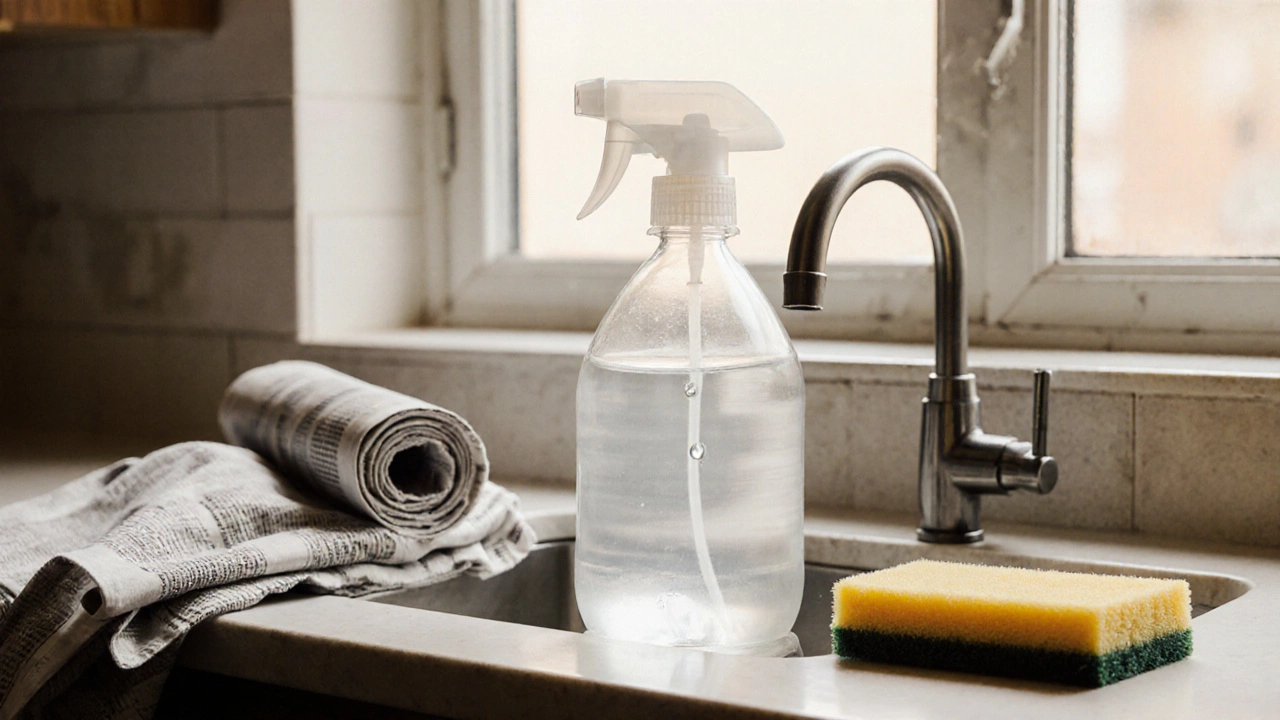
A clean spray bottle (reused from old cleaner or vinegar)
White vinegar
Water
One drop of dish soap (any brand)
A lint-free cloth or old newspaper
A sponge or soft brush (for dirty frames)
That’s it. No special tools. No fancy gadgets. If you’ve got a kitchen and a bathroom, you’ve got everything you need.
How to make the best homemade window cleaner
Mix these three simple ingredients in a spray bottle:
1 cup white vinegar
1 cup water
1 drop of dish soap (like Dawn or any generic brand)
Shake gently. Don’t over-shake-too much foam makes wiping harder. This mix cuts grease, dissolves dirt, and evaporates without streaks. Vinegar is acidic, so it breaks down mineral deposits and grime. Water dilutes it to a safe strength. The tiny bit of soap helps lift stubborn dirt without leaving residue.
Pro tip: Use distilled water if your tap water is hard. Hard water leaves white spots. Distilled water won’t. But if you’re in a hurry, tap water works fine-just dry the glass completely after cleaning.
How to clean windows without streaks
Streaks happen when you use the wrong cloth or dry too slowly. Here’s the method that works every time:
Start with a cool, cloudy day. Sun heats up the glass, making cleaner dry too fast and leave streaks.
Wipe the frame and sill first with a damp sponge. Dirt falls onto the glass while you clean.
Spray the glass lightly-not soaked. Too much liquid drips and pools.
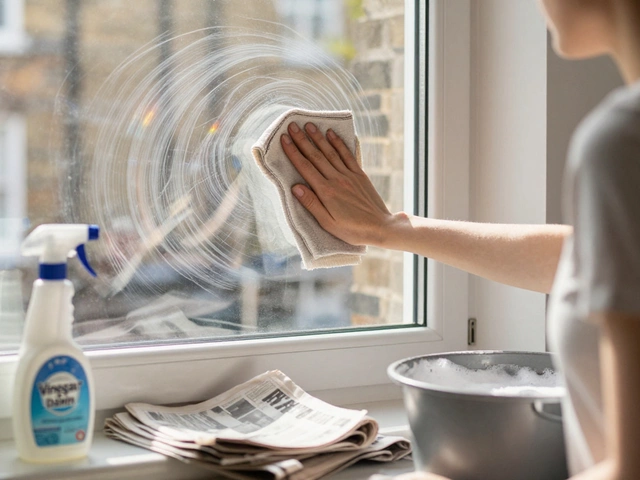
Wipe with a lint-free cloth. Old cotton T-shirts work great. Paper towels leave lint.
For the final pass, use crumpled newspaper. Yes, newspaper. The ink acts as a mild polish and absorbs moisture without leaving fibers.
Use a vertical motion on one side of the window, then horizontal on the other. This helps you spot missed streaks. If you see a smudge, go over it once with a dry part of the cloth.
What to do about really dirty windows
If your windows are caked with dust, pollen, or bird droppings, vinegar alone won’t cut it. Here’s how to handle heavy grime:
Pre-rinse with plain water from a hose or bucket. This loosens dirt before you apply cleaner.
Use a soft-bristled brush (like an old toothbrush) to scrub corners and frames.
Let the vinegar solution sit for 30 seconds on tough spots-don’t scrub immediately.
For grease or sticky residue (like from kids’ fingers or cooking fumes), add a second drop of dish soap.
Never use steel wool, razor blades, or abrasive pads. They scratch glass permanently. Even a tiny scratch catches light and looks worse than dirt.
How often should you clean windows?
There’s no rule. But here’s what works in real homes:
Exterior windows: Twice a year-spring and fall. Dust, pollen, and rain buildup fast.
Interior windows: Every 3-4 months. Especially in kitchens or near fireplaces.
High windows: Once a year. Use a long-handled squeegee or hire help if you’re uncomfortable.
If you live near the ocean, a sandy area, or a busy road, clean them more often. Salt and dust cling to glass and eat away at seals over time.
What not to do
Avoid these common mistakes:
Don’t clean on sunny days. Heat = streaks.
Don’t use paper towels. They shed fibers and leave lint.
Don’t mix vinegar with bleach. It creates toxic gas.
Don’t use vinegar on stone window sills (marble, granite). It etches the surface.
Don’t skip the frame. Dirty frames transfer grime back to glass.
Real cost comparison: Homemade vs. Store-Bought
Cost to clean 10 average-sized windows
Method
Cost
Time
Streak-Free?
Homemade vinegar solution
$0.20
45 minutes
Yes
Store-bought spray (Windex)
$5.00
45 minutes
Sometimes
Professional service
$150-$300
2 hours
Usually
That’s 25 times cheaper than buying cleaner. And 750 times cheaper than hiring someone. You’re not just saving money-you’re saving the planet from plastic waste and chemical runoff.
What about rain and hard water spots?
Rain leaves mineral deposits. If you see white rings or cloudy patches, soak a cloth in undiluted vinegar and lay it on the spot for 10 minutes. Then wipe clean. The acid dissolves the calcium. No scrubbing needed.
For persistent spots, try rubbing with a cut lemon. The citric acid works like vinegar but smells better. Rinse afterward.
Why newspaper works better than cloth
Newspaper isn’t magic. It’s just dense, lint-free, and slightly absorbent. The ink contains carbon, which helps polish glass without scratching. It’s also cheap-free if you get the paper delivered. Even old flyers or junk mail work if they’re not glossy.
Modern recycled paper? Skip it. It’s too soft and leaves fibers. Stick to black-and-white newsprint. Avoid color pages-they can smudge.
Final tip: Keep your tools clean
Wash your cloths after each use. Dirty rags transfer dirt back onto glass. Rinse them in warm water with a splash of vinegar. Hang them to dry. Don’t use fabric softener-it leaves a residue that causes streaks.
Reuse your spray bottle. Rinse it out with hot water after each use. If it gets clogged, soak the nozzle in vinegar for 10 minutes.
Can I use rubbing alcohol instead of vinegar?
Yes, but vinegar is better for most homes. Rubbing alcohol dries faster and can be good for very greasy windows, like above a stove. But it evaporates so quickly that it can leave streaks if you don’t wipe fast enough. Vinegar gives you more time to work and doesn’t smell as strong after drying.
Is it safe to clean windows with kids or pets around?
Absolutely. Vinegar and water are non-toxic. Dish soap in tiny amounts is safe too. Commercial cleaners often contain ammonia or formaldehyde, which can irritate lungs or eyes. Homemade cleaner won’t hurt your dog if they sniff it or your toddler if they touch the sill.
What if my windows have tint or film?
Avoid vinegar on tinted windows. The acid can damage the film over time. Use distilled water with a drop of dish soap instead. Test on a small corner first. Never use ammonia-based cleaners-they can bubble or peel the tint.
Can I clean windows in winter?
Yes, but only if the temperature is above freezing. Cold weather causes water to freeze on glass, making streaks worse. If it’s below 32°F (0°C), wait for a warmer day. If you must clean, do it midday and dry immediately with a towel.
Do I need a squeegee?
Not for small windows. A cloth or newspaper works fine. For large windows, like picture windows or sliding doors, a squeegee helps speed things up. You can buy a basic one for $8 at a hardware store. But if you don’t have one, don’t buy one just for this. Use what you have.
Next steps
Start with one window. Try the vinegar mix. Use newspaper. See how it looks. If you’re happy, clean the rest. You’ll save money, reduce waste, and feel good knowing you didn’t buy another plastic bottle of chemicals.
Window cleaning isn’t a chore-it’s a small act of care for your home. And when sunlight pours through clean glass, you’ll see why it’s worth the 45 minutes.