Urine Stain Removal Time Calculator
Estimated Time Required
Total:
00:00
Step-by-Step Breakdown
1. Blotting
5-15 min
2. Cleaning Solution
10-20 min
3. Baking Soda Drying
8-12 hours
4. Vacuuming
5-10 min
5. Hydrogen Peroxide Treatment
20-30 min
Important: This estimate assumes you follow all steps correctly. For old stains or leather, drying time may be longer. Always test solutions in hidden areas first.
Nothing ruins a cozy living room faster than the sharp, sour smell of pee soaking into your couch. Whether it’s a puppy accident, a toddler’s misstep, or an older family member’s slip-up, the odor doesn’t just sit on the surface-it digs deep into the foam, fabric, and frame. And once it sets in, regular vacuuming or air freshener won’t touch it. The smell lingers, gets worse in heat, and turns your favorite seat into a no-go zone. But you can fix this. Not with gimmicks, not with expensive sprays, but with simple, proven steps that actually work.
Why pee smell sticks so badly
Urine isn’t just water and salt. It contains urea, uric acid, and bacteria. When it hits fabric, the urea breaks down into ammonia, which is what you’re smelling. But the real problem? Uric acid crystals. These crystals form as the liquid dries and cling to fibers like glue. They don’t dissolve in water. They don’t wash out with soap. And they wake up again when humidity rises or the sun hits the couch-releasing that stale, pungent odor all over again. That’s why wiping the surface or using a generic cleaner often makes things worse: you’re just spreading the problem around.
What you’ll need
You don’t need a fancy kit. Just grab these basics from your kitchen or local supermarket:
- White vinegar
- Baking soda
- Hydrogen peroxide (3%)
- Liquid dish soap (unscented)
- Measuring cup
- Clean cloths or paper towels
- Soft-bristle brush or old toothbrush
- Fan or dehumidifier (optional but helpful)
Don’t use bleach, ammonia-based cleaners, or steam cleaners. Bleach reacts with urine and makes the smell stronger. Steam can push the urine deeper into the padding. And ammonia? It smells like urine to dogs and cats-and they’ll just go again.
Step 1: Blot up fresh urine
If the accident just happened, act fast. Grab as many dry paper towels or clean cloths as you can. Press down firmly-not rub-on the wet spot. Keep replacing towels until no more liquid soaks through. You’re not trying to clean yet; you’re removing as much liquid as possible before it sinks deeper. The faster you do this, the less damage you’ll have to fix later.
Step 2: Mix a cleaning solution
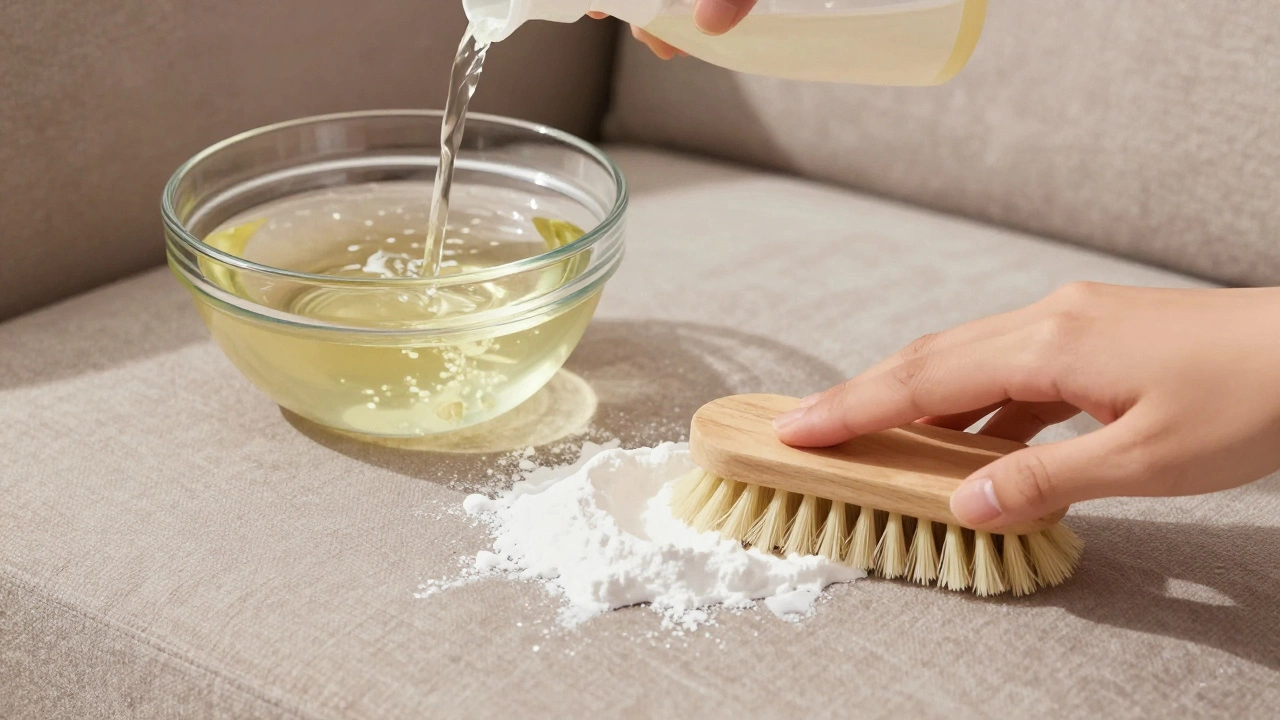
In a bowl, combine:
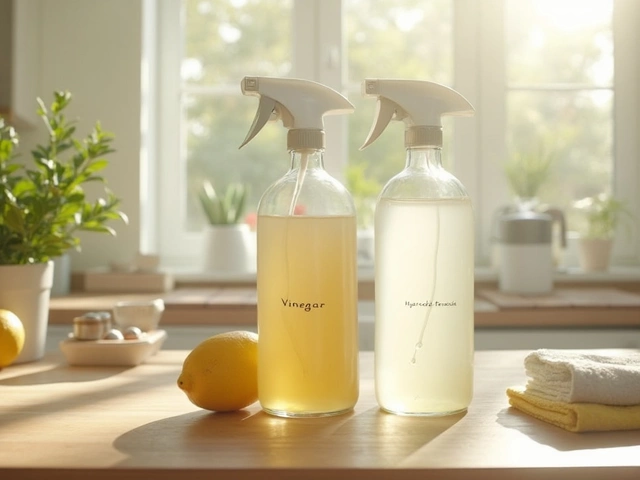
- 1 cup of white vinegar
- 1 cup of water
- 1 tablespoon of liquid dish soap
Vinegar neutralizes ammonia. Dish soap lifts grease and grime. Water dilutes it to a safe strength for fabric. Stir gently. Don’t make it too soapy-you don’t want residue left behind.
Step 3: Apply the solution
Pour the mixture lightly over the stained area. Don’t soak it. You want it damp, not dripping. Let it sit for 5 to 10 minutes. During this time, the vinegar starts breaking down the uric acid crystals. Use a soft brush to gently scrub the surface. Work from the outside of the stain toward the center. This pushes the mess outward instead of deeper into the cushion.
Step 4: Blot again
After the solution has sat, use fresh paper towels or cloths to blot the area. Press down hard. Change towels often. Keep going until the cloth comes up mostly clean. You’ll see a color change-yellow or brown streaks fading. That’s the urine being lifted.
Step 5: Sprinkle baking soda
Now, cover the entire damp area with a thick layer of baking soda. This isn’t just for odor-it absorbs moisture and traps lingering odor molecules. Use at least a quarter-inch thick layer. Let it sit for at least 8 hours, or overnight if you can. Baking soda works best when it has time to dry completely.
Step 6: Vacuum thoroughly
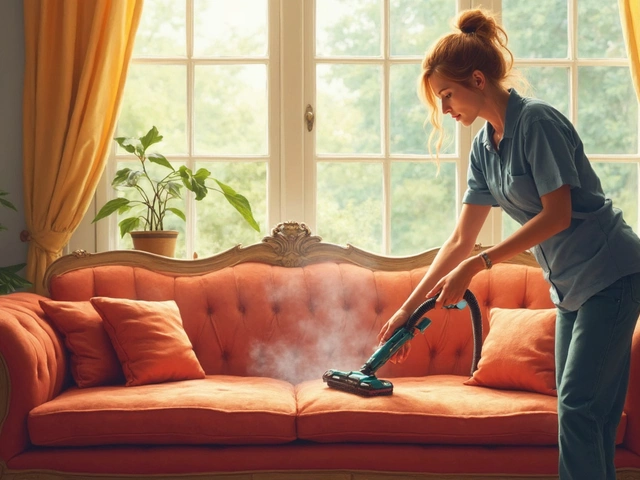
Once the baking soda is dry, vacuum it up. Use the upholstery attachment on your vacuum. Go over the spot several times. You’ll see the powder lifting off in clouds. Keep going until the area looks clean and feels dry to the touch.
Step 7: For stubborn odors, use hydrogen peroxide
If the smell still lingers after baking soda, you need something stronger. Mix:
- 1 cup of 3% hydrogen peroxide
- 1 tablespoon of dish soap
- 2 tablespoons of baking soda
Stir until the baking soda dissolves. Test this on a hidden part of your couch first-like under a cushion. Some fabrics, especially dark ones, can lighten slightly. If it’s safe, pour the solution lightly over the spot. Don’t flood it. Let it bubble for 10 minutes. Then blot with clean towels. Let it air dry completely before sitting on it.
What not to do
Avoid these common mistakes:
- Don’t use steam cleaners-they force urine deeper into the foam.
- Don’t use ammonia or bleach-they react with urine and create toxic fumes.
- Don’t spray air fresheners-they mask the smell, not remove it.
- Don’t wait. The longer you wait, the more the uric acid crystals harden.
Preventing future accidents
Once the smell is gone, protect your couch. Spray the area lightly with a pet-safe enzymatic cleaner every few weeks. These contain live bacteria that eat up leftover uric acid before it can re-activate. Keep a towel nearby for quick cleanups. If you have pets, make sure they have easy access to their litter box or outdoor area. For kids or elderly family members, consider a washable slipcover or waterproof cushion liner.
When to call a pro
If you’ve tried all this and the smell still comes back after a week, the urine may have soaked into the couch frame or foam padding. That’s when professional upholstery cleaning becomes necessary. Look for a service that uses
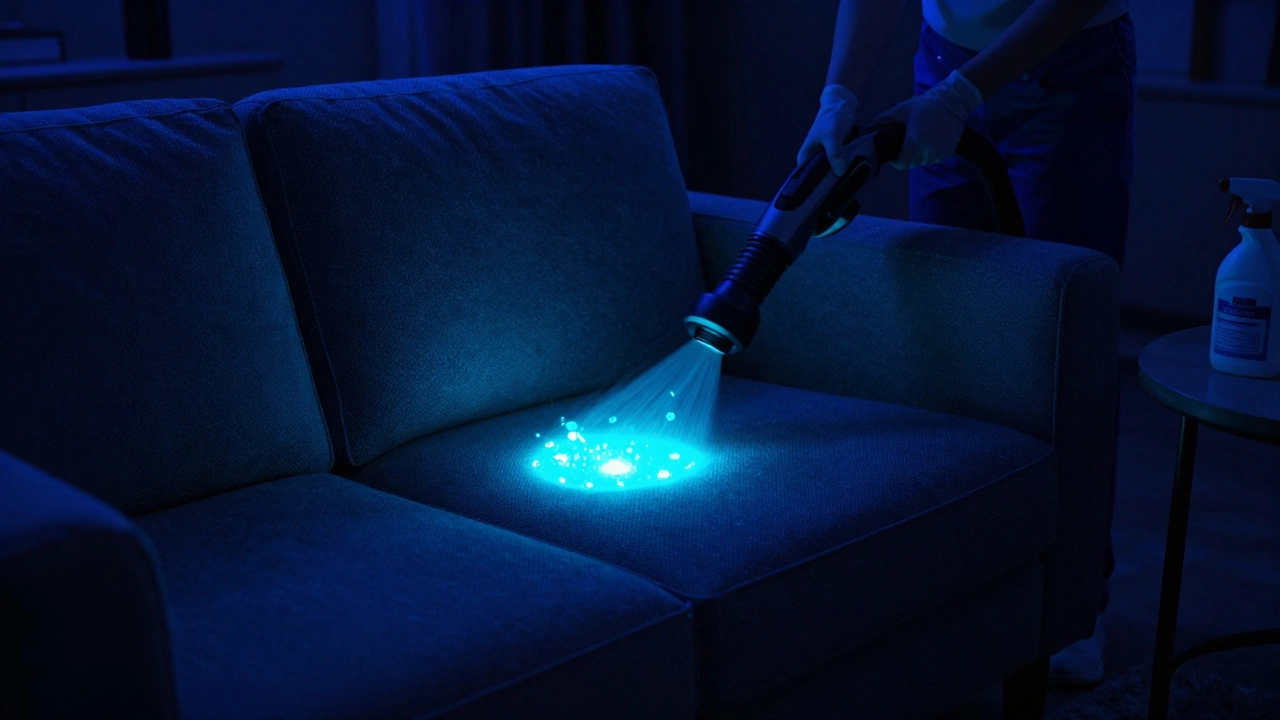
enzymatic cleaning and has experience with pet urine. Ask if they use a moisture extraction system-not just surface spraying. A good pro will use a black light to find hidden stains and treat them at the source.
Most upholstery cleaners charge between £80 and £150 for a standard sofa, depending on size and fabric. It’s expensive, but cheaper than replacing the whole couch.
Real results, real time
A friend in Brighton had a golden retriever who had accidents on her cream linen sofa. She tried everything-commercial sprays, baking soda, even calling a cleaner who just sprayed perfume. Nothing worked. She followed these steps: vinegar solution, overnight baking soda, then hydrogen peroxide on the worst spot. After 48 hours, the smell was gone. She didn’t replace the sofa. She didn’t buy a new one. She just cleaned it right.
It takes patience. It takes a few hours. But you don’t need to throw out your couch. You just need to treat it like the problem it is-not a stain, but a chemical reaction. And with the right tools, you can win.