Calculate how much of each cleaning ingredient you need to safely remove yellow stains from your mattress without damaging the fabric.
Important: Do NOT apply more than 10-15 mL of liquid per square foot to avoid moisture damage. Always vacuum before cleaning and ensure complete drying (6-8 hours). Never use bleach or steam cleaners.
Nothing kills the vibe of a fresh bedroom like a yellowed, stained mattress. You’ve washed the sheets, fluffed the pillows, even aired out the room-but that mattress still looks like it’s seen too many late-night snacks, spilled coffee, and sweaty nights. If your once-white mattress has turned a dull beige or worse, don’t toss it. You can bring it back. Not with magic, but with common household stuff you already own.
Before you scrub, understand what’s happening. Mattress fabric isn’t designed to be spotless forever. Sweat, body oils, dead skin cells, and even humidity seep into the fabric over time. These build up into yellowish stains that look like dirt but are actually organic residue. Urine, spilled drinks, and lotions make it worse. The foam underneath can also yellow from age and UV exposure, especially if the mattress sits near a window. It’s not dirt you can just wipe off-it’s embedded.
Trying to bleach it? Don’t. Bleach breaks down the fabric fibers and can make the stain worse by reacting with the oils and turning them orange. Same goes for strong commercial cleaners-they might kill germs but leave residue that attracts more dust and smells.
You don’t need a professional cleaning kit. Here’s what works:
Stick to white vinegar and hydrogen peroxide-they’re mild but effective. Baking soda lifts odors and absorbs moisture. Dish soap cuts grease without damaging fabric. No fancy chemicals. No expensive sprays.
Do this in a well-ventilated room. Open windows. If you can, move the mattress outside for a few hours after cleaning-sunlight helps naturally disinfect and dry.
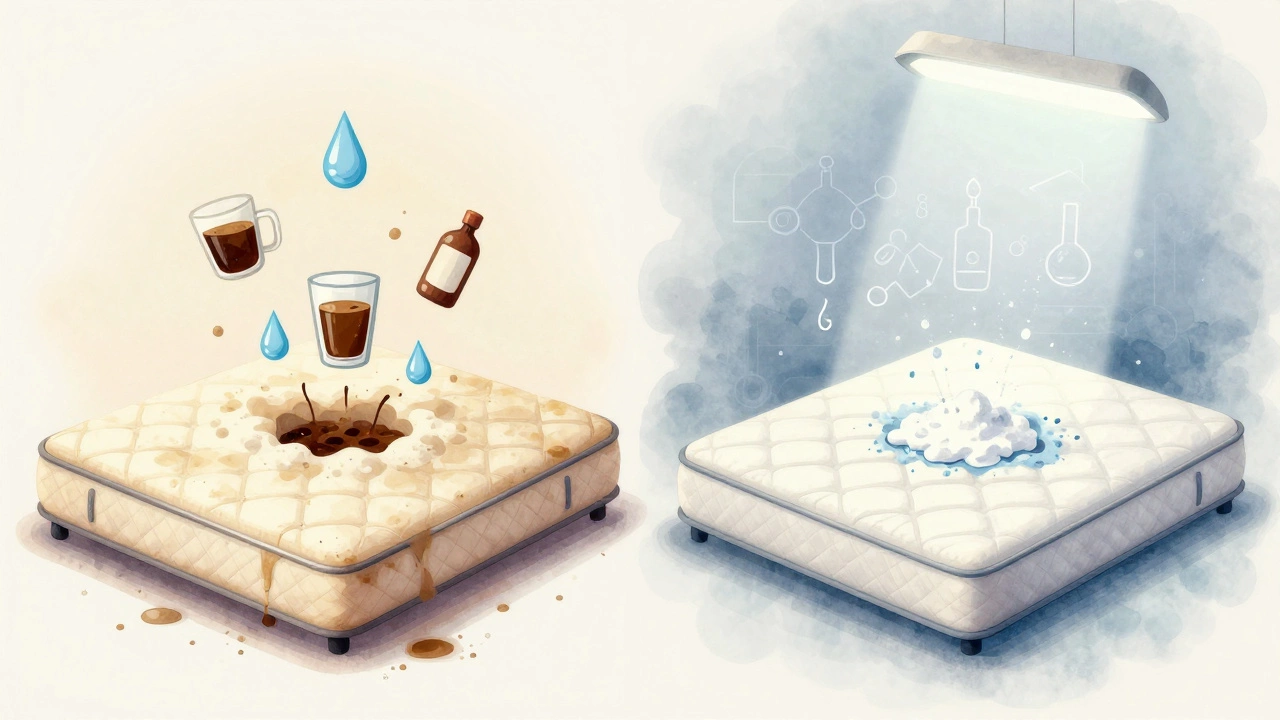
People try all sorts of fixes. Most backfire.
Stick to the vinegar-peroxide-baking soda combo. It’s been used by mattress cleaners in the UK for over a decade. It’s safe, cheap, and actually works.
Don’t wait until it looks awful. Clean it every 3-6 months. If you sweat a lot, have pets, or kids who jump on the bed, do it every 2-3 months. Vacuuming weekly helps a lot. Just a quick pass with the upholstery tool removes skin flakes before they turn into stains.
Use a good mattress protector. Not the thin plastic kind-get a breathable, washable one made of cotton or bamboo. It catches sweat and spills before they reach the mattress. Wash it every two weeks.
Even with perfect cleaning, mattresses wear out. If yours is over 7-8 years old, sagging in the middle, or smells musty even after cleaning, it’s time to replace it. No amount of baking soda fixes broken springs or compressed foam.
Signs it’s done:
When you buy a new one, pick a white or light-colored mattress with a removable, washable cover. It makes future cleaning easier.
A friend of mine in Brighton had a 10-year-old mattress that looked like a coffee-stained map. She tried everything-cleaners, steam, even a hired service (cost £120, barely helped). Then she did this vinegar-peroxide-baking soda method. Two sessions. Two days. The yellow patches faded by 70%. Not brand-new, but close enough to sleep on without feeling gross. She kept it another two years before upgrading.
You don’t need to spend money or time on fancy gadgets. The simplest things work best. Your mattress doesn’t need a spa day. It needs a good scrub, proper drying, and a little patience.
Once you’ve got it white again, keep it that way:
These habits add up. You’ll rarely need a deep clean again.
No. Bleach damages mattress fabric and can react with body oils to turn stains orange. It also weakens the foam and stitching over time. Stick to hydrogen peroxide-it’s a gentler oxidizer that lifts stains without destroying the material.
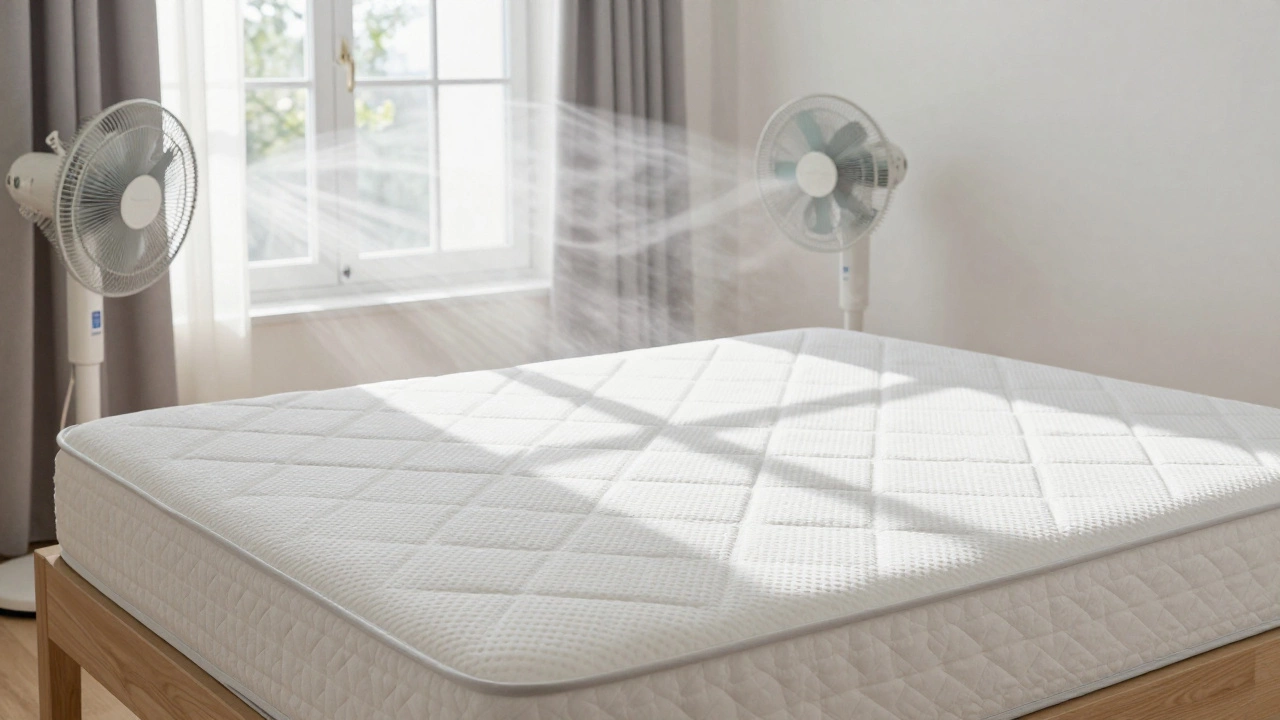
At least 6-8 hours, but 12 hours is better. Use fans, open windows, or a dehumidifier. If you’re in a humid climate like Brighton, drying can take longer. Never put sheets back on until the mattress is completely dry-moisture trapped inside causes mold and smells.
If it still smells musty or sour, the odor is likely trapped in the foam layers, not just the surface. Sprinkle baking soda over the whole mattress, let it sit for 2-4 hours, then vacuum it up. Repeat if needed. If the smell persists after two treatments, the mattress may be too old or damaged to save.
Yes, but be extra careful with moisture. Memory foam absorbs water slowly and dries slowly. Use less liquid-dab, don’t soak. Stick to the paste method and avoid spraying vinegar directly. Always dry with fans, never in direct sunlight, as UV can break down the foam over time.
For light stains and odors, no. DIY works just as well and costs under £5 in supplies. For deep-seated stains from urine or mold, or if you have allergies, a professional service using hospital-grade UV and steam-free systems can help. But make sure they don’t use water-based steam cleaners-those can ruin your mattress. Look for companies that use dry extraction or ozone treatment.
Start today. Vacuum the mattress. Make the paste. Treat the worst stains. Let it dry. You’ll be surprised how much difference it makes. A clean mattress doesn’t just look better-it sleeps better. Less allergens, less odor, less stress. And if you do this every few months, you’ll never have to face a completely yellowed mattress again.