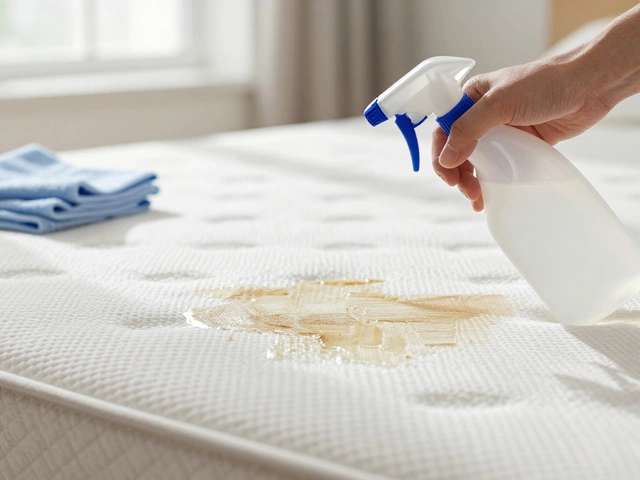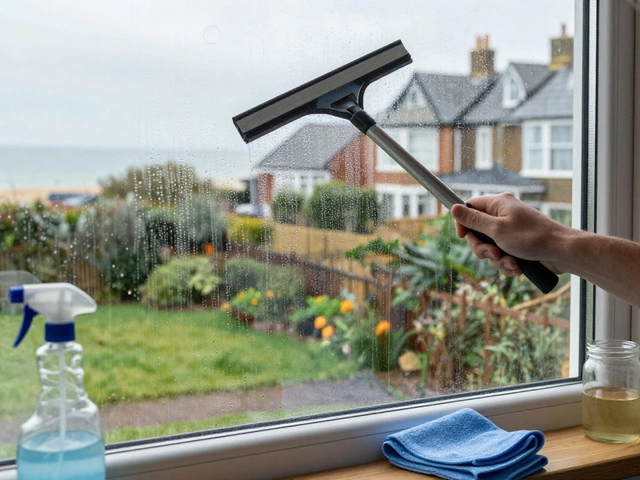
Try our easy recipe: Mix equal parts white vinegar and water. Use hydrogen peroxide separately for bathrooms.
When you spray Lysol on your kitchen counter, you’re not just killing germs-you’re also releasing chemicals into your home and the environment. But is it really eco-friendly? The short answer: Lysol isn’t designed to be. While it’s effective at killing bacteria and viruses, its environmental footprint is heavy, and many of its ingredients are harmful to aquatic life, soil health, and even indoor air quality.
Lysol products vary by type-sprays, wipes, disinfecting concentrates-but most rely on a few key ingredients: alkyl dimethyl benzyl ammonium chlorides (quaternary ammonium compounds or "quats"), ethanol, and hydrogen peroxide. Quats are the most common disinfecting agents in household cleaners. They’re cheap, powerful, and long-lasting. But they’re also persistent in the environment.
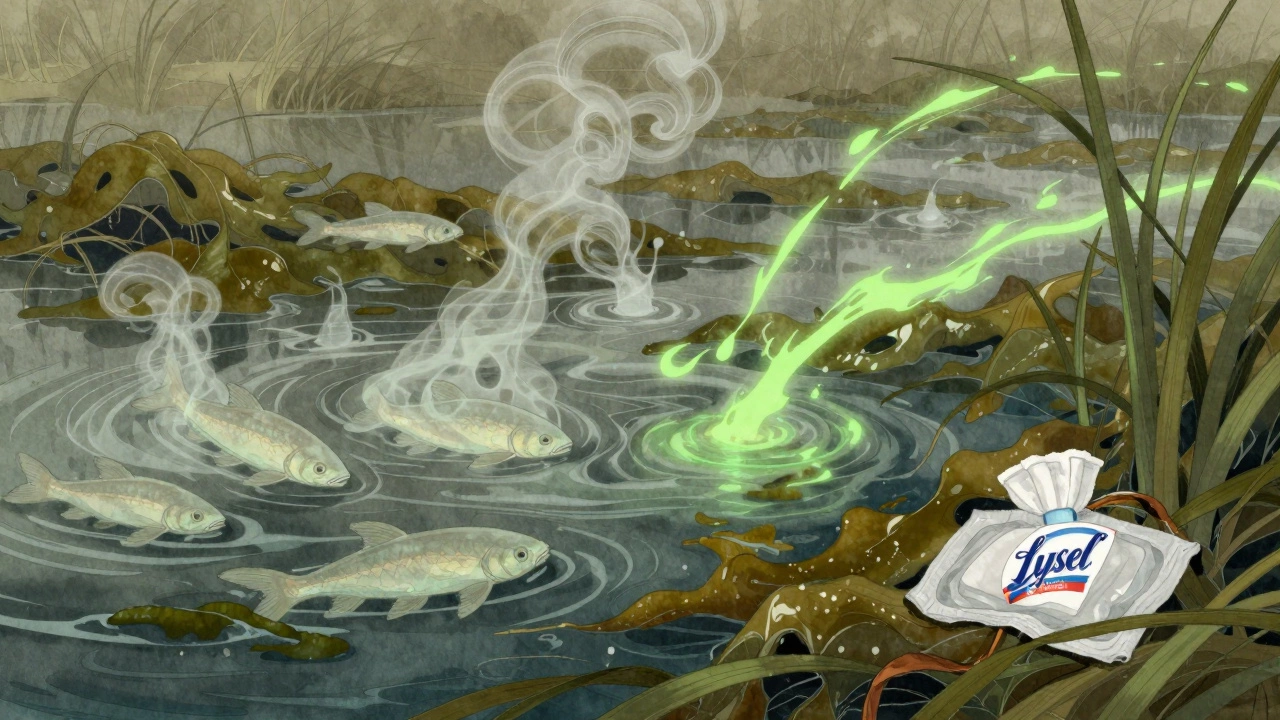
When you rinse a Lysol-sprayed surface or wash rags used with Lysol, those chemicals go down the drain. From there, they enter wastewater systems. Most sewage plants can’t fully break down quats. They end up in rivers, lakes, and oceans. A 2023 study by the European Environment Agency found that quats were detected in over 70% of tested freshwater samples across 12 countries, with concentrations high enough to harm algae and small aquatic organisms.
Hydrogen peroxide is less concerning-it breaks down into water and oxygen. But ethanol? It’s volatile. When you spray it, a good chunk evaporates into your home’s air. That’s not just a smell-it’s a respiratory irritant. People with asthma or chemical sensitivities often report worsened symptoms after using Lysol regularly.
Lysol’s packaging is mostly single-use plastic. The spray bottles? Not recyclable in most curbside programs because they contain mixed plastics and residual chemicals. Even the wipes-marketed as "flushable"-are a major contributor to sewer blockages. In 2025, the UK’s Water UK reported that wipes (including disinfectant ones) were responsible for 40% of all sewer blockages in England and Wales.
Unlike brands like Seventh Generation or Ecover, Lysol doesn’t offer refillable containers or concentrated formulas that reduce plastic use. Their business model depends on constant repurchasing. That means more plastic production, more shipping emissions, and more landfill waste.
Some Lysol products claim to be "biodegradable," but that’s misleading. Under EPA guidelines, a product can be labeled biodegradable if 60% of its organic content breaks down within 28 days under lab conditions. Real-world conditions? Different. In cold, low-oxygen wastewater systems, quats take months or even years to degrade. And even then, they don’t vanish-they turn into toxic byproducts.
Compare that to vinegar-based cleaners or hydrogen peroxide solutions (99% of which break down within hours). Those leave no trace. Lysol leaves a trail.
Lysol markets itself as a hospital-grade disinfectant. But for most households, that’s overkill. The CDC says daily cleaning with soap and water is enough to remove germs from most surfaces. You don’t need to kill every last microbe. In fact, over-disinfecting can harm your home’s microbiome-just like antibiotics can harm your gut.
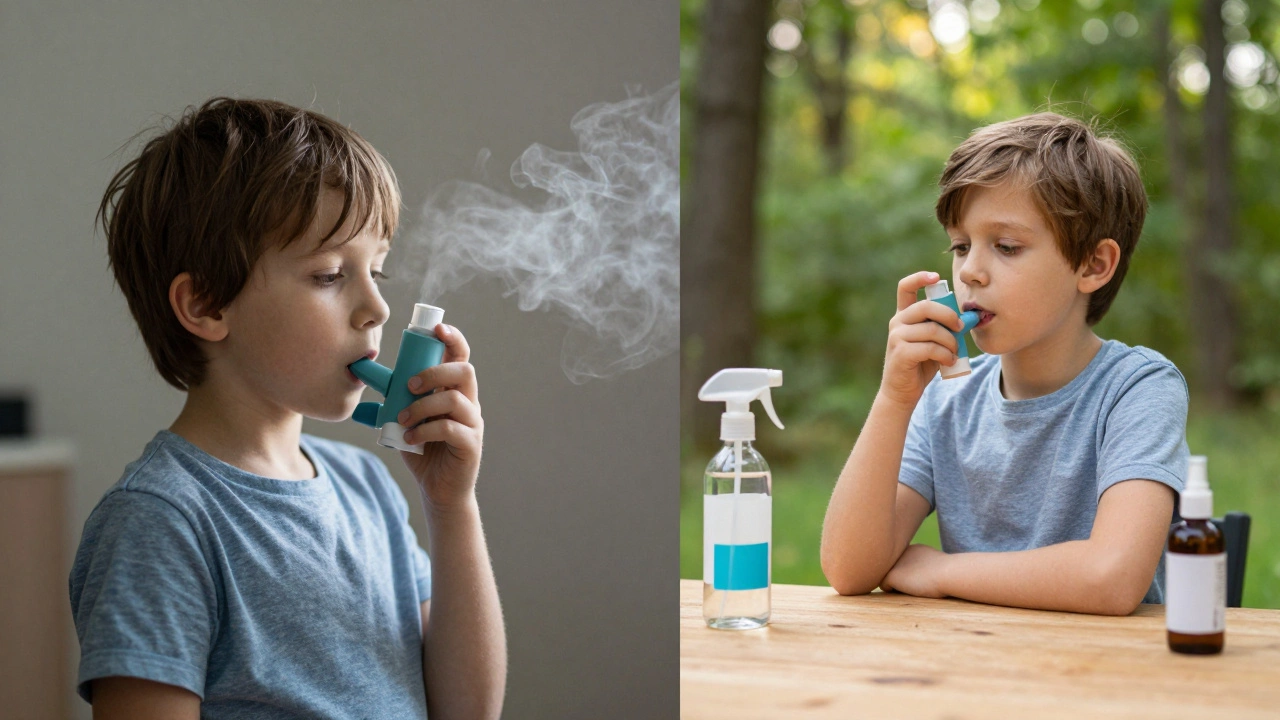
Using Lysol every day doesn’t make your home safer. It just increases your chemical exposure. Studies from the University of California, Berkeley show that children in homes that use disinfectants daily have higher rates of asthma and allergies by age five.
You don’t need Lysol to keep your home clean. Here are three simple, effective, and eco-friendly options:
Combine vinegar and hydrogen peroxide (use separately, never mix) for a powerful, non-toxic disinfecting routine. Add a few drops of tea tree oil for extra antimicrobial power. These cost less than Lysol, last longer, and don’t poison waterways.
Marketing. Lysol spent over $120 million on advertising in 2024 alone. Their ads show clean homes, smiling families, and "99.9% germ kill" claims. But they don’t show the polluted streams, the plastic choking rivers, or the children with new allergies.
People buy Lysol because they believe it’s necessary. But the science says otherwise. In countries like Sweden and Germany, where stricter environmental regulations exist, Lysol’s main disinfectants are banned from public spaces. In the UK, the Environment Agency has flagged quats as "emerging pollutants of concern."
If you’ve been using Lysol because you think it’s the best option, you’re not alone. But you have better choices. Start by switching one product: replace your Lysol spray with a vinegar-hydrogen peroxide mix. Use microfiber cloths instead of wipes. Buy in bulk. Support brands that use refillable containers and plant-based ingredients.
Your health-and the planet’s-will thank you.