How Much PSI Do You Really Need for a Driveway?
Learn the right PSI for cleaning your driveway safely-whether it's concrete or asphalt. Avoid damage and get better results with the correct pressure, nozzle, and technique.
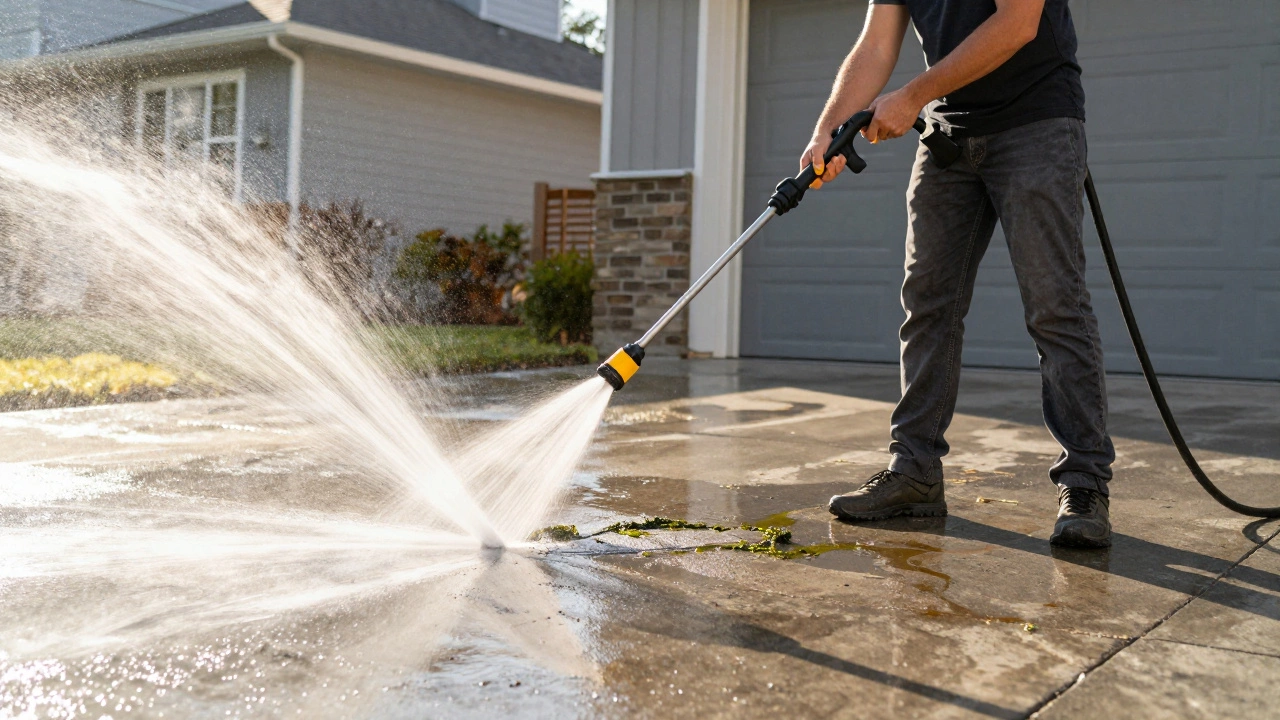
Read MoreWhen it comes to cleaning concrete, PSI, pounds per square inch, measures the force a pressure washer delivers. It's not about going as high as possible—it's about using the right amount to remove dirt without damaging the surface. Too little pressure won't do the job. Too much can etch the concrete, strip sealants, or even break loose chips and cracks. For most residential concrete surfaces—like driveways, patios, and walkways—the sweet spot is between 2,500 and 3,000 PSI, the range most professionals use for safe, effective cleaning. That’s enough to blast away grease, oil, algae, and stubborn dirt without turning your driveway into a gravel bed.
If you're dealing with a heavily stained commercial lot or a neglected garage floor, you might bump up to 3,000 to 3,500 PSI, a level often seen in professional-grade machines. But even then, the nozzle matters just as much as the PSI. A 15- or 25-degree nozzle spreads the water out, reducing the risk of damage. A 0-degree nozzle? That’s for industrial stripping, not your sidewalk. And don’t forget water flow—gallons per minute (GPM)—because without enough volume, even high PSI won’t rinse away the grime. A machine with 3,000 PSI and 2.5 GPM cleans faster and safer than one with 4,000 PSI and 1.5 GPM.
Concrete isn’t the only thing you need to watch. Older surfaces, stamped concrete, or anything with sealant can be easily ruined by over-pressurizing. A lot of people think more power equals better results, but that’s a myth. Real pros know that technique beats brute force. Start low—try 2,500 PSI—and work your way up only if needed. Hold the wand at least 12 inches from the surface, and keep it moving. Let the water do the work, not your arm strength.
What you’ll find in the posts below isn’t just about pressure numbers. It’s about real-world results: how people actually clean concrete without breaking it, what tools work best, and why some DIYers end up with more problems than they started with. You’ll see how pressure washing income ties into knowing the right settings, how to pick a washer that actually fits your needs, and what happens when you ignore the basics. No fluff. Just what works—and what doesn’t—on concrete you care about.
Learn the right PSI for cleaning your driveway safely-whether it's concrete or asphalt. Avoid damage and get better results with the correct pressure, nozzle, and technique.
Read More