How Much PSI Do You Really Need for a Driveway?
Learn the right PSI for cleaning your driveway safely-whether it's concrete or asphalt. Avoid damage and get better results with the correct pressure, nozzle, and technique.
Read MoreWhen you pick up a pressure washer, a high-power cleaning tool that uses water under pressure to remove dirt and grime from surfaces. Also known as a power washer, it can save hours of scrubbing—but only if you use the right pressure washer settings. Too much pressure and you’ll strip paint, gouge wood, or crack brick. Too little and you’re just spraying water around. The difference isn’t just about power—it’s about matching the machine to the surface.
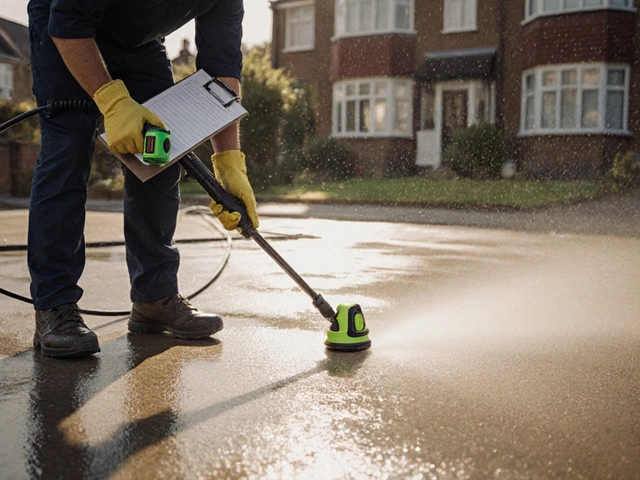
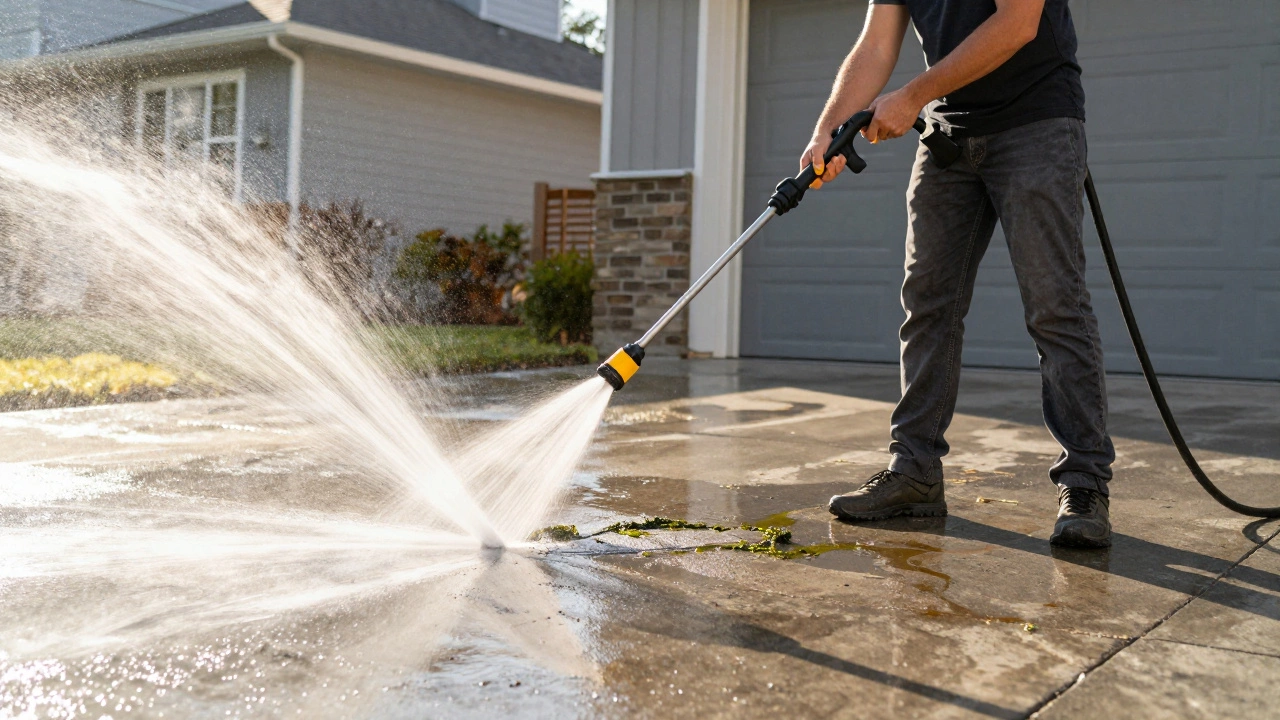
Pressure washer pressure, measured in PSI (pounds per square inch), is the core factor. Most residential units run between 1,300 and 3,000 PSI. For delicate surfaces like vinyl siding or painted wood, stick under 1,500 PSI. Driveways and patios can handle 2,500–3,000 PSI. But pressure alone isn’t enough. The pressure washer nozzle controls how that force is delivered. A 0-degree tip gives you a thin, cutting stream—useful only for stubborn graffiti. A 15- or 25-degree fan spray spreads the force safely over larger areas. Always start wide and work your way in. Never hold the nozzle too close, even on tough surfaces. A foot away is usually enough. And don’t forget pressure washer usage, the way you move the tool across the surface. A steady, overlapping sweep works better than staring at one spot. Let the water do the work. If you’re forcing it, you’re doing it wrong.
People buy pressure washers thinking they’re a magic fix, but most damage comes from bad settings, not bad machines. A 2,000 PSI washer with the wrong nozzle can wreck a deck faster than a rusty scraper. That’s why knowing your settings isn’t optional—it’s the difference between a clean driveway and a costly repair. The posts below cover real-world examples: what works on concrete versus wood, how to clean a fence without splintering it, why some people ruin their siding with 3,000 PSI, and how to adjust pressure for seasonal grime. You’ll find no fluff—just what actually happens when you turn the knob, pick the tip, and pull the trigger.
Learn the right PSI for cleaning your driveway safely-whether it's concrete or asphalt. Avoid damage and get better results with the correct pressure, nozzle, and technique.
Read More