Select your house material and condition to get a customized cleaning solution recommendation based on the article's expert guidelines.
Dilution Ratio:
Power washing your house isn’t just about spraying water hard enough. If you use the wrong thing, you could damage your siding, strip paint, or even kill your plants. The best thing to power wash a house with isn’t just water - it’s the right cleaning solution paired with the right technique.
Tap water might seem simple, but it doesn’t cut through dirt, mold, or algae the way it should. On a typical UK house, especially in damp areas like Brighton, green algae and black mildew cling to brick, vinyl, and wood siding. Water alone might move surface grime, but it won’t kill the roots of mold or lift decades of dirt buildup. That’s why most professionals don’t use just water - they use a cleaning solution designed for exterior surfaces.
The most effective house cleaning solutions contain three key ingredients: a surfactant to break down dirt, a biocide to kill mold and mildew, and a mild detergent to lift grease and grime. You don’t need fancy chemicals - just something formulated for outdoor use.
One of the most trusted options is a sodium hypochlorite-based cleaner, commonly called bleach solution. It’s not household bleach, though. Professional-grade pressure washing bleach blends are diluted properly (usually 1:5 to 1:10 with water) and include surfactants to help the solution stick to surfaces. This mix kills mold at the root and rinses away cleanly without leaving residue.
Another solid choice is an oxygen bleach solution. Unlike chlorine bleach, oxygen bleach (sodium percarbonate) is safer for plants, doesn’t fade paint, and breaks down into water and soda ash - no toxic fumes. It’s slower acting but gentler on wood, stone, and painted surfaces. Many eco-conscious homeowners in the UK prefer this because it’s non-toxic and biodegradable.
Don’t use regular dish soap. It might foam up nicely, but it’s not designed to cling to vertical surfaces or kill biological growth. It’ll rinse off too fast and leave you with the same dirty house you started with.
Also skip strong industrial degreasers meant for driveways or garage floors. These can strip paint, eat away at sealants, and damage window frames. And never use muriatic acid unless you’re a licensed pro - it’s too risky for DIYers.
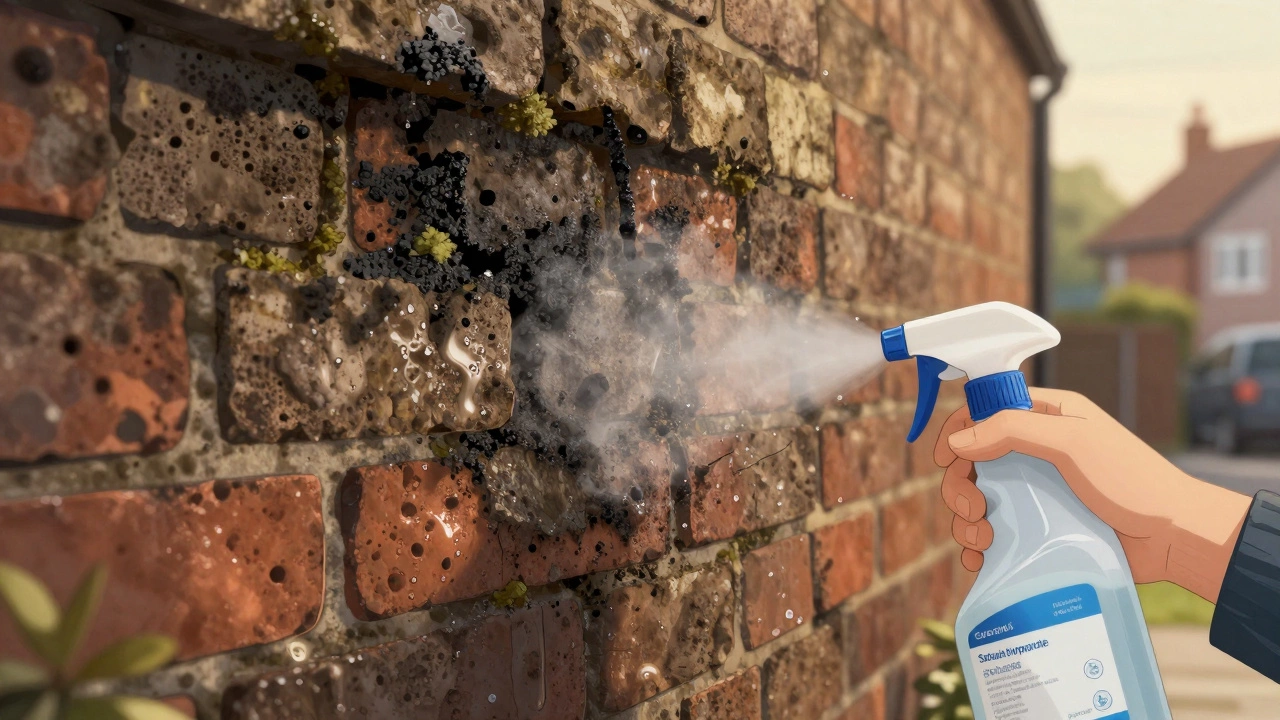
Not all houses are the same. The best solution depends on what your house is made of.
Using the right solution means nothing if you spray it wrong. Here’s how to do it properly:
You don’t need to order from a specialty supplier. Most hardware stores in the UK stock pressure washing detergents. Look for brands like Karcher, Sun Joe, or Simple Green Exterior Cleaner. These are sold in ready-to-use bottles or concentrates. If you’re buying concentrate, check the label for surface compatibility.
For oxygen bleach, you can find sodium percarbonate in the laundry aisle under brands like OxiClean. Just mix it with water in a bucket - no special equipment needed.
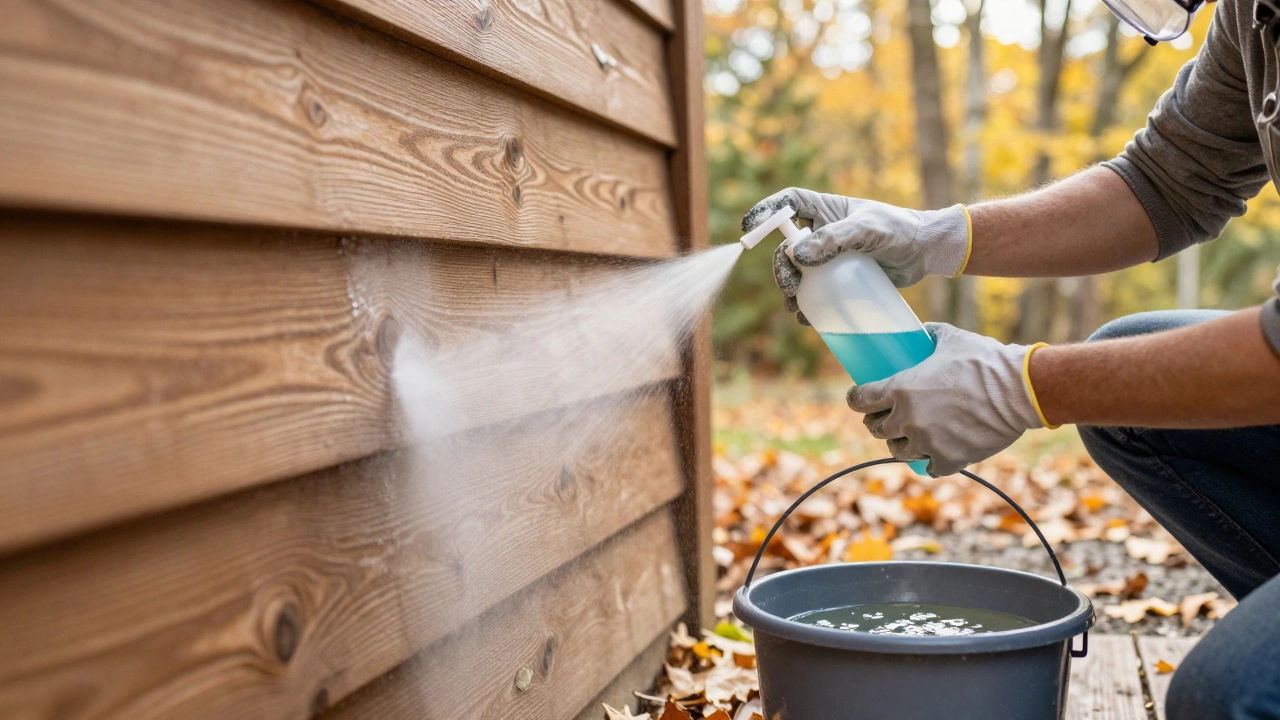
Some people swear by detergent tanks built into pressure washers. These work fine if you’re using a compatible solution. But many cheaper models don’t draw detergent well, and the solution can clog the system. If your machine doesn’t have a reliable soap injector, just apply the cleaner manually with a garden sprayer or pump-up bottle. It’s slower, but safer and just as effective.
Since you’re in the UK, timing matters. Don’t power wash in winter - freezing temperatures can trap water behind siding or in cracks, leading to ice damage. Spring and early autumn are ideal. Wait for a few dry, sunny days after cleaning so surfaces can fully dry out. Mold grows fast in damp weather, so cleaning every 1-2 years keeps your house looking fresh without costly repairs.
Before you go all over your house, test your solution on a small, hidden area - like behind a downspout or under an eave. Wait 24 hours. If the color changes, the surface looks damaged, or the cleaner leaves streaks, switch to a milder option. It’s better to be safe than sorry.
Yes, but only if it’s diluted properly and used carefully. Household bleach (sodium hypochlorite) can kill mold and clean siding, but it’s harsh on plants, paint, and metal fixtures. Use a 1:10 mix with water and always rinse thoroughly. For safer results, especially on wood or painted surfaces, choose oxygen bleach instead.
It can be, if done wrong. Using too much pressure (over 2,000 PSI), holding the nozzle too close, or using the wrong cleaner can damage siding, crack brick, strip paint, or force water into gaps that lead to rot. Always use low pressure, keep the nozzle at least 12 inches away, and choose a cleaner suited to your home’s material.
In the UK’s damp climate, cleaning every 1-2 years is ideal. If your house is shaded by trees or near a garden, you might need to clean annually. Look for visible mold, dark streaks, or green patches - those are signs it’s time. Waiting too long lets grime settle in, making it harder to remove and potentially damaging surfaces over time.
Not necessarily. While detergent tanks are convenient, many budget models don’t draw soap well and can clog. If your machine doesn’t have a reliable soap injector, apply the cleaning solution manually with a garden sprayer or pump bottle. Let it sit, then rinse with the pressure washer. This method is just as effective and avoids equipment issues.
Oxygen bleach (sodium percarbonate) is the safest option for vinyl siding. It cleans effectively without fading color or warping panels. Mix 1 cup of oxygen bleach with 1 gallon of water, apply with a sprayer, let sit 10-15 minutes, then rinse with low-pressure water. Avoid chlorine bleach - it can dull the finish over time.