Select how frequently you plan to use a pressure washer for cleaning tasks.
Select all surfaces you plan to clean regularly.
If you currently hire someone to clean your surfaces, estimate the average cost per service.
Ever stood in front of your grimy driveway, stained deck, or moldy siding and thought, pressure washer-is this thing really worth the cash, space, and hassle? You’re not alone. Thousands of homeowners wrestle with this exact question every year. The answer isn’t a simple yes or no. It depends on your situation, your schedule, and how much grime you’re willing to live with.
A pressure washer isn’t magic. It’s a machine that uses high-pressure water-usually between 1,300 and 3,000 PSI-to blast away dirt, algae, grease, and old paint. Think of it like a power hose with serious muscle. It doesn’t dissolve grime; it knocks it off with force. That’s why it works so well on concrete, brick, vinyl siding, and metal fences-surfaces that can handle the punch.
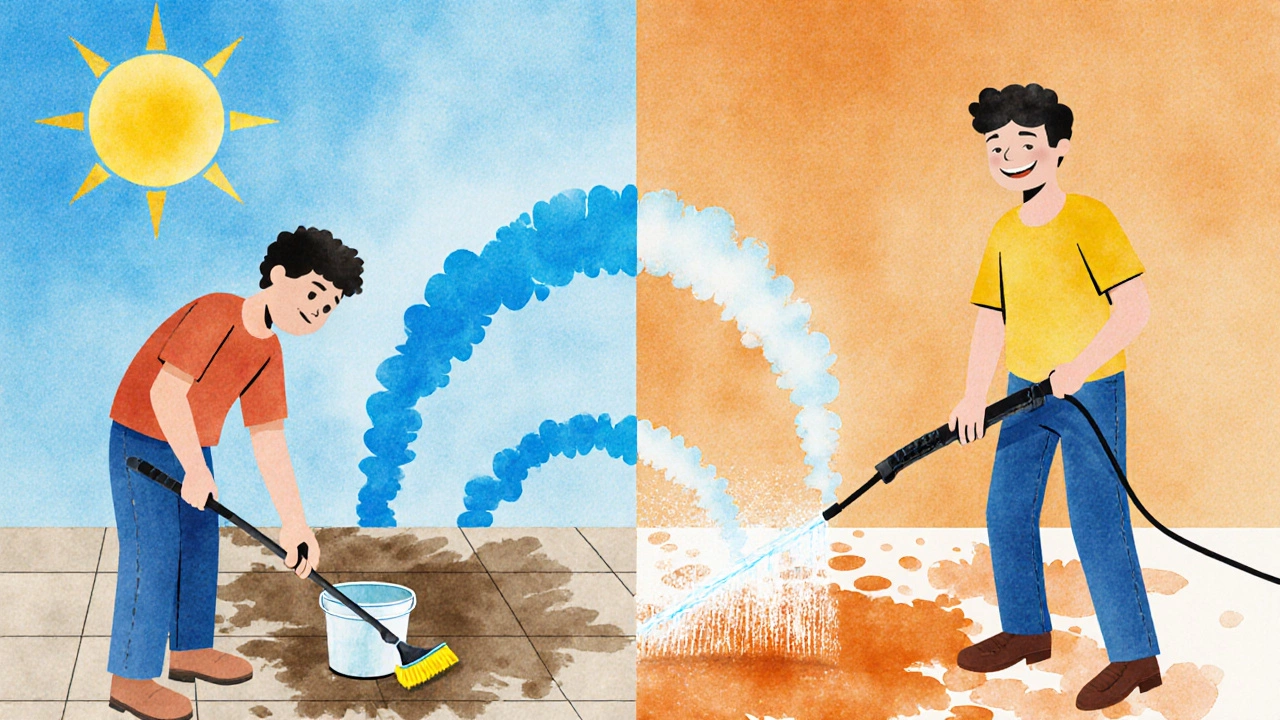
Compare that to scrubbing with a brush and bucket. One person can clean a 500-square-foot driveway in 20 minutes with a pressure washer. Without it? That same job could take two hours, maybe three, and still leave streaks and spots. The time savings alone make it tempting.
Let’s say you buy a decent electric pressure washer for $250. If you use it just once a year to clean your driveway and patio, it’s probably not worth it. But if you’re cleaning twice a year, or if you’re washing your car, cleaning gutters, or refreshing your fence every few months? That $250 starts to look like an investment.
One homeowner in Ohio used their pressure washer every two weeks during summer to clean their deck and patio. They stopped hiring a $120-per-cleaning service and saved $720 in one year. That’s more than double the cost of the machine. And they didn’t just save money-they gained control. No more waiting for a service to show up. No more bad results.
It also helps if you have pets. Dog paws track mud. Cats leave dirt trails. Kids track in grass and clay. If your outdoor surfaces get dirty fast, a pressure washer cuts cleaning time in half. And if you live in a humid climate where mold and mildew grow like weeds on your siding? A pressure washer is the only practical way to get rid of it without repainting.
Pressure washers aren’t free to own. There’s the upfront cost, sure. But also the water bill. A typical machine uses 1.5 to 4 gallons per minute. Cleaning a driveway might use 100 gallons. That’s not a lot compared to a full shower, but if you’re doing it weekly, it adds up. In areas with water restrictions, that matters.
Then there’s the noise. Electric models are quieter, but gas-powered ones? They sound like a lawnmower with a jet engine. If you live in a neighborhood with noise ordinances or close neighbors, you’ll need to plan your cleaning around quiet hours.
And don’t forget storage. Most units are bulky. You need a garage, shed, or covered spot to keep them dry. Moisture ruins motors. Rust kills pumps. If you live in a rainy climate and don’t have dry storage, you’re setting yourself up for early failure.
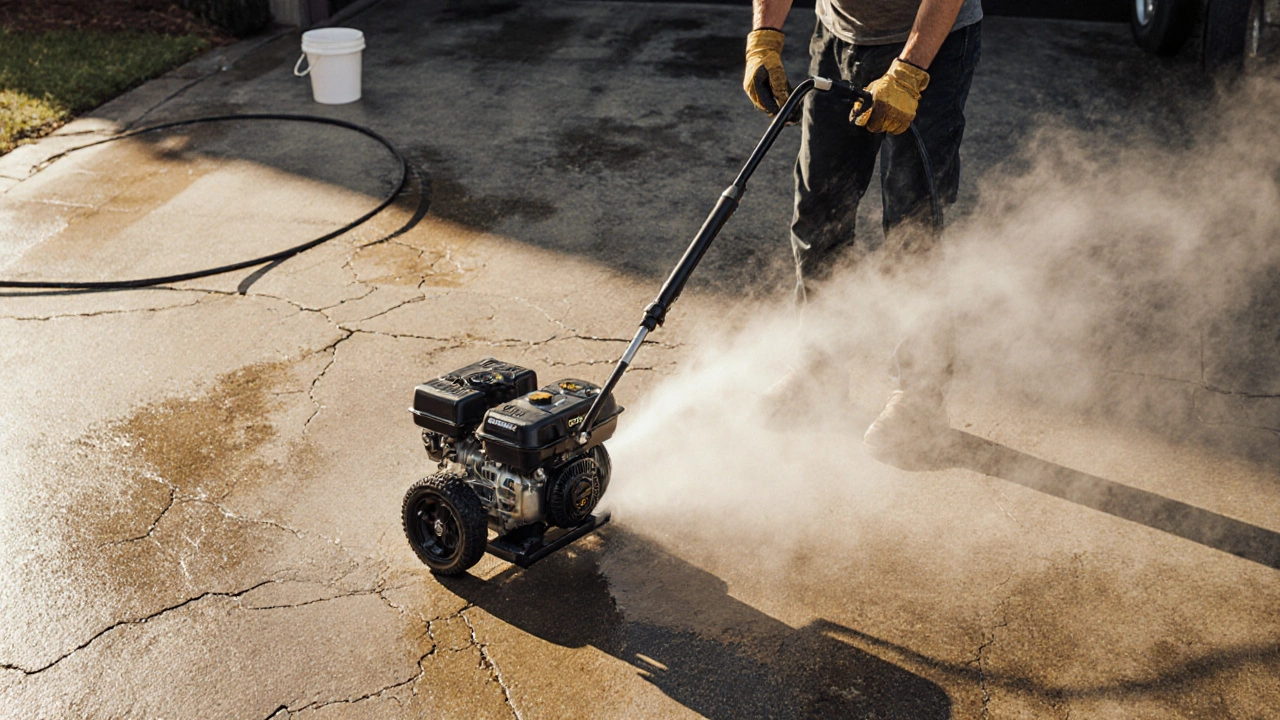
Electric pressure washers are simpler. Plug them in, turn them on, and go. They’re lighter, quieter, and don’t need gas or oil. Most top out around 2,000 PSI-enough for patios, cars, siding, and fences. They’re perfect for homeowners who clean once or twice a season.
Gas models hit 3,000 PSI or more. They’re louder, heavier, and need maintenance. But they’re the only option if you’re cleaning large driveways, commercial properties, or removing stubborn paint. If you’re tackling a 1,500-square-foot driveway or a two-story house, gas is the only realistic choice.
Most people who buy gas models regret it if they don’t have a big job. The machine sits unused for months, then gets forgotten in the garage until the pump seizes from old fuel. Electric models? They’re more likely to get used regularly because they’re easier to grab and go.
Pressure washers aren’t universal. Don’t use them on:
There’s a reason professionals use different nozzles and lower pressure settings for different surfaces. A 15-degree nozzle is fine for concrete. A 40-degree nozzle is safer for siding. Use the wrong one, and you’ll spend more fixing damage than you saved cleaning.
You don’t need to be a mechanic to use a pressure washer. But you do need to pay attention. Too much pressure, too close to the surface, and you’ll ruin it. Many people buy one, use it once, and then never touch it again because they scared themselves with the results.
Start slow. Test on a hidden spot. Keep the nozzle at least 12 inches away. Move in slow, even strokes. Don’t hold the trigger down in one spot. Read the manual. Watch a 5-minute YouTube video. That’s all it takes to avoid disaster.
If you’re still unsure, rent one. Home Depot, Lowe’s, and local tool shops rent pressure washers for $40-$70 a day. Try it for a weekend. Clean your driveway, your fence, your car. See how you feel. If you love it, buy one. If you hate it, walk away without spending $300.
These people get the most value from owning a pressure washer:
If you fall into one of these groups, the answer is almost always yes-it’s worth it.
If you live in a small apartment, have no outdoor space, or only clean once every few years? Save your money. Call a pro. Or just scrub with a brush. It’s not glamorous, but it’s cheaper and safer.
The real question isn’t whether a pressure washer is powerful enough. It’s whether you’ll use it often enough to justify the cost. Most people buy them thinking they’ll use them weekly. Then life gets busy. The machine gathers dust.
But if you’re the kind of person who notices dirt and hates it? Who likes to tackle chores before they become projects? Who’d rather spend 20 minutes cleaning than 2 hours scrubbing? Then yes. It’s worth it. Not because it’s fancy. Not because it’s trendy. But because it makes your life easier, faster, and less messy.
No. Pressure washers can damage wood, vinyl siding, roof shingles, windows, and delicate brick if used incorrectly. Always use the right nozzle and keep the spray moving. Test on a small hidden area first. For sensitive surfaces, use a lower-pressure setting or avoid pressure washing altogether.
Most home models use between 1.5 and 4 gallons of water per minute. Cleaning a typical driveway takes about 25-40 minutes, so you’ll use 100-160 gallons total. That’s less than a long shower, but it adds up if you clean weekly. Check local water restrictions before using one regularly.
Choose electric if you’re cleaning smaller areas like patios, cars, or fences and want something quiet and easy to store. Go gas if you’re tackling large driveways, multi-story homes, or stubborn grime. Gas units are more powerful but require maintenance, fuel, and storage space.
Yes. Most hardware stores rent pressure washers for $40 to $70 per day. Renting is a great way to test if you’ll actually use one before spending $250-$600. Try cleaning one project-like your driveway or deck-and see how you feel about the results and effort.
Electric models need little maintenance-just rinse the nozzle and store dry. Gas models require oil changes, fuel stabilizer in the tank, and pump care after each use. If you don’t maintain them, the pump can fail within a year. Always run the machine with water flowing to avoid overheating.