Enter your couch's cleaning code and answer a few questions to get personalized sanitization instructions.
Most people don’t realize their fabric couch is one of the dirtiest spots in the house. Between spilled snacks, sweaty skin, pet hair, and colds passed around on the couch, it’s crawling with bacteria, dust mites, and allergens. Sanitizing your fabric couch isn’t just about making it look nice-it’s about making it safe. You don’t need harsh chemicals or professional equipment. With the right steps, you can kill germs and remove grime using things you already have at home.
Before you grab a spray bottle or scrub brush, look at the tag on your couch. It’ll have a code: W, S, SW, or X. This tells you what cleaning methods are safe.
Skipping this step can ruin your couch. I’ve seen people soak a ‘S’ coded sofa with soapy water and end up with permanent stains and warped foam. Always check the label. It’s the only rule that can’t be broken.
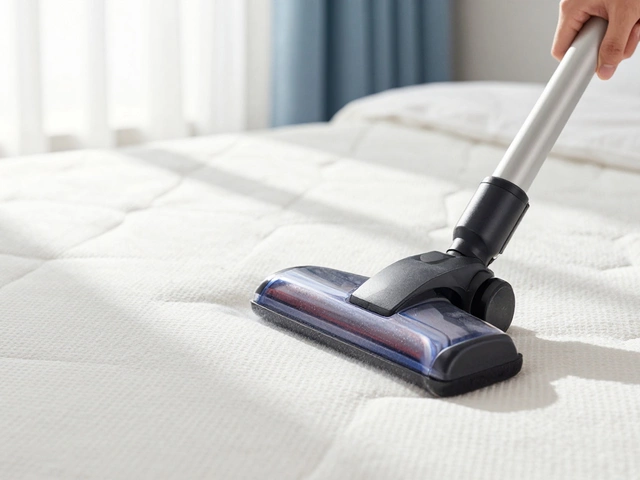
Sanitizing doesn’t work if dirt and hair are still on the surface. Start by vacuuming thoroughly. Use the upholstery attachment and go over every inch-seams, crevices, armrests, and under cushions. Dust mites and pet dander cling to fabric fibers, and they’ll survive even the best disinfectant if you don’t remove them first.
For stubborn hair, use a rubber glove. Dampen it slightly, run it over the fabric, and the hair will stick to it like magic. Do this before any wet cleaning. It cuts down on drying time and prevents dirt from mixing into the cleaner.
Not all disinfectants are safe for fabric. Bleach? No. Vinegar? Only if your couch is labeled W or SW. Here’s what actually works:
Avoid all-purpose cleaners labeled ‘disinfectant’ unless they say they’re safe for upholstery. Many contain ammonia or chlorine that can damage fibers or leave sticky residue.
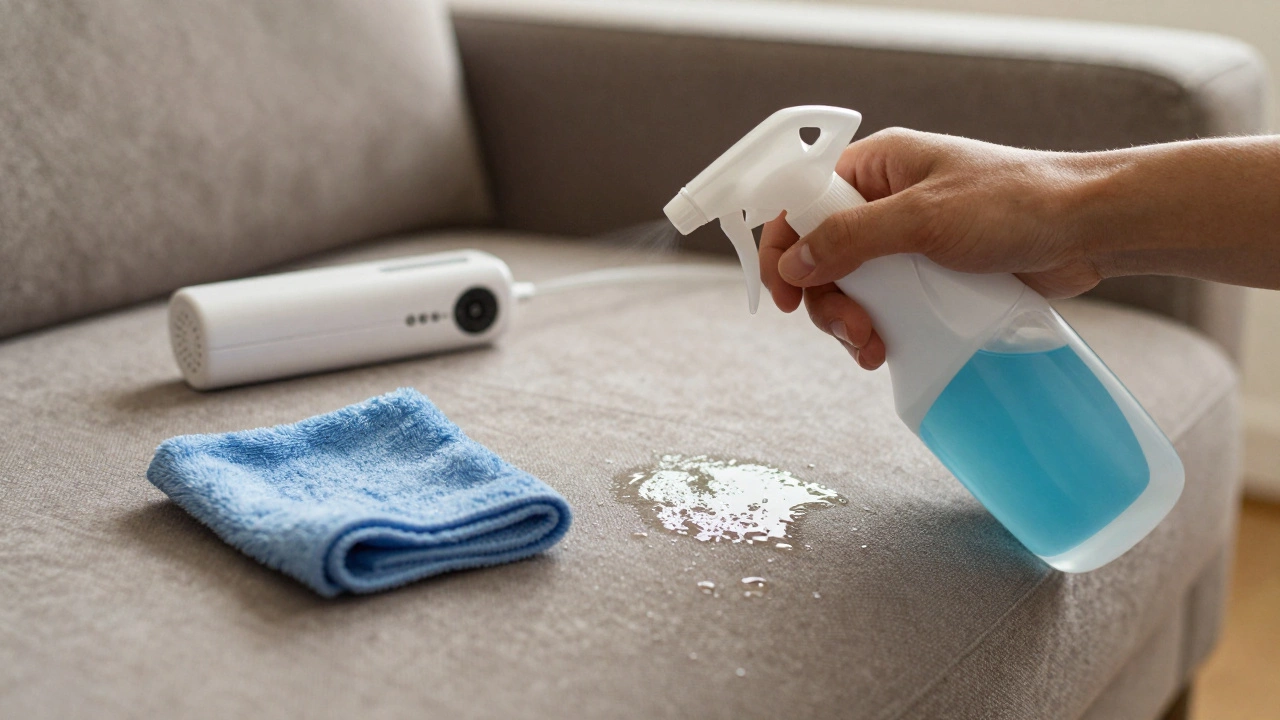
Here’s the right way to apply your chosen cleaner:
Pro tip: If you’re using alcohol, work in small sections. It evaporates fast. Don’t try to clean the whole couch at once.
Sanitizing removes germs, but not smells or old stains. For odors, sprinkle baking soda over the entire couch after sanitizing. Let it sit for 15-30 minutes, then vacuum it up. Baking soda absorbs smells without leaving residue.
For stains, mix one teaspoon of mild dish soap with one cup of cool water. Dab the stain gently with a cloth dipped in the solution. Blot, don’t scrub. Rinse by dabbing with a cloth dampened with plain water. Dry immediately with a towel. Never use hot water-it sets stains and shrinks fibers.
For pet urine or vomit, use an enzymatic cleaner. Regular disinfectants won’t break down organic matter. Enzymatic cleaners eat the source of the smell. Look for one labeled safe for upholstery.
Moisture is the enemy. If your couch stays damp, mold and mildew grow within 24-48 hours. Open windows. Turn on fans. Use a dehumidifier if you live in a humid climate. Don’t sit on it until it’s completely dry.
How do you know it’s dry? Press your hand on the fabric. If it feels cool or damp, keep drying. If it’s warm and dry to the touch, you’re good. This can take 4-8 hours, depending on airflow and humidity.
For households with kids, pets, or allergies, sanitize every 2-3 months. If someone in the home is sick, sanitize right after they recover. For healthy adults without pets, once every 6 months is enough.
Between deep cleans, vacuum weekly. That alone cuts down on dust mites and allergens by 70%. A quick weekly vacuum is the easiest way to keep your couch sanitary without extra effort.
You don’t need to hire someone for routine sanitizing. But call a professional if:
Professional upholstery cleaners use industrial-grade extractors and medical-grade disinfectants. They can sanitize without damaging the structure. It’s worth it for high-value or heirloom pieces.
Once your couch is clean, keep it that way:
A clean couch doesn’t have to be a luxury. It’s a habit. A quick vacuum, occasional spot cleaning, and a deep sanitize twice a year keep your living space healthy without costing a dime.
Only if the couch tag says W or SW. Lysol contains alcohol and other solvents that can discolor or damage some fabrics. Always test on a hidden spot first. Spray lightly and blot-don’t soak. Avoid Lysol on delicate weaves or antique upholstery.
Vinegar kills some bacteria and removes odors, but it’s not a registered disinfectant. It won’t kill viruses like flu or COVID-19. It’s safe for W-coded fabrics, but avoid it on silk, wool, or dark colors-it can fade dye. Use it only as a deodorizer, not as your main sanitizer.
Typically 4 to 8 hours. In dry, well-ventilated rooms, it can dry in 3 hours. In humid climates or without airflow, it may take up to 12 hours. Never sit on it until it’s completely dry. Use fans and open windows to speed up drying.
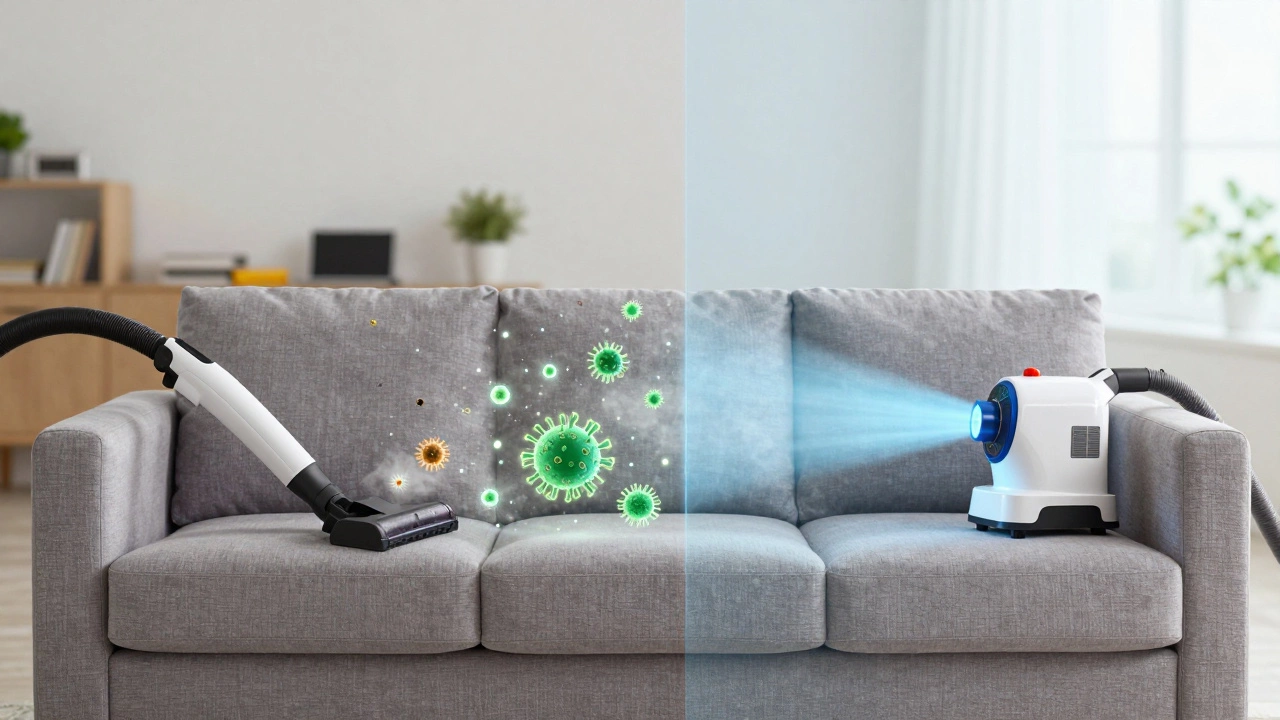
Only if the manufacturer’s tag says W or SW. Steam can damage foam, glue, and backing materials in many couches. It may cause warping, shrinking, or mold growth if moisture gets trapped. If you’re unsure, skip steam. A handheld UV-C sanitizer is safer and just as effective for germs.
Yes. Baking soda is non-toxic and safe for all fabric types. It absorbs odors without leaving residue. Sprinkle it over the couch, wait 15-30 minutes, then vacuum thoroughly. It won’t sanitize, but it’s great for freshening up between deep cleans.