You spill coffee on your favorite armchair. Or your dog shakes off muddy paws after a walk. Suddenly, your upholstery looks worse for wear-and you reach for the baking soda. It’s cheap, it’s in your kitchen, and everyone says it works. But does baking soda actually clean upholstery, or is it just another cleaning myth?
Baking soda doesn’t clean the way soap or detergent does. It doesn’t break down grease or lift dirt from fibers. Instead, it absorbs odors and draws out moisture. That’s why it’s great for deodorizing carpets, refrigerators, and even shoes. But when it comes to stains on fabric, baking soda is more of a sidekick than a hero.
Here’s the science: baking soda is a mild alkaline compound (sodium bicarbonate). When mixed with water, it forms a paste that can help loosen surface-level grime. But upholstery fabrics-whether cotton, microfiber, or polyester-are designed to trap dirt deep in the fibers. Baking soda alone won’t reach that. It sits on top. And if you leave it too long, it can actually dry out natural fibers like wool or linen, making them brittle.
Real cleaning needs surfactants-chemicals that break the bond between dirt and fabric. That’s what commercial upholstery cleaners do. Baking soda? It’s just a scrubbing aid at best.
There are two situations where baking soda might seem to help with upholstery:
What it doesn’t do:
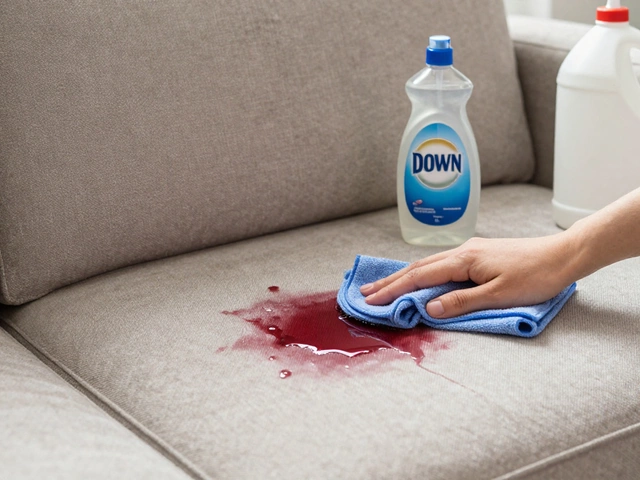
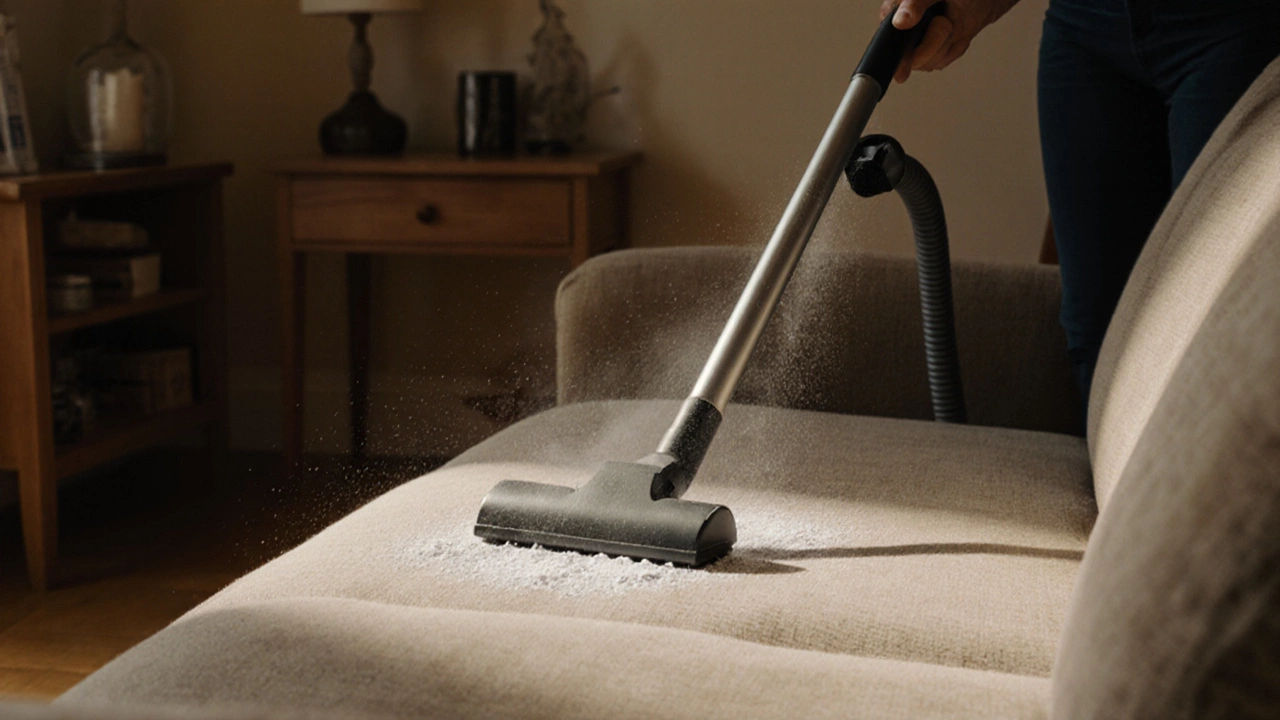
Try this: Pour a little red wine on a white microfiber cushion. Sprinkle baking soda on it. Wait an hour. Vacuum. Now look. The stain is still there. You’ve got a dry, dusty patch and a red mark underneath. That’s the reality.
If you want real results, you need the right tools. Here’s what works:
For pet accidents, you need enzyme cleaners. Baking soda won’t touch the ammonia in urine. But an enzyme cleaner like Nature’s Miracle breaks down the proteins that cause lingering smells. It’s the only thing that stops dogs from returning to the same spot.
Why do people think baking soda cleans upholstery? Probably because it’s used in so many other cleaning jobs. It cleans ovens. It freshens carpets. It removes fridge smells. People assume: if it works for one thing, it works for all.
Also, YouTube and Pinterest are full of videos showing someone sprinkling baking soda on a couch, scrubbing lightly, and then vacuuming. The result? A slightly less dusty couch. They call it “clean.” But if you look closely, the stains are still there. The fabric looks fluffier, not cleaner.
It’s a placebo effect. You see the powder disappear. You smell less odor. You feel like you’ve done something. But you haven’t fixed the problem.
If you still want to use baking soda, here’s how to do it without wasting time or damaging your furniture:
That’s it. No scrubbing. No paste. No water. Just odor absorption and surface dust removal.
For stains, skip the baking soda. Use a targeted cleaner. For deep cleaning, rent a steam cleaner. For regular maintenance, vacuum weekly. That’s the real secret to keeping upholstery looking new.
There are risks:
I’ve seen sofas in Brighton homes where people used baking soda for years. The fabric looked fine on the surface-but when they finally had it professionally cleaned, the technician found thick, chalky layers of dried baking soda packed into the seams. It took two full sessions to remove it.
Yes-if you want to remove odors. No-if you want to remove stains.
Baking soda is not a cleaning agent for upholstery. It’s a deodorizer. And while that’s useful, it’s not enough. If you’re trying to save money by avoiding professional cleaning or proper products, you’re risking long-term damage to your furniture.
For everyday care: vacuum weekly. Spot clean stains immediately with vinegar or alcohol. For deep cleaning: steam every 6-12 months. Keep baking soda in the fridge for smells, not on the sofa for stains.
Your upholstery lasts longer, looks better, and doesn’t cost more in the long run. That’s the real win.
No. Baking soda won’t remove coffee stains. It may absorb some surface moisture, but the tannins in coffee penetrate deep into fabric fibers. To remove coffee stains, blot with a cloth first, then spray a mix of equal parts white vinegar and water. Blot again. Repeat until the stain fades. For stubborn stains, use a fabric stain remover designed for upholstery.
Most synthetic fabrics like polyester and microfiber are fine with occasional baking soda use for odor control. But natural fibers like wool, silk, or cotton can become brittle if baking soda is left on them or used too often. Always check the manufacturer’s care label. If it says "W" (water-based cleaner only), avoid dry powders. If it says "S" (solvent only), don’t use water or baking soda paste.
Don’t. When you mix baking soda and vinegar, they react and produce carbon dioxide gas and water. The fizzing looks impressive, but the cleaning power disappears. You’re left with salt water and no active cleaning agents. For stains, use vinegar alone as a spray, or baking soda alone as a dry deodorizer-but never together on fabric.
Vacuum your sofa at least once a week to remove dust and pet hair. Spot clean spills immediately. For deep cleaning, steam clean every 6 to 12 months, depending on usage. Households with pets or kids may need it every 4-6 months. Waiting too long lets dirt settle into fibers, making it harder to remove and shortening the life of your furniture.
The best all-around alternative is a dedicated upholstery cleaner like Bissell SpotClean or Vanish Pet Professional. These contain enzymes and surfactants that lift stains without damaging fabric. For natural options, white vinegar and water (1:1) work well for odors and light stains. For grease or ink, use 70% isopropyl alcohol. Always test in a hidden spot first.