Estimate your household's bleach impact on water and soil ecosystems.
Equivalent to fish eggs killed
Water volume:
Impact level:
Soil recovery time:
Microbial loss:
Impact level:
Effective on toilets and non-porous surfaces
Kills mold without toxic byproducts
For laundry whitening with no chlorine
Tip: Use vinegar for 70% of cleaning tasks to reduce environmental impact by over 80%.
Start today: Replace bleach in one area (e.g., bathroom) with vinegar solution.
Every year, UK households buy over 20 million bottles of household bleach. It’s cheap, it kills germs fast, and it turns your bathroom white again. But here’s the question no one asks at the supermarket: is bleach eco-friendly? The answer isn’t simple. Bleach works wonders on surfaces, but it doesn’t disappear after you rinse it. It changes. It reacts. And what it becomes can be worse than what you started with.
Most liquid bleach sold in the UK is sodium hypochlorite-usually 3% to 8% concentration. It’s made by reacting chlorine gas with sodium hydroxide. That sounds like a chemistry lab, and it kind of is. The process uses a lot of energy and releases toxic gases. Factories that make bleach are regulated, but the environmental damage starts before it even reaches your cupboard.
When you pour bleach down the drain, it doesn’t vanish. It breaks down into salt and water-sort of. In reality, it often reacts with organic matter in wastewater to form chlorinated compounds like trihalomethanes. These are known to be toxic to aquatic life. A 2023 study by the UK Environment Agency found detectable levels of chlorinated byproducts in 68% of tested river samples near urban areas. That’s not from industrial waste. That’s from your shower drain.
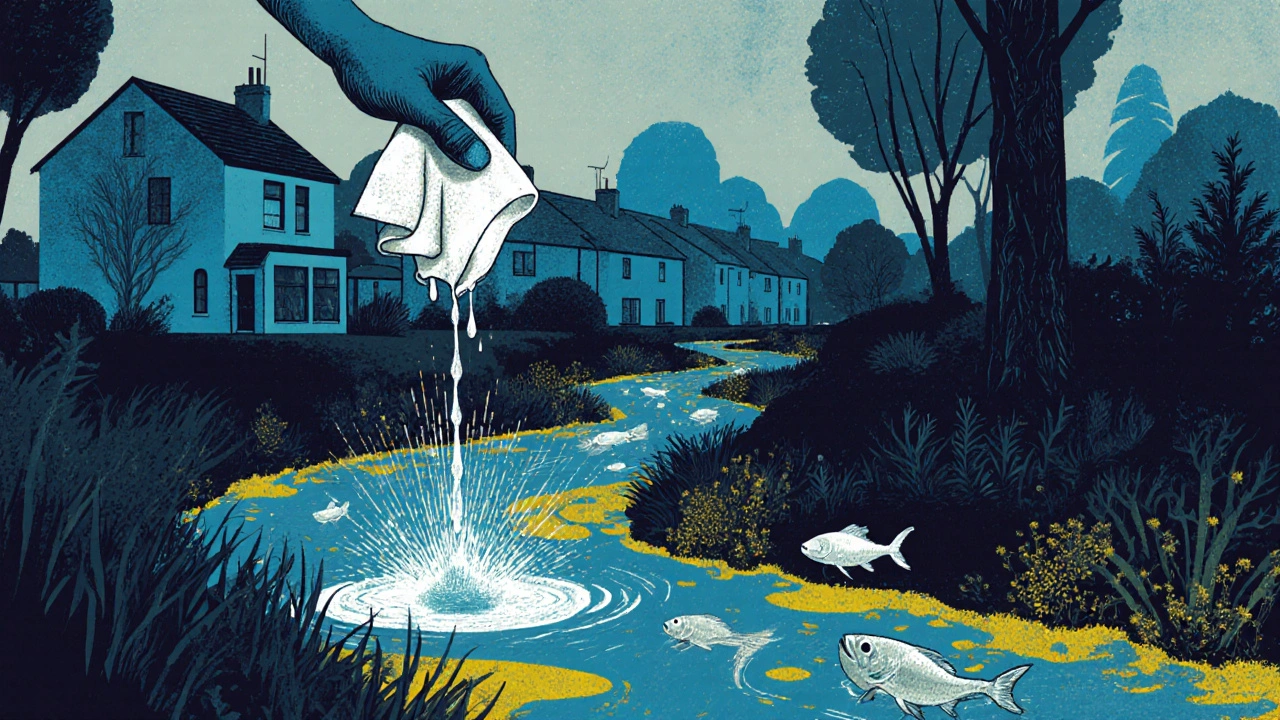
Imagine a small stream near your home. A few drops of bleach from your cleaning rag end up there. It doesn’t take much. A single teaspoon of bleach diluted in 100 litres of water can kill fish eggs and disrupt the balance of beneficial bacteria that break down organic waste. These bacteria aren’t just invisible-they’re essential. Without them, sewage doesn’t break down properly. Algae blooms follow. Oxygen drops. Fish die.
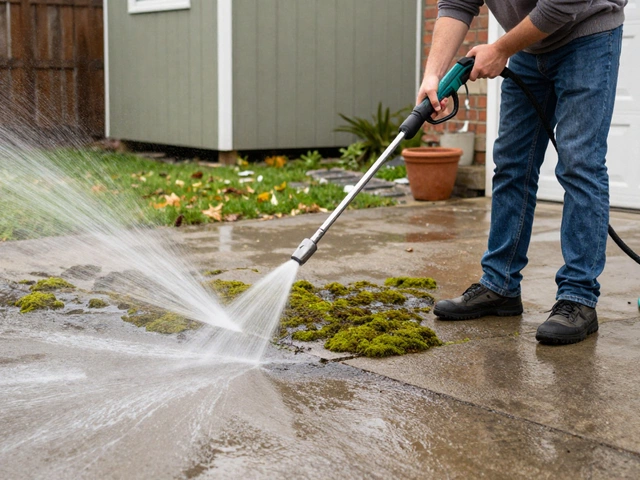
Bleach also harms soil. If you use it to clean outdoor patios or garden paths, it runs into the ground. It doesn’t just kill weeds-it kills the microbes that help plants grow. Earthworms, fungi, and nitrogen-fixing bacteria all suffer. One 2022 trial in Brighton showed soil treated with bleach had 70% fewer microbial organisms after just one application. That soil took over six months to recover, even with compost added.
Most bleach bottles are made from HDPE plastic-recyclable in theory. But in practice, only about 30% of bleach bottles in the UK get recycled. Why? Because they’re often contaminated with residue. Even if you rinse them, traces of chlorine remain. Recycling plants don’t want that. It corrodes machinery. So most end up in landfill or incinerated.
Incinerating bleach bottles releases dioxins-among the most toxic chemicals humans have made. They stick in the environment for decades, build up in animal fat, and can cause cancer and hormone disruption. The UK government classifies dioxins as priority pollutants. Yet we keep buying bleach in plastic bottles without thinking twice.
If you have a septic tank, bleach is a bad idea. It doesn’t just kill germs-it kills the good bacteria your tank needs to break down waste. One cup of bleach can wipe out weeks of bacterial activity. That means solids build up faster. Tanks fill up sooner. You pay more for pumping. And when the system fails, untreated sewage can leak into groundwater.
Environmentally, it’s a domino effect. Septic failure → contaminated wells → poisoned rivers → dead fish. The UK’s Environment Agency has issued warnings to homeowners with septic systems: avoid bleach, antibacterial cleaners, and strong disinfectants. Use septic-safe products instead.
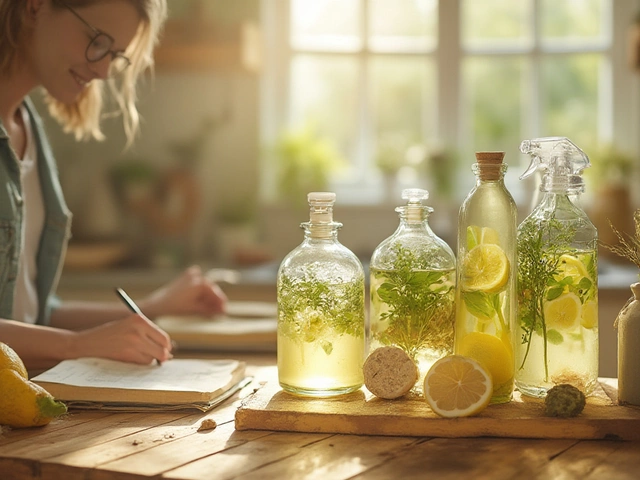
You don’t need bleach to clean effectively. White vinegar works better than bleach for killing mold on non-porous surfaces. It’s non-toxic, biodegradable, and costs less than a pound per litre. Baking soda scrubs away grime without scratching. Hydrogen peroxide (3%) disinfects surfaces and breaks down into water and oxygen-no harmful byproducts.
For disinfecting during illness outbreaks, the NHS recommends hydrogen peroxide or alcohol-based cleaners over bleach. They’re just as effective, and far safer for the environment. Brands like Ecover, Method, and Ecos make plant-based disinfectants that meet EU biodegradability standards. They’re not magic, but they work.
Here’s a simple swap:
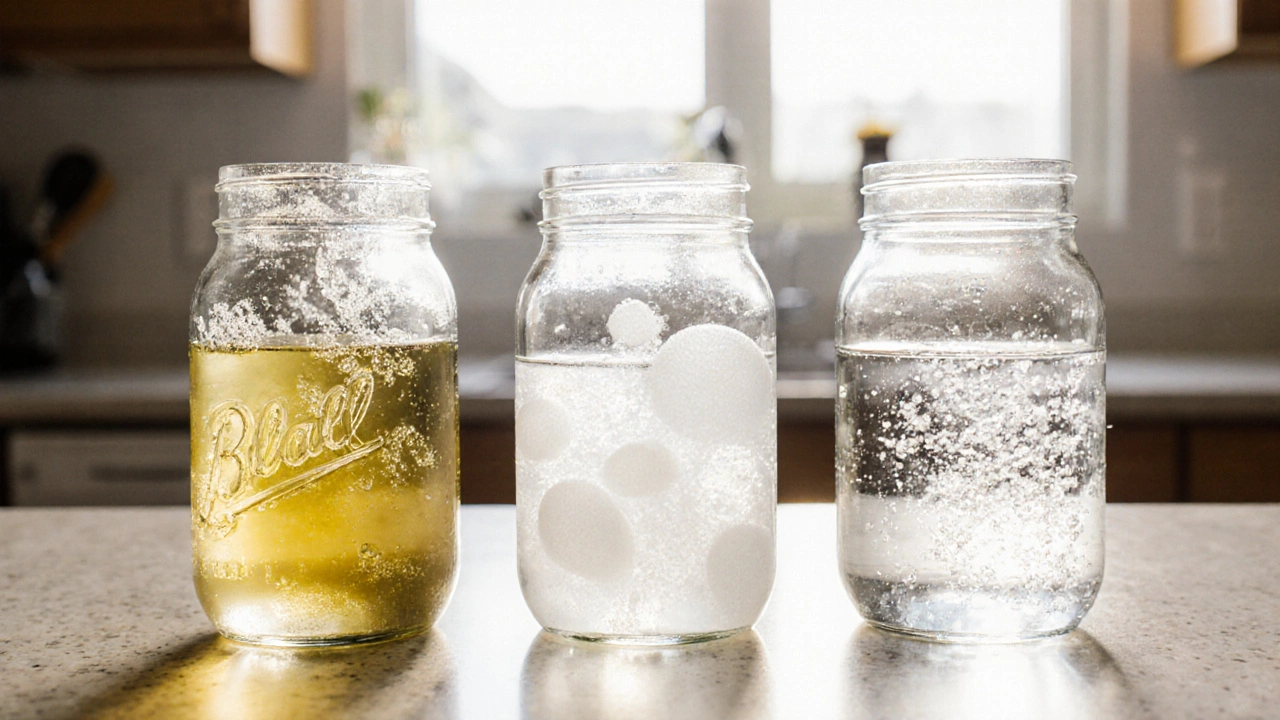
Oxygen bleach is the best alternative. It’s made from sodium percarbonate and soda ash. When it hits water, it releases hydrogen peroxide and soda ash-both break down into water, oxygen, and salt. No chlorine. No dioxins. No harm to aquatic life. And it works just as well on stains.
There are exceptions. Bleach is still recommended for disinfecting surfaces after vomiting or diarrhoea, especially in healthcare settings. It’s also used in water treatment plants to kill pathogens. But for everyday home cleaning? It’s overkill.
Most germs in your home are harmless. Your immune system deals with them. You don’t need to sterilise your kitchen counter after making a sandwich. Regular cleaning with soap and water removes 99% of germs. Bleach adds no real benefit-and a lot of risk.
A 2024 meta-analysis of 17 peer-reviewed studies on household cleaning products found that bleach use correlated with higher rates of respiratory issues in children and pets. It also showed no significant reduction in illness transmission compared to non-toxic cleaners when used in typical home settings.
The World Health Organization doesn’t recommend bleach for routine home disinfection. The UK’s National Health Service advises limiting bleach use to specific situations-like cleaning up bodily fluids-and always ventilating the room well.
Bleach isn’t eco-friendly. It’s a chemical with a short-term payoff and long-term consequences. It harms water, soil, wildlife, and even your own health over time. It’s not the villain of cleaning-but it’s not the hero either. It’s a tool that’s been overused because it’s cheap and loud.
Switching to alternatives doesn’t mean giving up cleanliness. It means choosing safety-for your family, your local river, and the next generation. You don’t need to be perfect. Start by replacing bleach in one area: your bathroom. Try vinegar and baking soda for a week. You’ll be surprised how clean things get-and how little you miss the smell.
Every bottle of bleach you don’t buy is one less drop of poison entering the water cycle. That’s real impact.
Bleach itself breaks down into salt and water, but only under ideal conditions. In real-world environments-like sewers, rivers, or soil-it reacts with organic matter to form toxic chlorinated compounds that don’t break down easily. These byproducts can persist for months and harm aquatic life. So while the base ingredient may degrade, what it turns into does not.
Yes. Bleach doesn’t distinguish between harmful and beneficial bacteria. In septic tanks, it kills the microbes that break down waste. In soil, it kills the fungi and bacteria that help plants grow. Even in your home, it wipes out the natural microbial balance on surfaces, which can actually make it easier for harmful germs to return. Overuse weakens your home’s natural defenses.
Yes, significantly. Oxygen bleach (sodium percarbonate) breaks down into water, oxygen, and soda ash-none of which are toxic to ecosystems. It disinfects and whitens without releasing chlorine gas or forming dioxins. It’s safe for septic systems, greywater, and aquatic life. It’s also gentler on fabrics and doesn’t damage colours like chlorine bleach can.
Never mix bleach with vinegar, ammonia, or any acid-based cleaner. It creates chlorine gas, which is poisonous. Even mixing bleach with some all-purpose cleaners can release toxic fumes. The UK Health and Safety Executive has recorded dozens of emergency calls each year from people who mixed cleaners and ended up in hospital. Keep bleach separate and always read labels.
No. Pets are more sensitive to chemical fumes and residues. Cats, in particular, can develop respiratory issues from bleach vapours. Dogs may lick surfaces cleaned with bleach and ingest toxic residues. Even diluted bleach can cause vomiting, drooling, or chemical burns on paws. If you must use it, keep pets out of the area until surfaces are fully dry and rinsed.