Look down at your living room floor. Does it look like the beige paradise you imagined when you bought those rugs, or does it look like a map of every spill and footstep since 2019? Most homeowners face this dilemma every few years: do I rent that heavy machine from the hardware store and spend my Saturday sweating over shampoo buckets, or do I call in the pros and hand over a wad of cash?
The answer isn't just about pride or laziness. It’s about chemistry, physics, and the hidden costs of doing it wrong. If you’ve ever tried to scrub out a red wine stain only to make it darker, you know that cleaning carpets is trickier than it looks. While there are plenty of niche directories online for everything from this resource to local service providers, finding the right approach for your home’s biggest fabric investment requires looking at the actual mechanics of how dirt gets trapped in fibers.
To understand why professional cleaning often wins, you have to understand what’s actually in your carpet. Dust mites, skin cells, pollen, and ground-in grit don’t just sit on top of the fibers. They work their way down to the backing. When you vacuum, you’re removing surface debris. That’s great for daily maintenance, but it doesn’t touch the deep-seated grime that makes your carpet look dull and smell musty.
When you walk on a dirty carpet, those microscopic particles act like sandpaper. They cut through the nylon or wool fibers, causing them to fray and lose their resilience. This is called abrasion damage. Over time, this turns a plush carpet into a flat, worn-out mat. Professional cleaning removes this abrasive layer, effectively resetting the clock on your carpet’s lifespan. DIY methods often miss this deeper layer, leaving the damaging particles behind.
Let’s be fair. Renting a carpet cleaner isn’t useless. For fresh spills, spot cleaning, or maintaining high-traffic areas between professional visits, DIY has its place. The most common method used by homeowners is dry foam or low-moisture cleaning. You apply a compound, agitate it with a brush, and vacuum it up. It’s quick, dries fast, and doesn’t require moving heavy furniture.
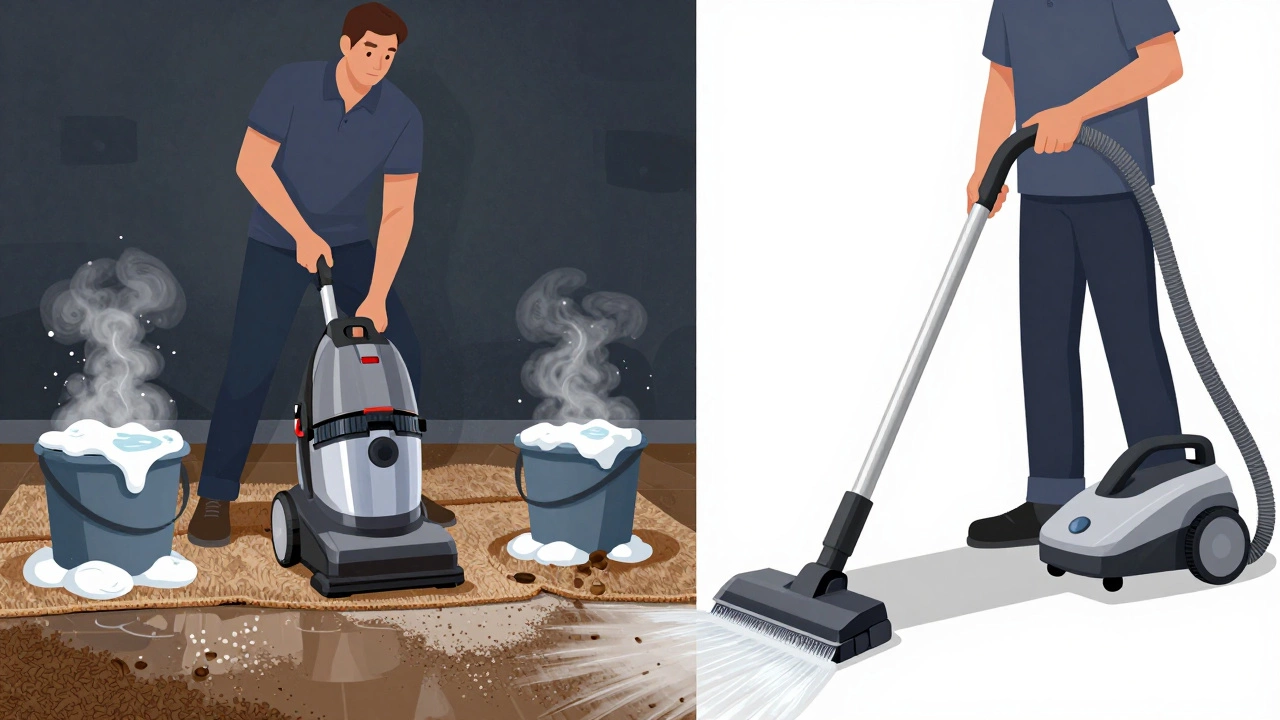
However, the popular rental machines that use hot water extraction (often confused with steam cleaning) come with significant risks if you aren’t trained.
If you choose the DIY route, stick to dry methods or ensure you have industrial-strength fans running to dry the area within two hours. Never use excessive soap, and always test any solution in an inconspicuous corner first.
When you hire a professional carpet cleaner, you aren’t just paying for a truck and a hose. You’re paying for commercial-grade equipment, specialized chemistry, and expertise in textile care. Here is the breakdown of why professionals achieve better results:
Hot Water Extraction (HWE): This is the gold standard. Professionals use trucks or vans with massive tanks and powerful pumps. They inject a mix of hot water and eco-friendly detergents under high pressure, then immediately extract it with industrial suction. Because the suction is so strong, the carpet is left significantly drier than after a DIY job. This reduces drying time from 8-12 hours to 3-4 hours, minimizing mold risk.
Pre-treatment and Agitation: Pros don’t just spray and go. They identify different types of stains-protein-based (blood, egg), tannin-based (coffee, wine), or oil-based (grease)-and treat them with specific enzymes or solvents. They also use rotary brushes to agitate the soil, loosening it from the fibers before extraction.
Furniture Moving and Protection: Professionals move heavy sofas and beds to clean underneath. They also protect baseboards and walls from overspray. Doing this yourself risks scratching floors or damaging walls.
Money is usually the deciding factor. Let’s look at the numbers for an average-sized living room (approx. 300 square feet).
| Expense Item | DIY Cost | Professional Cost |
|---|---|---|
| Rental Fee / Service Call | £50 - £70 | £80 - £120 |
| Cleaning Solution | £15 - £25 | Included |
| Time Investment | 3-4 Hours | 1 Hour (plus wait) |
| Drying Time | 8-12 Hours | 3-6 Hours |
| Total Out-of-Pocket | ~£75 | ~£100 |
On paper, DIY looks cheaper. But consider the hidden costs. If you ruin a carpet due to over-wetting or shrinkage, replacement costs thousands. If you buy a standalone carpet cleaner instead of renting, the upfront cost is £200+, which negates savings unless you clean multiple times a year. Furthermore, professional cleaning often comes with warranties or guarantees-if a stain remains, they’ll re-clean it for free. With DIY, you’re on your own.
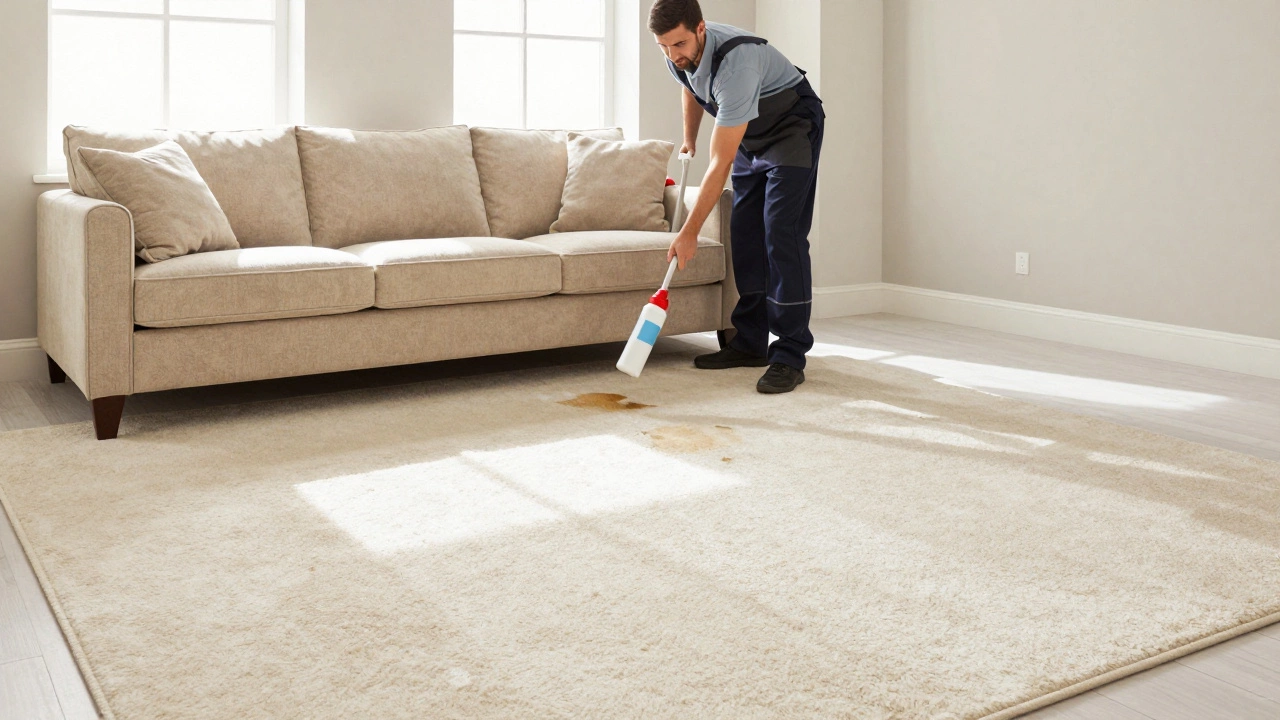
Not every situation requires a professional team, but some do. You should skip the rental store and call an expert if:
Still unsure? Use this quick guide to decide based on your specific situation.
Ultimately, professional carpet cleaning is an investment in the longevity of your flooring. While DIY is a viable option for light maintenance, it cannot match the depth, safety, and efficiency of commercial-grade services. Think of it like dental hygiene: brushing at home is essential, but you still need a dentist for the deep clean.
The Institute of Inspection, Cleaning and Restoration Certification (IICRC) recommends professional cleaning every 12 to 18 months. However, households with pets, children, or smokers should aim for every 6 to 12 months to manage allergens and stains effectively.
True steam cleaning uses no water, just vapor, which is excellent for sanitizing but less effective at removing deep soil. Hot water extraction (often called steam cleaning) is generally superior for deep cleaning because the water dissolves dirt and the suction removes it. Dry cleaning is best for quick refreshes or delicate fabrics that can’t get wet.
Vinegar can help neutralize odors and break down some alkaline soils, but it is not a comprehensive cleaner. It lacks the surfactants needed to lift oily dirt from fibers. Using straight vinegar can also damage certain synthetic fibers over time. It’s best used as a spot treatment rinse, not a full-carpet solution.
A bad smell after cleaning usually indicates mold or mildew growth in the padding. This happens when too much moisture is injected and not fully extracted, leaving the carpet damp for too long. It can also result from leftover soap residue fermenting bacteria. Ensure proper ventilation and consider hiring a pro to extract the remaining moisture.
While professionals can remove most stains, some permanent damage may remain. Stains caused by hair dye, rust, or old blood that has set for weeks may only lighten rather than disappear completely. Early treatment increases the likelihood of complete removal.