Answer these questions to determine if using the customer's water supply is safe.
There is a moment in every professional pressure washing job where the question comes up: "Can I hook into your outdoor tap?" It sounds simple enough. You have a high-pressure machine, you need water, and there is a spigot right there on the side of the house. But the answer is rarely just "yes." Using a customer’s water supply involves plumbing risks, cost implications, and sometimes legal restrictions that most homeowners don’t think about until something goes wrong.
If you are a homeowner trying to understand what professionals do, or if you are a new cleaner wondering about industry standards, this guide breaks down why using customer water is often a bad idea, when it might be acceptable, and what alternatives exist. We will look at the mechanics of municipal water systems, the potential damage to private plumbing, and the best practices for sourcing water safely.
The primary reason many professional pressure washers avoid using a customer’s water supply is the risk of damaging their plumbing system. Municipal water systems are designed to handle high flow rates, but residential pipes are not always built for the sudden demand created by industrial-grade equipment.
When you connect a commercial pressure washer to a standard garden hose bib (outdoor faucet), you create a significant draw on the household’s water pressure. If the pipe inside the wall is old, corroded, or poorly installed, this surge can cause leaks or even bursts. Imagine running your shower while someone else turns on a high-power vacuum cleaner connected to the same line; the pressure drop can be dramatic. In older homes with galvanized steel pipes, this stress can lead to catastrophic failures.
Furthermore, there is the issue of backflow prevention. While modern codes require backflow preventers on outdoor faucets, not all properties have them installed correctly. If the pressure washer’s pump creates a vacuum effect during shutdown or maintenance, there is a theoretical risk of contaminating the potable water supply with dirt and chemicals from the machine. This is a health code violation in many jurisdictions.
Water is not free. In many parts of the United Kingdom and the US, water bills are based on volume consumed. A typical residential pressure washing job can use anywhere from 500 to 1,500 gallons (approx. 2,000 to 6,000 liters) of water, depending on the size of the driveway or siding.
If a homeowner allows a contractor to use their water without a clear agreement, they could see a surprise spike in their next utility bill. For example, in Brighton, UK, where water scarcity is occasionally an issue, local councils often encourage residents to conserve water. Using thousands of liters for a non-essential cleaning task might violate local conservation guidelines during drought periods.
Some contractors include water costs in their quote, assuming they will use their own tank. Others charge extra if they must use the client’s water because they cannot control the meter. Transparency is key here. Always ask: "Who pays for the water used?" before the hoses come out.
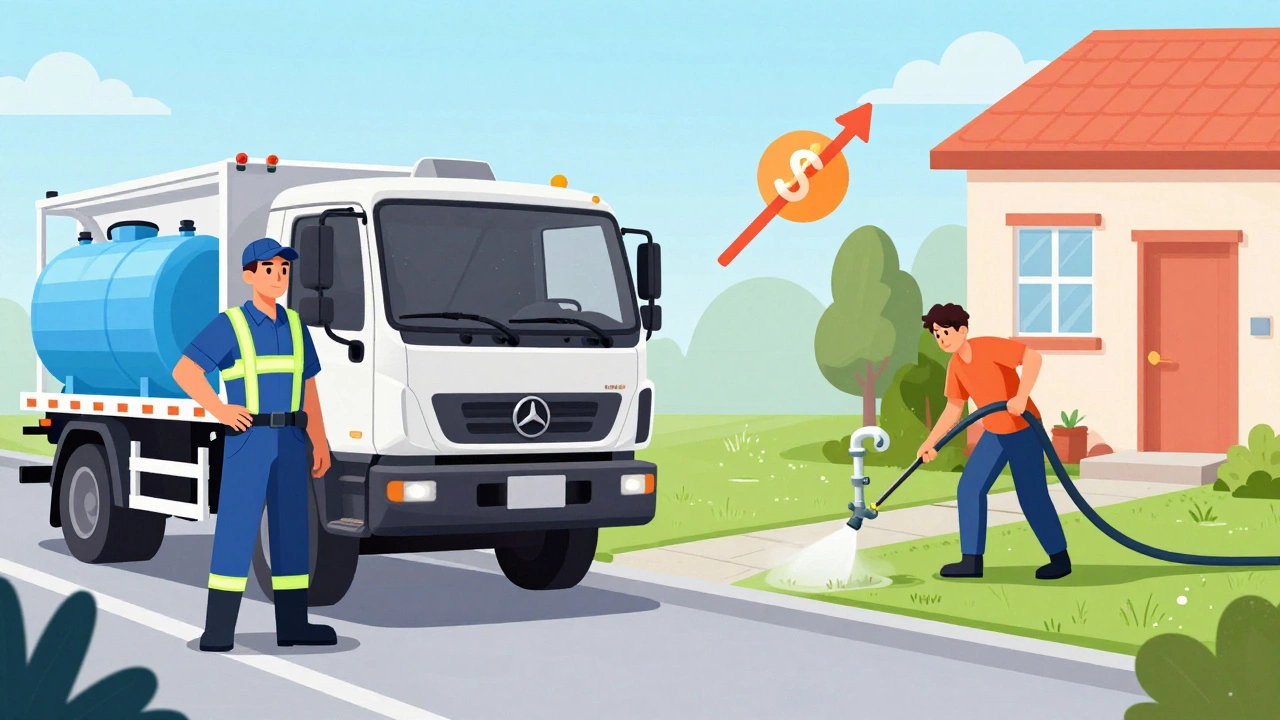
Not all situations are dangerous. There are specific scenarios where using a customer’s water supply is safe, efficient, and even preferred. Understanding these conditions helps both the provider and the consumer make informed decisions.
First, the property must have modern, well-maintained plumbing. Copper or PEX piping is more resilient than old galvanized steel. Second, the outdoor faucet should be equipped with a certified backflow preventer. You can usually identify this by a small device attached to the spigot that looks like a valve with a red or blue cap.
Third, the job must be relatively small. Cleaning a patio table or a small section of decking requires far less water than stripping paint off a two-story house. For small jobs, the strain on the system is negligible.
| Factor | Safe Condition | Risky Condition |
|---|---|---|
| Pipe Age | Less than 10 years | Over 20 years / Galvanized |
| Backflow Preventer | Installed and functional | Missing or broken |
| Job Size | Small area (< 100 sq ft) | Large driveway or house exterior |
| Water Source | Municipal supply | Private well (risk of sediment) |
To avoid these risks, many professional pressure washing companies use self-contained units. These machines have their own onboard water tanks, typically holding between 50 and 100 gallons. They are filled at a fire hydrant or a dedicated fill station before arriving at the site.
This approach offers several advantages. First, it eliminates any liability regarding the customer’s plumbing. Second, it ensures consistent water pressure and flow rate, regardless of the home’s main supply issues. Third, it allows for greater mobility. The operator can move the machine around the property without being tethered to a single faucet.
In the UK, where space is often limited in urban areas like Brighton, tanked machines are particularly popular. They allow cleaners to work in tight driveways without dragging long hoses across neighbors’ lawns. Additionally, some advanced units recycle water through filtration systems, reducing overall consumption by up to 80%. This aligns with growing environmental concerns and stricter regulations on wastewater runoff.
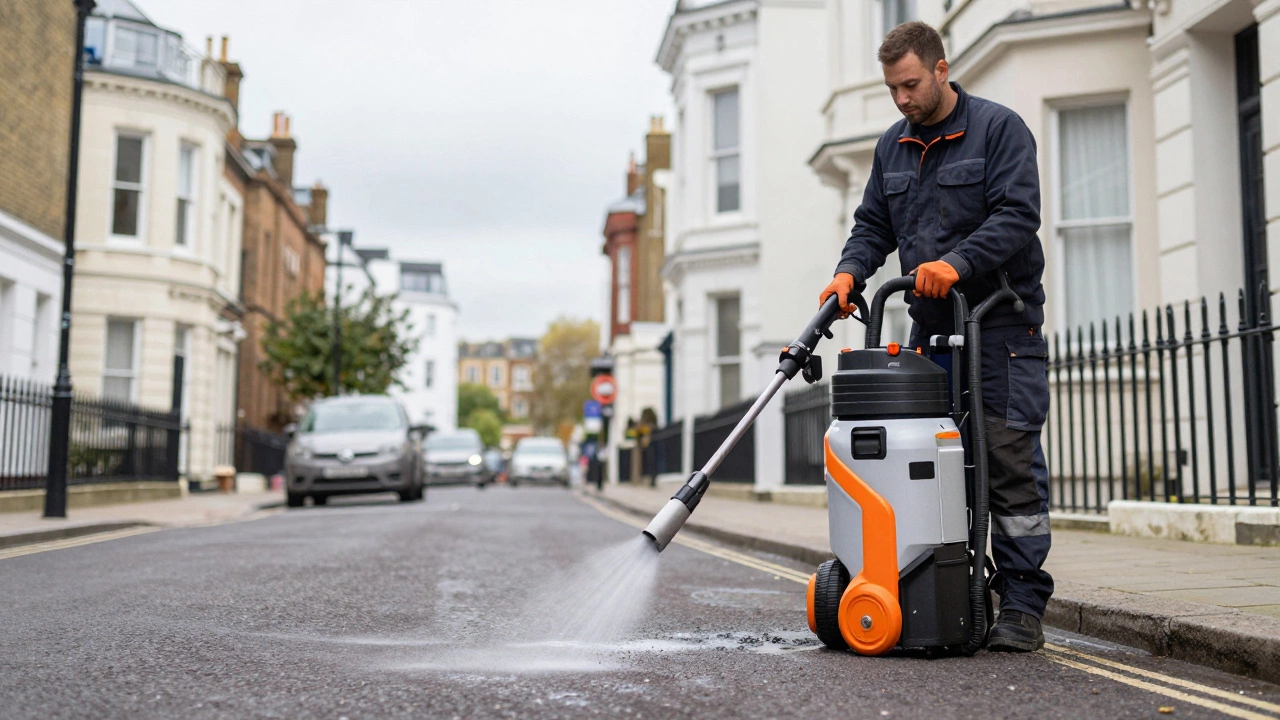
Beyond plumbing and costs, there are legal factors to consider. In many municipalities, it is illegal to discharge untreated wastewater directly into storm drains. Pressure washing removes oil, grease, mold, and chemical residues from surfaces. If this dirty water flows into a gutter or storm drain, it ends up in local rivers or oceans, causing pollution.
Using a customer’s water supply often means the wastewater has nowhere to go but the ground or the street. Professional services must comply with local environmental laws, which may require them to contain and dispose of wastewater properly. Some cities ban pressure washing altogether unless specific containment measures are used.
In Brighton, local council guidelines emphasize responsible water use and waste management. Residents are encouraged to report excessive water usage or improper disposal of cleaning runoff. As a homeowner, you want to ensure that the service you hire is compliant with these regulations to avoid fines or community complaints.
If you are hiring a pressure washer, here is how to protect yourself and your property:
By taking these steps, you can enjoy a clean home without worrying about unexpected repairs or environmental violations. Communication is the most important tool in this process. A reputable professional will be happy to explain their methods and reassure you about safety protocols.
Yes, if your plumbing is old or lacks a proper backflow preventer. High-demand flow can cause cracks in weak pipes, and suction effects can potentially contaminate your drinking water supply.
Many do, especially those using tanked machines. This avoids liability for plumbing damage and ensures consistent performance. However, some smaller operators may still rely on customer taps for minor jobs.
Generally, yes, but local regulations vary. Some areas restrict large-scale water usage during droughts, and others have strict rules about wastewater runoff entering storm drains.
A standard driveway cleaning can use 500 to 1,500 gallons (2,000 to 6,000 liters). Larger projects or heavily soiled surfaces may require significantly more.
It is a device installed on outdoor faucets that prevents contaminated water from flowing back into the clean water supply. It is essential for safety when connecting high-pressure equipment.