How to use: Select the surface you are cleaning to discover the best natural ingredient and the professional way to use it.
Select a surface on the left to see the recommended cleaning solution.
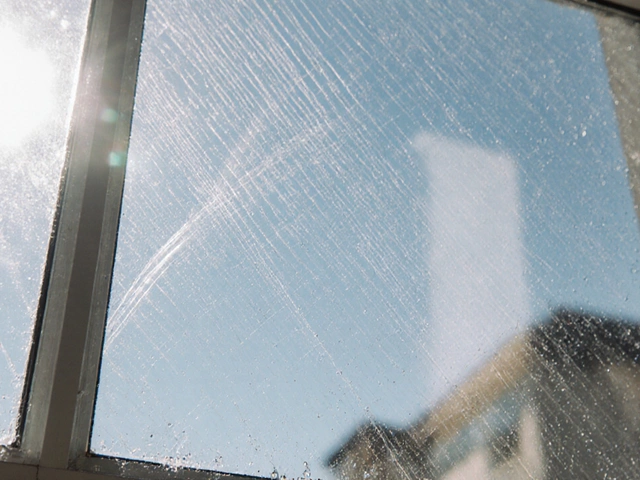
Use a 1:1 mix of white vinegar and water in a spray bottle. It evaporates quickly, leaving a streak-free shine.
Create a paste with baking soda and a tiny bit of water. Spread over the grime, let it sit for 15 minutes, then wipe away.
Dilute a few drops of Castile soap in warm water. Use a damp (not soaking) cloth or mop to lift dirt and oils.
Apply directly to moldy grout to oxidize and kill mold spores. Great for high-risk areas like cutting boards.
For odors: Sprinkle baking soda, let sit for 30 mins, then vacuum. For stains: Mix peroxide with a drop of soap.
Quick Summary: What actually works?
If you want to switch to eco-friendly cleaning, you don't need a cupboard full of twenty different plastic bottles. You only need a few versatile ingredients that handle different types of dirt. The secret lies in understanding the chemistry-whether you need an acid to break down minerals or a base to cut through oil.
White Vinegar is a diluted acetic acid that cuts through mineral deposits and kills some bacteria. Because it is acidic, it is the best tool for removing hard water stains from chrome faucets or cleaning streaks off a mirror. Just remember: never use it on granite or marble, as the acid will eat into the stone.
Baking Soda (or sodium bicarbonate) is a mild alkaline powder that acts as a gentle abrasive and a powerful deodorizer. It doesn't just mask smells; it neutralizes them. If you spill coffee on a rug or find a stinky gym bag, a sprinkle of this powder does the trick.
Castile Soap is a multipurpose soap made from vegetable oils, usually olive oil, and free from synthetic detergents. Unlike commercial soaps that use sulfates, this is biodegradable and safe for kids and pets. It works as a floor cleaner, dish soap, and even a hand wash.
| Surface Type | Best Ingredient | Why it Works | Avoid On... |
|---|---|---|---|
| Windows/Mirrors | White Vinegar | Evaporates quickly, no streaks | Marble, Quartz |
| Oven/Sinks | Baking Soda | Scrubs without scratching | Very delicate surfaces |
| Counters/Floors | Castile Soap | Lifts dirt and oils | N/A (Safe for most) |
| Moldy Grout | Hydrogen Peroxide | Oxidizes and kills mold | Dark fabrics (bleaches) |
The kitchen is where the real battle happens. You're dealing with polymerized oils on the stove and food particles in the sink. Forget the heavy-duty degreasers that require you to open every window in the house. Instead, try a paste made from baking soda and a tiny bit of water. Spread it over the burnt-on bits of your stovetop, let it sit for 15 minutes, and then wipe it away. The mild abrasion lifts the carbon without scratching the enamel.
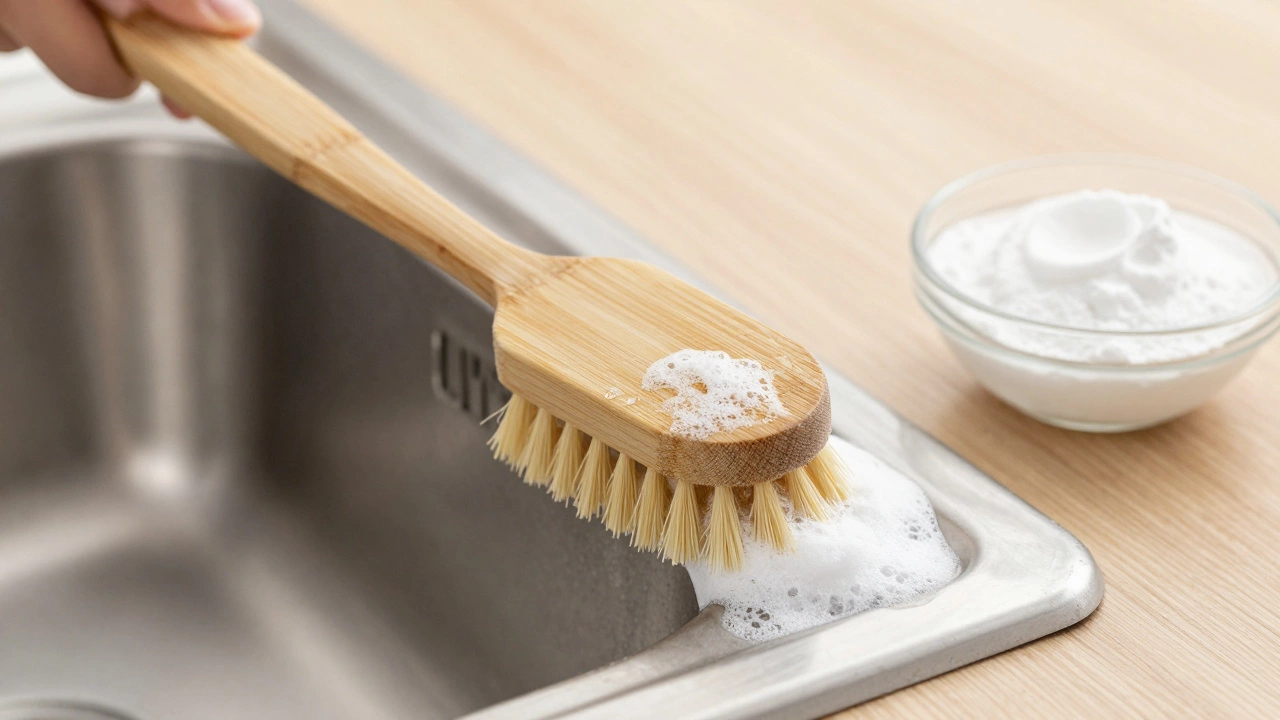
For the sink, a common mistake is using a sponge that has become a colony for bacteria. Switch to a Bamboo Brush. Combine this with a drop of Castile soap for a daily clean. If the drain starts to smell, pour half a cup of baking soda down the pipe, followed by half a cup of white vinegar. The resulting fizz-a chemical reaction between the acid and the base-physically pushes debris out of the pipe.
Bathrooms are prone to Limescale, those chalky white deposits left behind by hard water. Since limescale is alkaline, you need an acid to dissolve it. A 1:1 mix of white vinegar and water in a spray bottle is the most efficient way to handle this. Spray your shower head, let it sit for ten minutes, and the minerals will simply slide off.
When it comes to the toilet, avoid the blue chemicals that linger in the bowl. A sprinkle of baking soda followed by a vinegar rinse cleanses the bowl and freshens the air. For those stubborn rings at the water line, a pumice stone (kept wet!) is a mechanical solution that works far better than any liquid chemical.
Dusting often involves a lot of disposable wipes, which are basically just plastic. Instead, use Microfiber Cloths. These cloths are designed to grab and hold dust particles through electrostatic attraction rather than just pushing them around. When they get dirty, just toss them in the wash; avoid fabric softeners, as they coat the fibers and ruin the cloth's ability to attract dust.
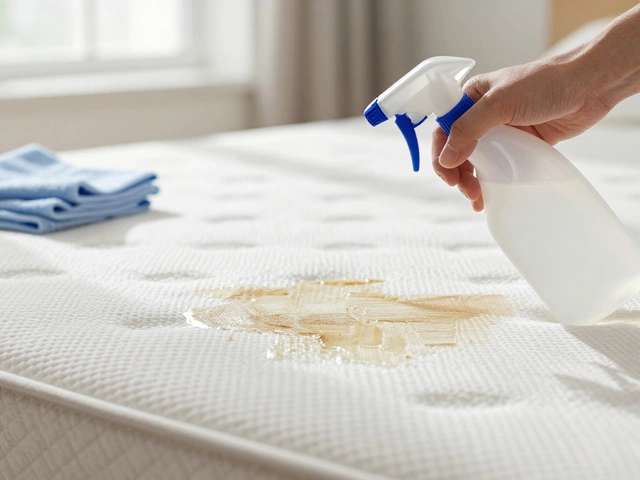
For carpets and upholstery, avoid the steaming chemicals of rented machines. A light dusting of baking soda on a mattress or rug, left for 30 minutes before vacuuming, removes odors at the molecular level. If you have a stain, a mix of hydrogen peroxide and a drop of dish soap often works better than a specialized "stain remover" spray, provided you test a small hidden area first to ensure no color bleeding occurs.
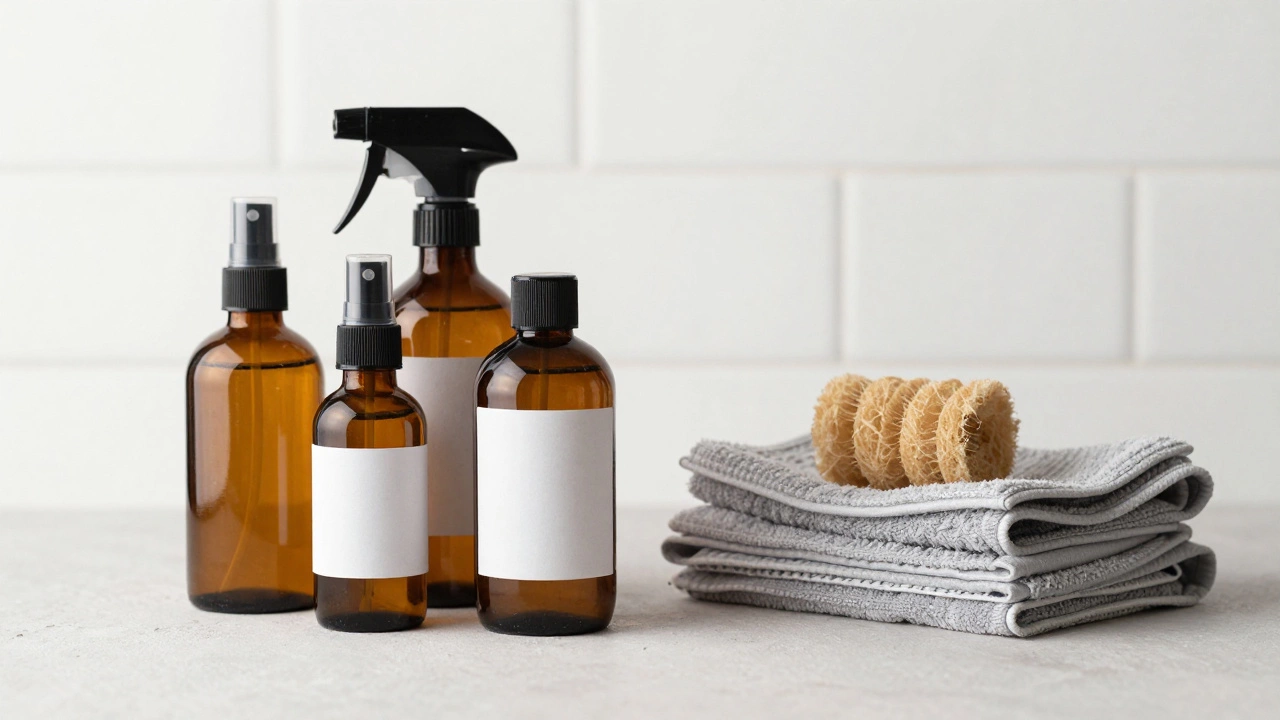
Cleaning isn't just about the liquid; it's about the tools. If you're using plastic sponges, you're contributing to the microplastic problem in our oceans. Move toward Cellulose Sponges or coconut husk scrubbers. They are compostable and often more durable.
Another pro tip is to invest in glass spray bottles. Not only does this stop the cycle of buying new plastic, but it also prevents the degradation of the cleaner. Some essential oils, like lemon or tea tree oil, can eat through cheap plastic over time, but they are perfectly stable in glass. Adding a few drops of tea tree oil to your vinegar spray doesn't just smell better-it adds antifungal and antibacterial properties to your routine.
Even natural cleaners can be dangerous if mixed incorrectly. The most critical rule is: Never mix bleach and vinegar. Doing so creates chlorine gas, which is toxic and can cause immediate respiratory distress. While you're moving toward eco-friendly options, you might still have some old bleach in the laundry room. Keep them strictly separate.
Another pitfall is using vinegar on everything. As mentioned, it's an acid. If you use it on your granite countertops or your marble tiles, you will cause "etching." This is a chemical burn on the stone that looks like a dull spot and cannot be wiped away-it requires professional polishing to fix. For stone surfaces, stick to a pH-neutral cleaner like a diluted Castile soap solution.
Vinegar is great for removing grime and inhibiting the growth of many bacteria, but it isn't a registered disinfectant. It won't kill everything, like salmonella or certain viruses. For high-risk areas (like a cutting board where raw chicken was prepped), it's better to use hydrogen peroxide or a dedicated food-safe sanitizer.
The strong scent of acetic acid disappears almost completely once the liquid dries. If you can't stand the smell while cleaning, add a few drops of lemon or peppermint essential oil to your mix. You can also infuse your vinegar by soaking lemon peels in the bottle for two weeks before using it.
Baking soda is generally safe, but because it's a mild abrasive, it can scratch very soft surfaces. Avoid using it on polished gold or silver, or on very high-gloss plastics. Always do a quick test on a small, hidden corner to make sure it doesn't leave a matte finish where you want a shine.
Loofahs (which are dried gourds) or coconut husk scrubbers are fantastic. For lighter cleaning, a Swedish dishcloth is a great choice; one cloth can replace up to 17 rolls of paper towels and can be washed in the laundry.
Yes, as long as you use it sparingly. The key is to use a damp mop, not a soaking wet one. Too much water can warp the wood, and too much soap can leave a sticky residue. A few drops of Castile soap in a bucket of warm water is usually plenty for a whole room.
If you're feeling overwhelmed, don't throw out all your current cleaners today-that's just wasteful. Instead, start a "one-in, one-out" policy. When your glass cleaner runs out, replace it with a homemade vinegar spray. When your scouring powder is gone, swap it for a box of baking soda.
For those who want to go even further, look into the "Zero Waste" movement. This involves buying ingredients in bulk to avoid plastic packaging entirely. You can find many health food stores that allow you to fill your own glass bottles with soap and vinegar. By making these small shifts, you not only protect the planet but also create a healthier breathing environment for everyone in your home.