When you see a house that looks like it just got a fresh coat of paint-except it didn’t-chances are, it was pressure washed. The dirt, mold, algae, and years of grime vanish in minutes. But what’s actually in the hands of the pros doing this job? It’s not just a garden hose with a nozzle. Professionals use specific tools, machines, and techniques that turn a messy chore into a precise, safe, and effective cleaning process.
Most professional pressure washers in the UK use gas-powered machines rated between 3,000 and 4,000 PSI (pounds per square inch). That’s three to four times stronger than a typical home unit you can rent or buy from a hardware store. Why? Because house surfaces like brick, stucco, and concrete need enough force to lift embedded dirt without damaging the material. Too little pressure, and you waste time. Too much, and you strip paint, gouge wood, or crack siding.
These machines also run at 3 to 4 GPM (gallons per minute). Flow rate matters as much as pressure. A machine with high PSI but low GPM will struggle to rinse away loosened grime. Professionals need volume to flush out debris quickly. That’s why rental units often feel underpowered-they’re designed for light use, not full-day jobs.
Brands like Karcher, Hotsy, and NorthStar dominate professional job sites. These aren’t just names-they’re trusted for durability, parts availability, and consistent performance. A pro might spend £1,500 to £3,000 on a machine, not because they’re extravagant, but because a cheap unit breaks down after three jobs, costing more in downtime and replacements.
Pressure washers come with interchangeable nozzles, and pros know exactly which one to use for each surface. The nozzle isn’t just a tip-it’s the control center.
Professionals carry at least three nozzles on every job. They switch based on the surface, the dirt type, and the weather. A cold, damp morning might need a wider spray to avoid freezing water on the surface.
Most homeowners think pressure washing means cold water. But pros often use hot water machines-especially for homes with heavy grease, oil, or biological buildup like mold and algae.
Hot water (up to 200°F) breaks down organic matter faster. It’s not just about heat-it’s about chemistry. Warm water helps cleaning solutions penetrate deeper and work more effectively. A cold water machine might take 45 minutes to clean a moldy wall. A hot water unit can do it in 15.
Hot water pressure washers cost more-£4,000 to £7,000-but they’re worth it for businesses. In the UK, where damp conditions breed mold year-round, hot water isn’t a luxury. It’s standard for any serious house cleaning service.
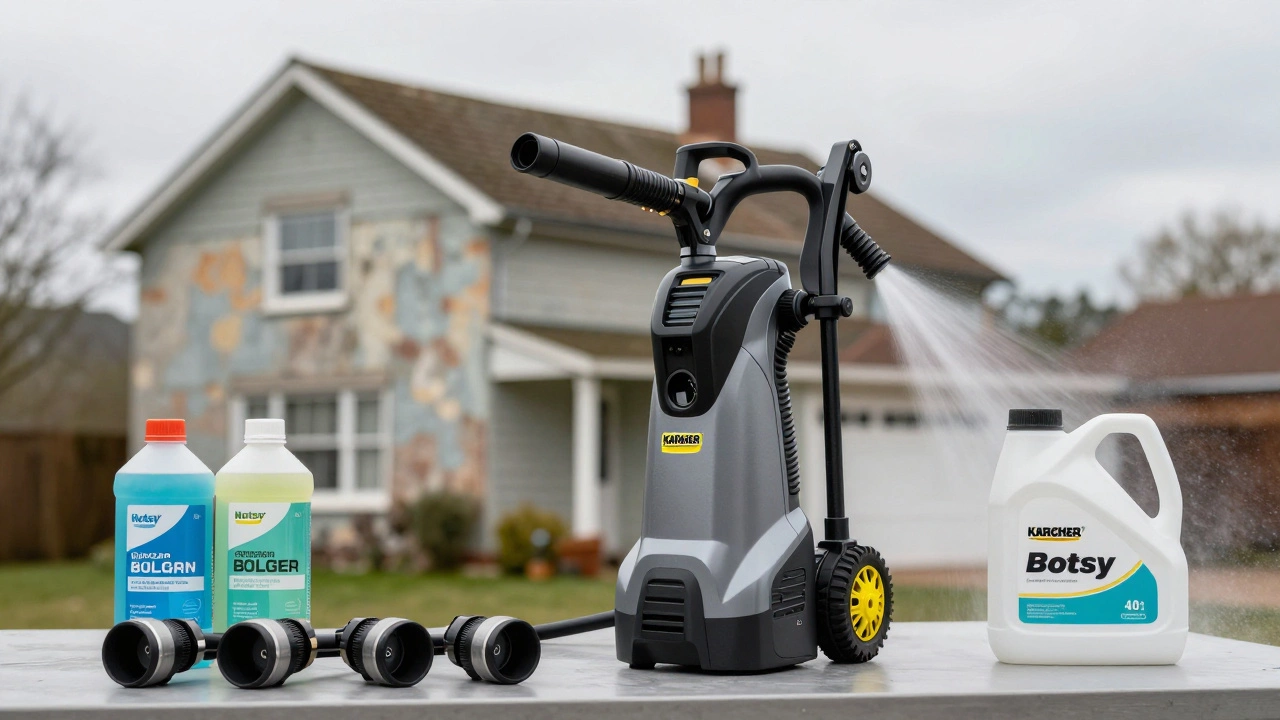
Pressure washing isn’t just water. It’s water + chemistry. Professionals use specialized cleaners designed for specific surfaces and contaminants.
Pros never use household bleach straight from the bottle. It’s too strong, damages surfaces, and kills nearby plants. They also avoid cheap, big-box store cleaners-many contain fillers that clog nozzles or leave residue.
Most professionals mix their own solutions based on the job. They carry 3-5 different concentrates in labeled containers and test a small area first. A house with moss on the roof? Different mix than one with dirt-caked brick.
Not all houses are the same. A 1930s brick cottage in Brighton needs different handling than a 2010s vinyl-sided suburban home.
One mistake many DIYers make? Cleaning the whole house at once. Pros work in sections. They apply cleaner, let it sit 5-10 minutes, then rinse. This gives the solution time to break down grime. Rushing leads to streaks and missed spots.
There’s a lot pros avoid:
Some DIYers think more pressure = better results. But pros know better. It’s not about power-it’s about precision. A professional’s skill lies in knowing when to back off, when to switch nozzles, and when to walk away from a surface entirely.
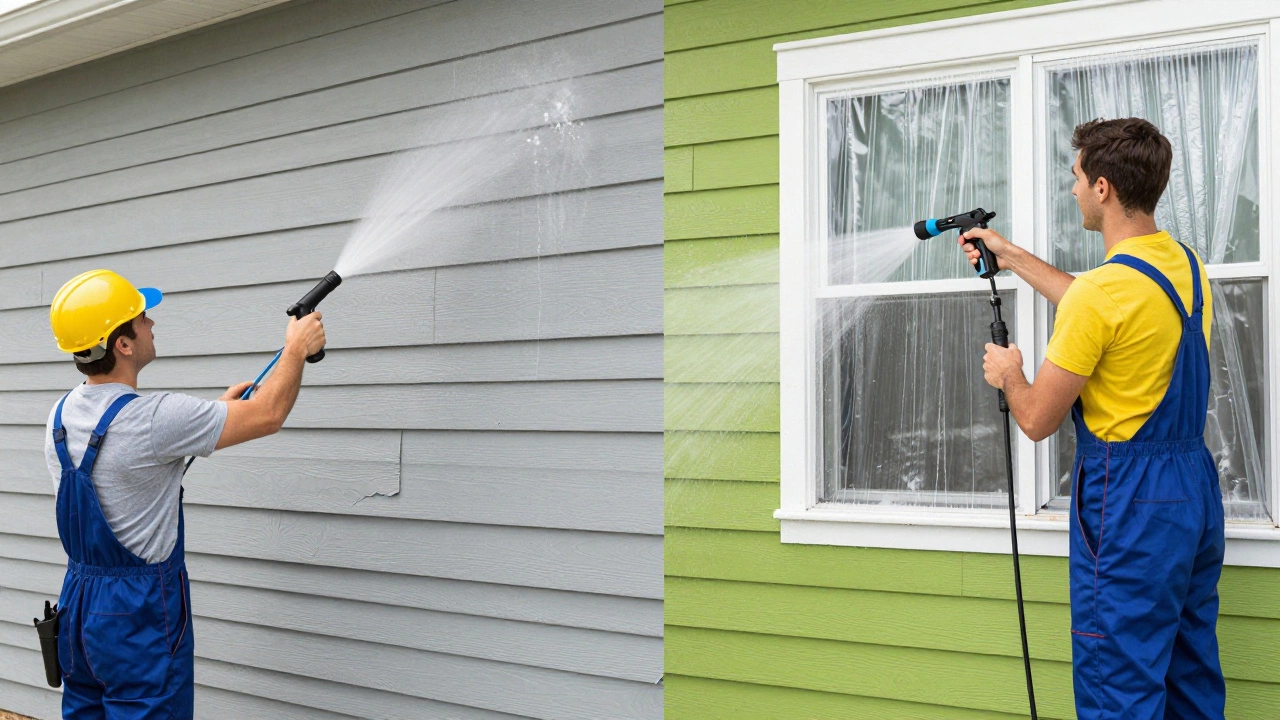
People rent machines from Home Depot or B&Q thinking they’ll save money. But here’s what usually happens:
Repairs cost more than hiring a pro. A single damaged vinyl panel costs £150 to replace. A water-damaged wall behind siding? That’s £1,000+.
Professionals carry insurance. They know how to protect plants, windows, and doors. They have the right gear to avoid injury and damage. It’s not just about the machine-it’s about experience.
If you’re hiring someone, ask:
Any reputable pro will answer these without hesitation. If they say, “I just use the machine,” walk away. Pressure washing is a trade. It’s not magic.
In Brighton, where sea salt, damp, and moss are constant problems, pros know the local conditions. They adjust their methods for coastal homes, listed buildings, and narrow streets. A one-size-fits-all approach doesn’t work here.
Pressure washing a house isn’t about brute force. It’s about matching the right tool to the right surface, at the right pressure, with the right chemical. Professionals don’t just spray water-they solve problems. They protect your home while making it look new again.
If you’re thinking of doing it yourself, understand the risks. If you’re hiring someone, don’t just pick the cheapest. Look for someone who knows the difference between a 25° and a 40° nozzle-and why it matters.
No. A garden hose with a nozzle might increase water speed slightly, but it won’t generate the pressure (PSI) or flow (GPM) needed to clean a house properly. Most household hoses max out at 100-150 PSI. Professional machines start at 3,000 PSI. You’ll just wet the surface, not clean it.
Yes, if you have mold, algae, grease, or heavy biological buildup. Hot water breaks down organic matter faster and reduces the need for strong chemicals. In the UK’s damp climate, it cuts cleaning time by up to 60% and gives longer-lasting results. For occasional use, it’s not necessary-but for regular cleaning, it’s a smart investment.
Most homes need pressure washing every 1-2 years. In coastal areas like Brighton, where salt and moisture accelerate mold growth, annual cleaning is recommended. Homes with lots of shade or trees nearby may need it more often. Always check for signs: dark streaks on siding, green patches on brick, or slippery walkways.
Yes-if done wrong. Too much pressure, the wrong nozzle, or spraying upward can damage siding, strip paint, crack brick, or force water into walls. Professionals know the safe limits for each material. DIYers often cause more harm than good. Always test a small area first, and never use a 0° or 15° nozzle on house exteriors.
Pressure washing uses high water pressure to blast away dirt. Soft washing uses low pressure (under 500 PSI) and relies on cleaning solutions to kill mold, algae, and bacteria. Soft washing is better for roofs, painted surfaces, and delicate materials. It’s gentler and lasts longer because it kills the roots of organic growth, not just the surface. Many pros now use soft washing for roofs and siding to avoid damage.