Most people think cleaning their kitchen is simple: spray, wipe, done. But if your counters still feel sticky, your sink smells weird, or your stainless steel looks like a fingerprint museum, you’re probably making the same mistakes millions of others do. It’s not about how much time you spend-it’s about what you’re doing wrong.
Don’t use vinegar on stone countertops
Vinegar is popular because it’s cheap and smells fresh. But if you’ve got granite, marble, or limestone countertops, vinegar is eating away at them. The acid in vinegar breaks down the sealant and etches the surface. Over time, you’ll see dull spots, tiny pits, and stains that won’t wipe off. I’ve seen kitchens where people cleaned daily with vinegar for years-then the countertop looked like it had been sandblasted. Once the stone is etched, you can’t just reseal it. You need a professional to polish it back, and that costs hundreds. Use a pH-neutral cleaner made for stone instead. Or just warm water and a drop of dish soap. It works fine.
Never mix bleach with ammonia or vinegar
This one kills people every year. Mixing bleach with ammonia creates chloramine gas. It burns your lungs, makes you cough until you vomit, and can send you to the hospital. Mixing bleach with vinegar makes chlorine gas. Same result: choking, eye damage, and in extreme cases, death. You don’t need to be a chemist to know this. If your cleaner says “bleach” on the label, don’t combine it with anything else. Not even if you think “it’ll make it stronger.” It won’t. It’ll just turn your kitchen into a toxic zone. If you need to disinfect, use bleach alone on non-porous surfaces like sinks or tiles. Let it sit for 10 minutes, then rinse thoroughly. Always open a window.
Avoid steel wool on non-stick pans
You’ve got a burnt-on piece of pancake stuck to the bottom of your pan. You grab steel wool. Bad idea. Non-stick coatings are thin. Steel wool scrapes right through them. Now your pan is ruined, and you’re eating food that’s coated in Teflon flakes. That’s not just a waste of money-it’s a health risk. Instead, soak the pan in hot, soapy water for 20 minutes. Then use a soft sponge or a wooden spatula to gently scrape off the gunk. If that doesn’t work, boil a mix of water and baking soda in the pan for 5 minutes. The residue lifts right off. Your pan will last five times longer if you treat it right.
Don’t pour grease down the drain
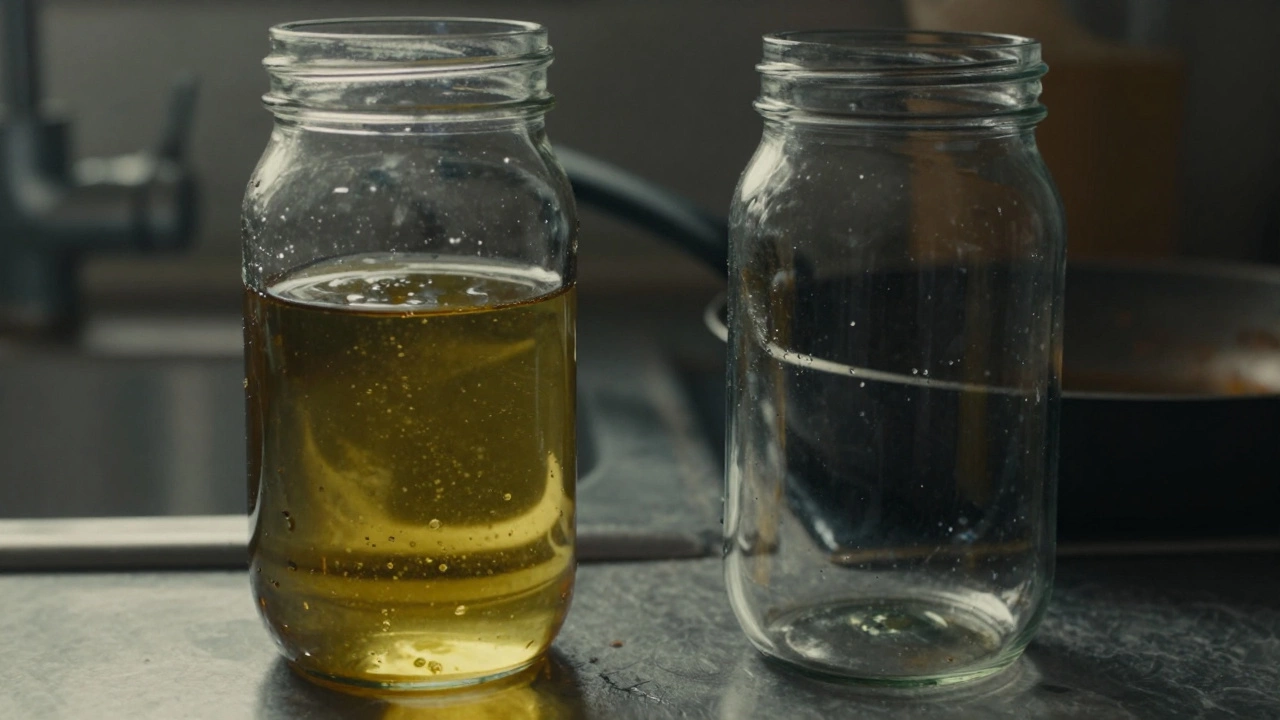
You’re washing out a pan after frying chicken. You tip the grease straight into the sink. “It’s liquid,” you think. “It’ll flow.” But grease cools down fast. It sticks to the inside of your pipes. Over time, it builds up. Then you get a slow drain. Then a gurgle. Then a full blockage. And when that happens, you’re not just paying for a plumber. You’re paying for a sewer line repair that can cost over £1,000. Instead, pour hot grease into a jar or an old tin can. Let it cool. Throw it in the bin. Keep a small container next to your stove. Make it a habit. It takes 10 seconds and saves you hundreds.
Stop using all-purpose cleaners on wood cabinets
All-purpose cleaners often contain ammonia or alcohol. They strip the finish off wood cabinets. You’ll notice the surface turning white, looking cloudy, or peeling in patches. It’s not dirt-it’s damage. Once the finish is gone, moisture gets in. The wood swells. The doors warp. Fixing that means sanding and refinishing the whole cabinet, which is a weekend project at best. Use a damp microfiber cloth for daily dusting. For deeper cleaning, mix a few drops of olive oil with water. Wipe gently. It cleans and conditions at the same time.
Don’t clean the fridge with harsh chemicals
Your fridge smells like old milk and mystery meat. You spray it with a strong disinfectant. Big mistake. Harsh chemicals leave residues that can taint your food. Even after wiping, traces stick around. That’s why your yogurt tastes like cleaner. Instead, take everything out. Wipe shelves with warm water and a teaspoon of baking soda. Use a toothbrush for crevices. Dry everything before putting food back. If you need to kill bacteria, use a mix of white vinegar and water-but only on non-food surfaces like the door seal. Never spray inside where food sits.
Don’t ignore the dishwasher filter
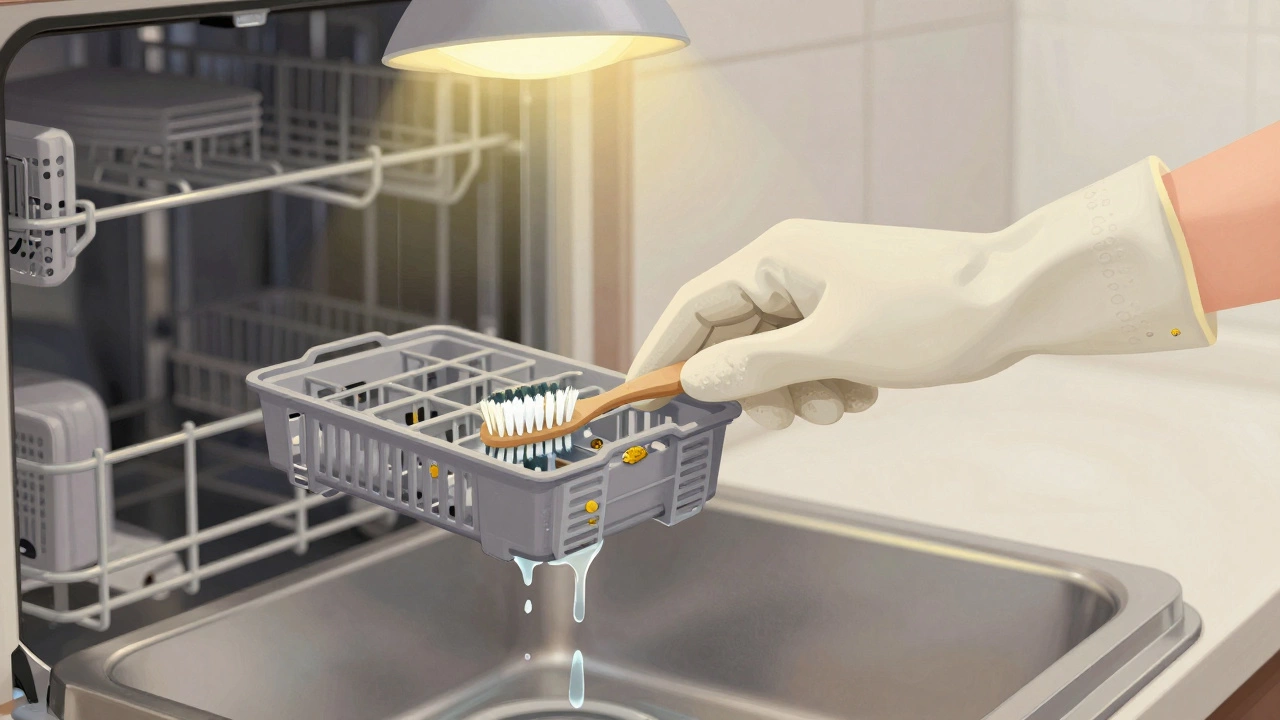
Your dishwasher runs fine, but your glasses come out cloudy. You think it’s the water hardness. It’s not. It’s the filter. Most people never clean it. Food scraps, grease, and bits of plastic build up inside. That gunk gets recycled into every wash cycle. The result? Dirty dishes, bad smells, and a machine that wears out faster. Check your filter every month. Remove it. Rinse under warm water. Use an old toothbrush to scrub out the gunk. Some models have a removable basket-clean that too. It takes two minutes. Your dishes will sparkle. Your machine will last longer.
Don’t use the same cloth for the sink and the counters
Your sponge is full of bacteria from raw chicken juice. You wipe the counter with it. Now your cutting board is contaminated. You wipe the fridge handle. Now your kid’s hands get dirty. Cross-contamination is the #1 reason people get sick from kitchen messes. Use separate cloths: one for raw meat areas, one for counters, one for glass and stainless. Color-code them if you need to. Wash them after every use. Or better yet, use disposable paper towels for high-risk zones. It’s cheap. It’s simple. It stops germs from spreading.
Don’t clean the oven while it’s hot
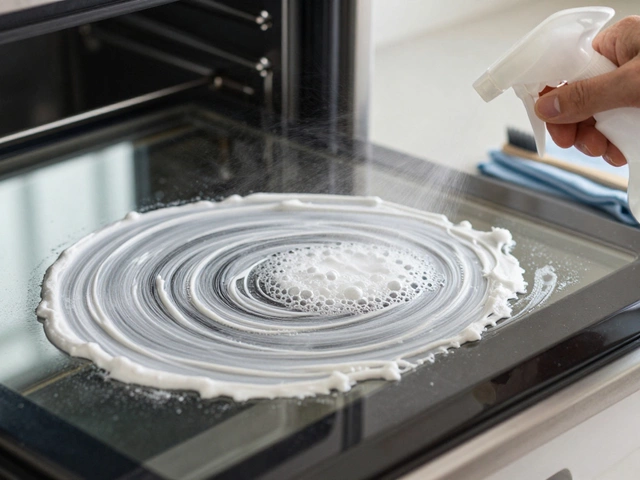
You just finished baking. The oven’s still warm. You grab the cleaner. Bad idea. Oven cleaners release fumes that are dangerous when hot. They can burn your skin, irritate your eyes, and make you dizzy. Plus, the heat makes the cleaner evaporate too fast-so it doesn’t work. Wait until the oven is cool. Open the window. Wear gloves. Spray the cleaner. Let it sit for at least 30 minutes. Then wipe with a damp cloth. If you’re lazy, try baking soda paste. Mix baking soda with water into a thick paste. Spread it inside. Leave it overnight. Wipe it off the next day. No fumes. No risk. Works just as well.
Don’t forget the backsplash and light switches
You clean the stove, the sink, the floor. But you skip the backsplash. That’s where grease builds up. You wipe the counter, but not the light switches. Those are germ hotspots. People touch them with dirty hands, then flip the switch. You don’t see it, but it’s there. Use a disinfectant wipe on switches, handles, and backsplashes weekly. If you have tile, scrub the grout with an old toothbrush and baking soda. It’s not glamorous. But it’s the difference between a kitchen that looks clean and one that’s actually hygienic.
Don’t clean everything every day
You think cleaning daily means a spotless kitchen. But over-cleaning wears things out. You scrub stainless steel every day? You’ll scratch it. You spray disinfectant on granite every morning? You’re breaking down the sealant. You wash your cutting board with bleach after every use? You’re ruining the wood. Clean daily only where it matters: the sink, the stove top, the counters after cooking. Deep clean once a week. That’s enough. Less is more. Your surfaces will thank you.
Don’t assume your cleaner is safe just because it’s labeled “natural”
“Natural” doesn’t mean harmless. Lemon oil cleaners can damage wood. Tea tree oil can stain stone. Essential oils leave oily residues that attract dust. Just because a bottle says “eco-friendly” doesn’t mean it’s safe for your surfaces. Always check the ingredients. Avoid anything with citric acid on stone. Avoid alcohol on wood. Avoid abrasives on non-stick. Read the label. If it doesn’t say what it’s safe for, don’t use it.
Don’t clean without gloves
Your hands are your most used tool in the kitchen. But they’re also your most vulnerable. Cleaning products dry out your skin. They cause cracks. Cracks mean germs get in. You get eczema. You get infections. Always wear gloves. Even if you’re just using dish soap. Rubber gloves cost less than £2. They last months. Protect your hands. Your skin will thank you.