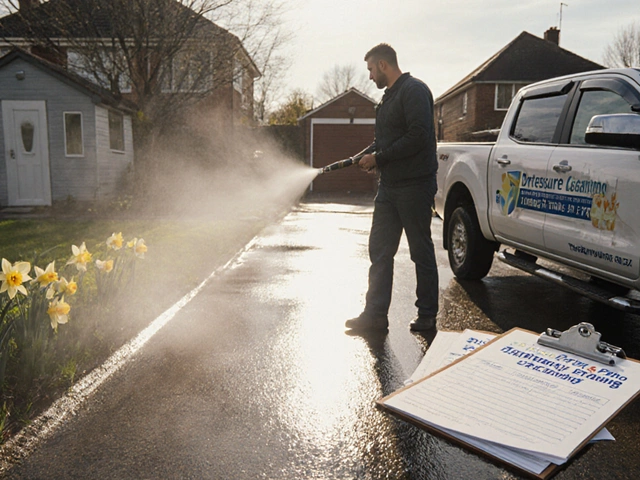
Grabbing a pressure washer and blasting your home’s siding without preparation is like scrubbing a stain with dry sandpaper. You might remove the dirt, but you’ll likely damage the surface in the process. The secret to a clean, streak-free exterior isn’t just water pressure; it’s chemistry. Applying the right cleaning solution before you even turn on the high-pressure nozzle can save hours of labor and protect your home’s materials.
If you’ve ever wondered what do you spray on your house before pressure washing, the answer depends entirely on what you’re trying to kill or dissolve. Is it green algae? Black mold? Years of baked-on grease? Or just general grime? Using the wrong chemical can discolor brick, rot wood, or strip paint. Let’s break down exactly what to use, how to apply it, and why patience beats power every time.
Most homeowners make the mistake of thinking pressure washing is about force. It’s not. Professional cleaners know that mechanical force (the water jet) should only be used for rinsing. The actual cleaning happens when chemicals break the bond between the contaminant and the surface. This method is often called "soft washing" when dealing with delicate surfaces like vinyl siding, stucco, or roof shingles.
When you spray a solution onto your house, you give it time to dwell. This dwell time allows the active ingredients to penetrate organic growths like algae, lichen, and moss. If you blast these organisms away with high pressure alone, their roots remain embedded in the pores of your siding or stone. They will grow back within weeks. Chemical treatment kills the root system, ensuring a longer-lasting clean.
Not all dirt is created equal, so you need specific agents for different problems. Here are the most common solutions used by professionals and DIYers alike.
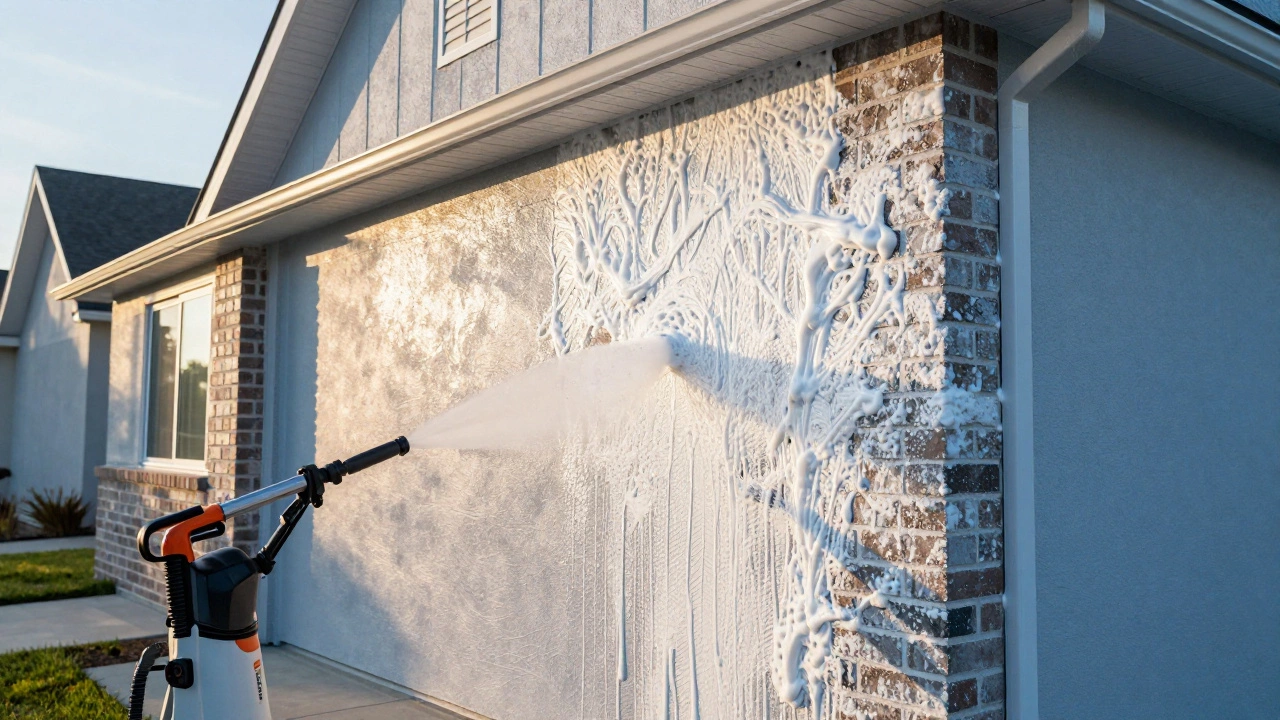
Applying the solution correctly is just as important as choosing the right one. Follow this sequence to ensure safety and effectiveness.
| Surface Material | Primary Contaminant | Recommended Solution | Dwell Time |
|---|---|---|---|
| Vinyl Siding | Algae & Mold | Bleach + Water + Surfactant | 10-15 mins |
| Brick/Masonry | Efflorescence & Dirt | Mild Detergent or TSP Substitute | 10 mins |
| Concrete Driveway | Oil & Grease | Degreaser or Dish Soap | 15-20 mins |
| Wood Deck/Fence | Mold & Mildew | Oxygenated Bleach (SOD) | 15 mins |
| Roof Shingles | Black Streaks (Gloeocapsa) | Diluted Bleach or Zinc Wash | No rinse needed (let rain do it) |
While there are many effective cleaners, some substances can cause irreversible damage to your home or pose serious health risks.
Avoid using undiluted bleach directly on painted surfaces unless you are certain the paint is sealed and intact. Bleach can strip paint over time. Never mix bleach with ammonia or acidic cleaners like vinegar. This combination creates toxic chloramine gas, which is dangerous to inhale. Additionally, avoid using strong acids on natural stone like limestone or marble, as they will etch the surface, leaving dull, permanent spots.
If you have metal fixtures, such as aluminum gutters or steel railings, be cautious with chloride-based cleaners. They can accelerate corrosion. In these cases, opt for oxygenated bleach (sodium percarbonate), which breaks down into soda ash and hydrogen peroxide. It’s gentler on metals and vegetation but still effective against organic stains.
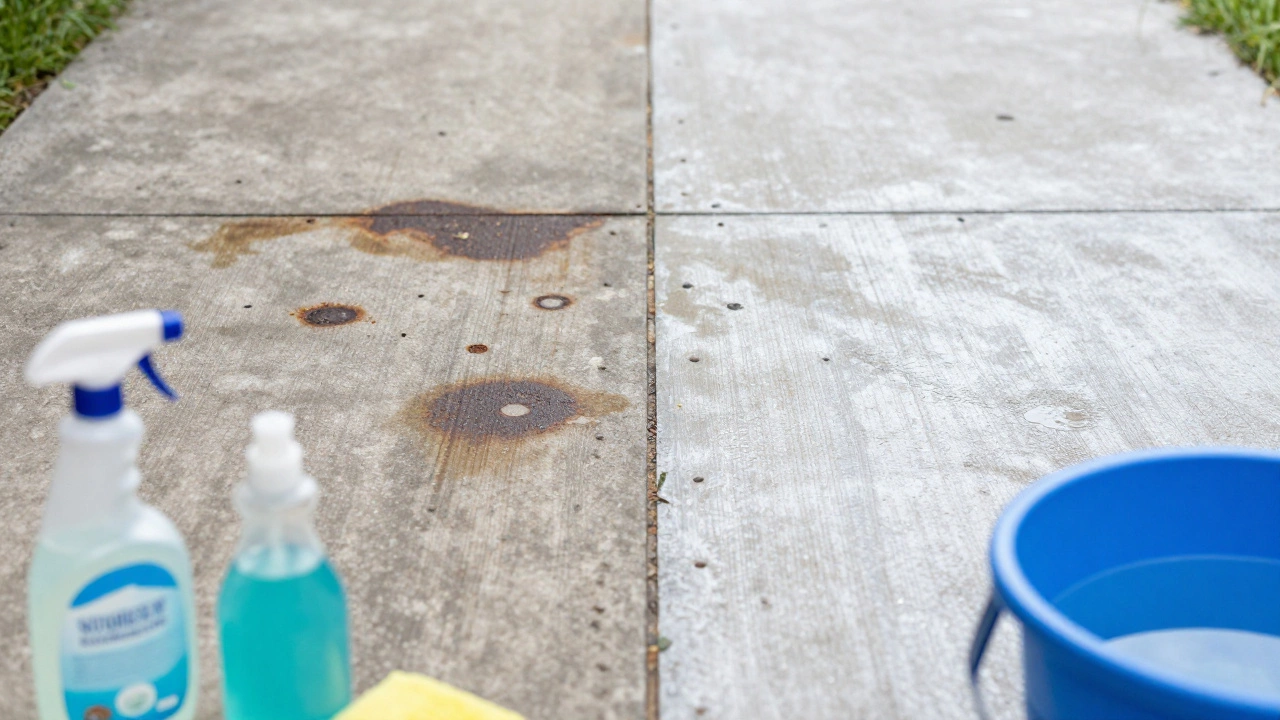
If you’re concerned about runoff affecting local waterways or harming your garden, consider biodegradable options. Many commercial "eco-friendly" pressure washing detergents are plant-based and free from phosphates. These work well for general dirt and light pollen but may require more elbow grease for stubborn mold.
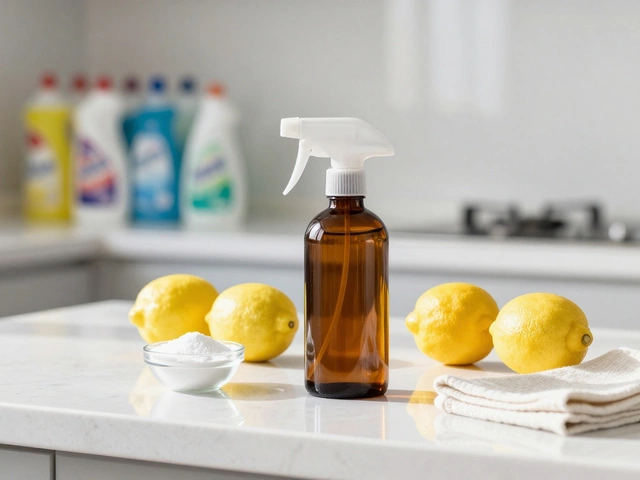
A simple homemade alternative involves mixing warm water with a few drops of castile soap and a cup of white vinegar. While less potent than chlorine bleach, this mixture is safe for pets and plants once rinsed. For tougher jobs, look for products labeled "biodegradable" and "phosphate-free." Always read the label to ensure compatibility with your specific siding material.
To get the best results, timing matters. Choose an overcast day for your project. Direct sunlight causes cleaning solutions to evaporate too quickly, reducing their effectiveness and potentially causing spotting. Early morning or late afternoon is ideal.
Also, test your solution on a small, inconspicuous area first. Some older paints or untreated woods may react unexpectedly to chemicals. If you notice discoloration, stop immediately and rinse with plenty of water. Finally, after rinsing, inspect your work. If stains remain, repeat the application process rather than increasing the pressure. Higher pressure doesn’t remove chemical-resistant stains; it just damages the substrate.
Yes, you can use dish soap, but it has limitations. Dish soap is excellent for cutting through grease and oil, making it suitable for kitchens or garages. However, it lacks the biocidal properties needed to kill mold, algae, or mildew. For general exterior cleaning, a dedicated pressure washing detergent or a bleach-water mixture is more effective. Also, ensure the soap is biodegradable to prevent environmental harm.
The ideal dwell time is typically 10 to 15 minutes. This allows the chemicals to penetrate and break down organic matter. Avoid letting the solution dry on the surface, as this can leave residues or cause staining. If it’s hot outside, mist the area with water to keep it damp during the dwell period.
Bleach is generally safe for vinyl, brick, and concrete when diluted properly. However, it can be harmful to wood, aluminum, and some types of paint. For wood, use oxygenated bleach instead. Always test a small area first and rinse thoroughly to prevent long-term damage or discoloration.
You don’t necessarily need expensive gear. A standard garden pump sprayer works well for smaller areas. For larger homes, a foam cannon attachment for your pressure washer is highly recommended. It creates a thick foam that clings to vertical surfaces, maximizing contact time and cleaning efficiency.
If cleaning solution accidentally lands on plants, rinse them immediately with plenty of plain water. To minimize risk, wet your plants thoroughly before starting the job. This creates a barrier that reduces chemical absorption. If you notice yellowing or wilting later, continue to water the plants deeply to help flush out any residual chemicals.