Select a method and adjust grime level to see results
Every year, millions of people mix baking soda and vinegar thinking it’s the ultimate natural cleaner for their oven. It’s cheap, it’s safe, and it’s everywhere online - tutorials, TikTok videos, Pinterest boards. But here’s the truth: baking soda and vinegar don’t work well together for oven cleaning. In fact, they cancel each other out.
Let’s start with what happens when you combine them. Baking soda (sodium bicarbonate) is a base. Vinegar (acetic acid) is, well, acidic. When you pour vinegar on baking soda, they react instantly. You see the fizzing, the bubbles, the foam. It looks powerful. It feels like science in action. But that reaction doesn’t clean - it neutralizes. The result? Salt water, carbon dioxide, and a lot of wasted effort.
Think of it like this: you’re trying to scrub grease off a baking tray with a sponge soaked in plain water. The fizzing might look impressive, but it’s not breaking down the baked-on grease. That’s exactly what’s happening here. The acid-base reaction consumes both ingredients before they can do any real cleaning work. By the time the bubbles settle, you’re left with sodium acetate and water - neither of which is a degreaser.
Oven grime isn’t just dirt. It’s a mix of burnt fat, sugars, proteins, and carbonized food particles. These stick to metal surfaces and bake into a tough, sticky layer over time. To break it down, you need something that either dissolves grease (a solvent) or breaks down carbon chains (a strong alkali). Vinegar? It’s too weak. Baking soda? It’s mild, but it can help - if used right.
Here’s what actually works: baking soda on its own. Sprinkle it thickly over the bottom of your oven, then spray it with water until it’s damp (not soaking wet). Let it sit overnight. The baking soda slowly penetrates the grease. It doesn’t fizz. It doesn’t bubble. It just… works. In the morning, wipe it away with a damp cloth. For stubborn spots, scrub gently with a non-scratch pad. No vinegar needed.
Vinegar is great for glass, stainless steel, and mineral deposits. It’s excellent at cutting through soap scum in showers or removing hard water stains from kettles. But it’s terrible at dissolving baked-on grease. That’s because grease is non-polar. Vinegar is polar. They don’t mix well. You’re better off using a dedicated oven cleaner or even just hot water and dish soap for light cleaning.
Some people swear by using vinegar after baking soda - claiming it ‘activates’ the paste. That’s a myth. The fizzing doesn’t enhance cleaning. It just speeds up the neutralization. If you’ve already applied baking soda and let it sit for hours, adding vinegar at that point won’t help. It’ll just make a mess and leave you with more wiping to do.
Last year, a group in Brighton tested three oven cleaning methods on identical ovens with heavy carbon buildup:
After 12 hours, here’s what they found:
The takeaway? The fizz doesn’t mean it’s working. It means it’s done.
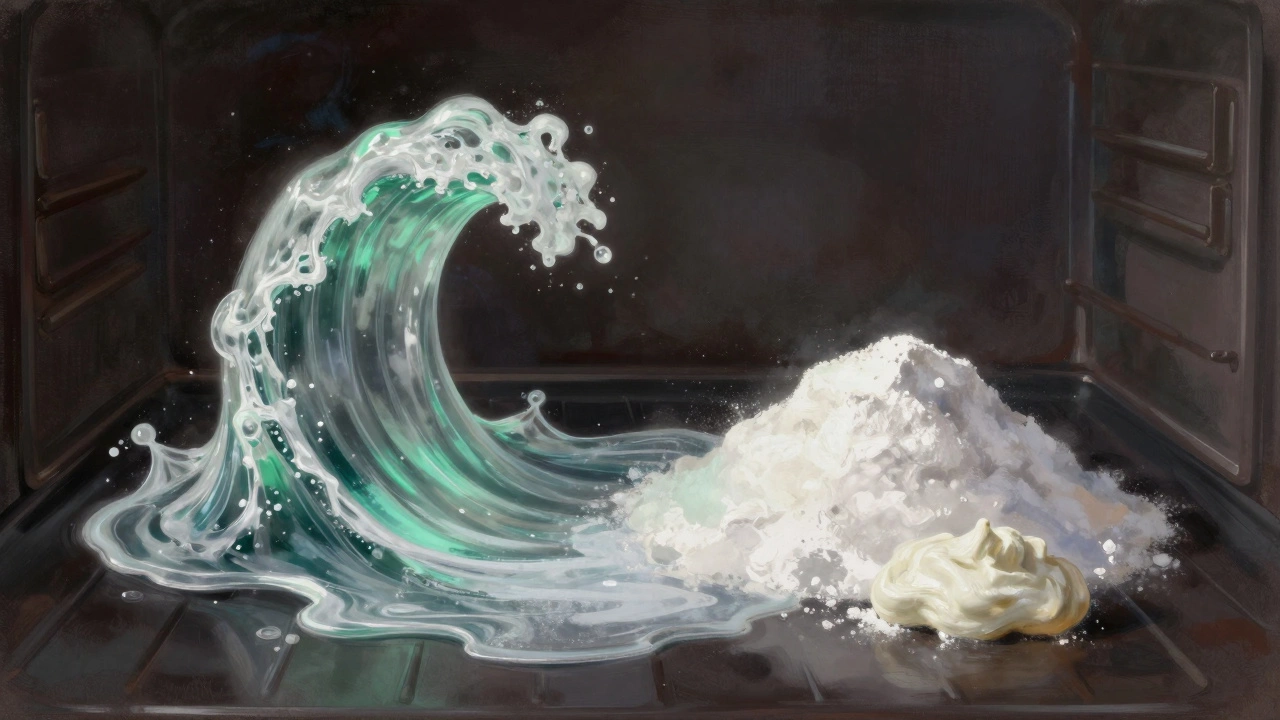
If you want a natural, safe, and effective oven cleaner, stick with baking soda and water. Add a drop of dish soap if you’re dealing with sticky residue. For extra power, use steam. Run your oven on high (200°C) for 20 minutes with a bowl of water inside. Let it cool, then wipe. The steam loosens grime without chemicals.
For really tough jobs - think decades of built-up grease - you might need a commercial product. But even then, choose one labeled “non-toxic” and “biodegradable.” Avoid lye-based cleaners unless you’re wearing gloves and have proper ventilation. Those are for professionals, not weekend cleaners.
One more thing: never mix vinegar with commercial oven cleaners. That can release toxic fumes. And while we’re at it - don’t use vinegar on stone countertops, cast iron, or hardwood floors either. It’s not a universal cleaner. It’s a specific tool.
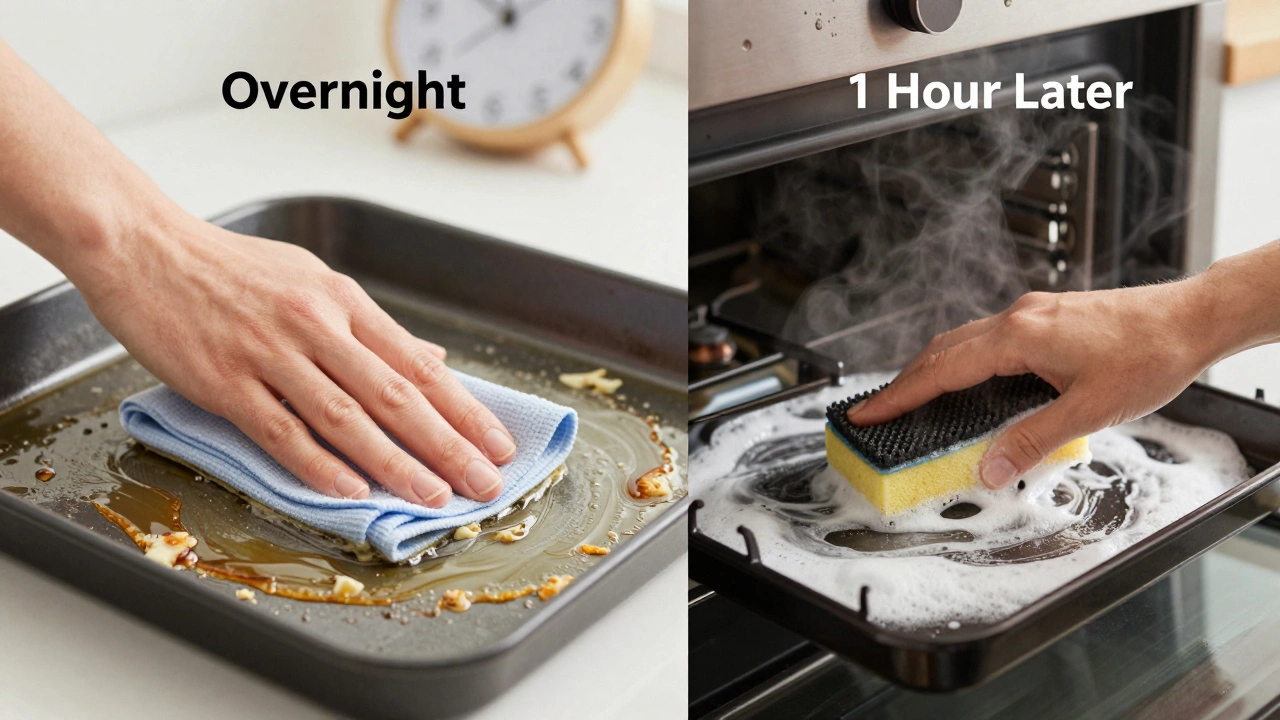
It’s not your fault. The internet loves quick fixes. A video shows someone pouring vinegar on baking soda, the oven sparkles, and the caption says, “100% natural and chemical-free!” But they didn’t show the 3 hours of scrubbing afterward. They didn’t show the residue left behind. They didn’t show the next oven that still looked dirty.
People trust what they see. And fizzing looks like action. But chemistry doesn’t care about appearances. It cares about molecular bonds. And in this case, the bond between baking soda and vinegar breaks the cleaning potential of both.
If you want to clean your oven without chemicals, skip the vinegar. Use baking soda and water. Let it sit. Wipe it up. Repeat if needed. It’s slow, but it’s reliable. It’s cheap. And it actually works.
And if you’re tempted to try the vinegar-and-baking-soda combo anyway - go ahead. Just don’t expect results. You’ll spend an hour making a mess, then spend another hour cleaning up the mess you made.
For oven cleaning, less is often more. And sometimes, the simplest thing - a paste of baking soda and water - is the smartest.