Answer a few questions to find the most effective and safest cleaning method for your specific situation.
When you're wondering what the best oven cleaner is, the answer depends on how much time you have and how "gross" the oven actually is. For most people, a combination of natural minerals and a bit of elbow grease is the safest bet. For those dealing with a professional-grade disaster, a chemical powerhouse is the only way out.
If you want to avoid harsh fumes, your best friend is Baking Soda is a mild alkaline powder (sodium bicarbonate) that reacts with acidic grease to break it down. It's not a magic instant-fix, but it's incredibly effective because it's abrasive enough to scrub but gentle enough not to scratch enamel.
Here is how you actually do it without making a mess: mix about half a cup of baking soda with a few tablespoons of water. You're looking for a spreadable paste-think toothpaste consistency. Spread this over every inch of the oven interior, avoiding the heating elements. The paste will turn brown as it pulls the grease out of the metal. The secret is time; leave it for at least 12 hours, or overnight. If you try to wipe it off after 20 minutes, you're just wasting your time.
After the soak, take a damp cloth and wipe away the paste. For the stubborn bits that won't budge, spray a bit of White Vinegar is a diluted acetic acid solution that reacts with baking soda to create a bubbling action. The vinegar reacts with any remaining baking soda residue, creating a foam that lifts the last of the grime. It's a simple chemistry project that happens right in your kitchen.
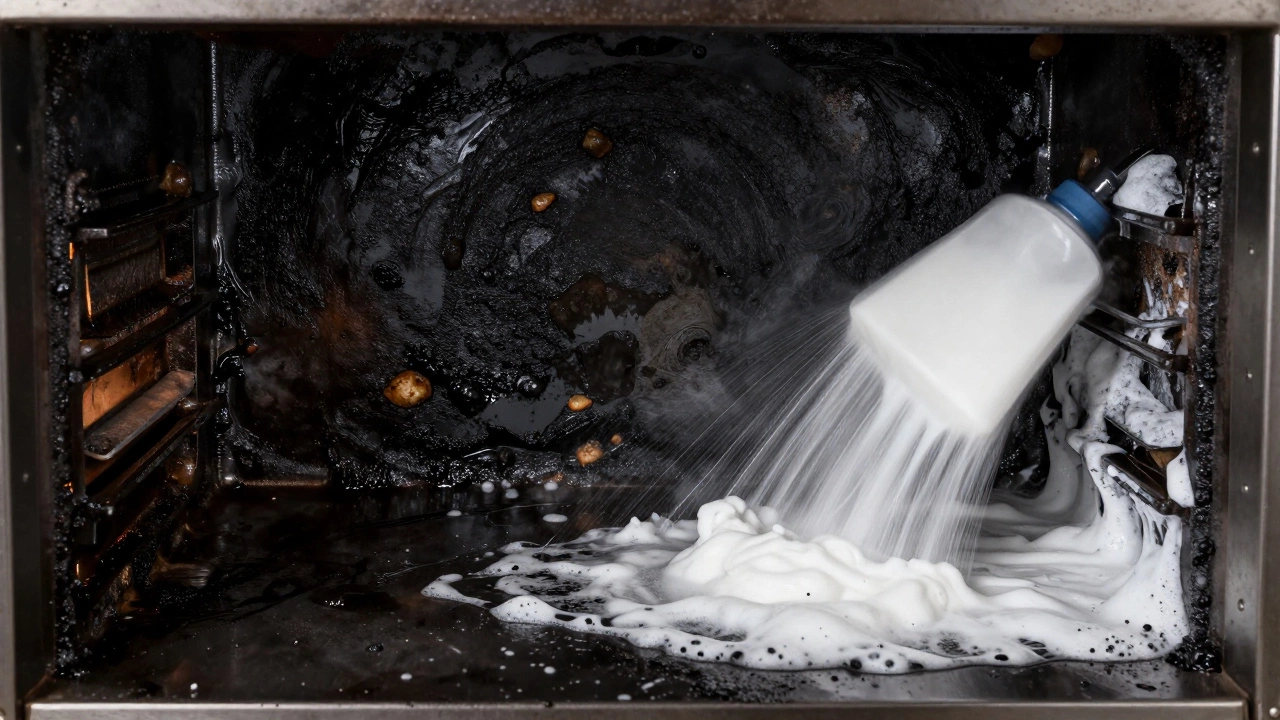
Sometimes, baking soda just isn't enough. If you've inherited an oven from a previous tenant or haven't cleaned yours since the 2010s, you need a Caustic Oven Cleaner is a heavy-duty chemical agent usually containing sodium hydroxide or potassium hydroxide to dissolve carbonized fat. These are the spray-on foams you find at the supermarket.
These cleaners work by a process called saponification-they literally turn the grease into soap so it can be washed away. However, they are aggressive. You must wear rubber gloves and keep the windows open. The fumes can irritate your lungs, and the chemicals can cause skin burns if you aren't careful. If you have a Self-Cleaning Oven is an appliance that uses either high-heat pyrolysis or catalytic liners to burn off food residue, be careful with these chemicals, as they can damage the specialized coating of the oven walls.
| Method | Effort Level | Safety | Best For... |
|---|---|---|---|
| Baking Soda + Vinegar | Medium (requires time) | Very High | Regular maintenance & eco-homes |
| Caustic Foam Cleaners | Low (fast acting) | Low (fumes/burns) | Severe carbon buildup |
| Self-Clean Cycle | Zero | Medium (smoke/heat) | Light residue |
One big mistake people make is trying to clean the racks inside the oven. It's clumsy and usually leaves a mess on the oven floor. Instead, pull the Oven Racks is the removable metal shelving used to hold baking trays and cookware out and soak them in a bathtub or a large plastic bin filled with hot, soapy water. If they are particularly greasy, you can add a splash of dish soap and some baking soda to the water.
Let them soak for a few hours. The hot water softens the grease, making it much easier to scrub off with a non-scratch scouring pad. If the racks are truly blackened, you can use a specialized Degreaser is a chemical solvent specifically designed to remove oil and grease from surfaces, but always rinse them thoroughly before putting them back in the oven. Any chemical residue left on the racks will smoke and smell the next time you bake a cake.
Many modern ovens come with a "self-clean" button. This usually triggers a Pyrolytic Cleaning is a process that heats the oven to extremely high temperatures (around 500°C) to incinerate food residue into ash cycle. While it sounds great, it's not without risks. The heat is so intense that it can occasionally damage the oven's electronic control boards or blow a fuse in an older home's electrical system.
Moreover, if you have a large spill of fat at the bottom of the oven, the self-clean cycle can cause the grease to ignite, leading to a small fire inside the oven. It's always a good idea to wipe out the most obvious chunks of food and pools of grease with a paper towel before starting a pyrolytic cycle. If your oven has a catalytic liner (the matte-looking walls), those actually clean themselves during normal cooking at high temperatures, so you should never use caustic chemicals on them.

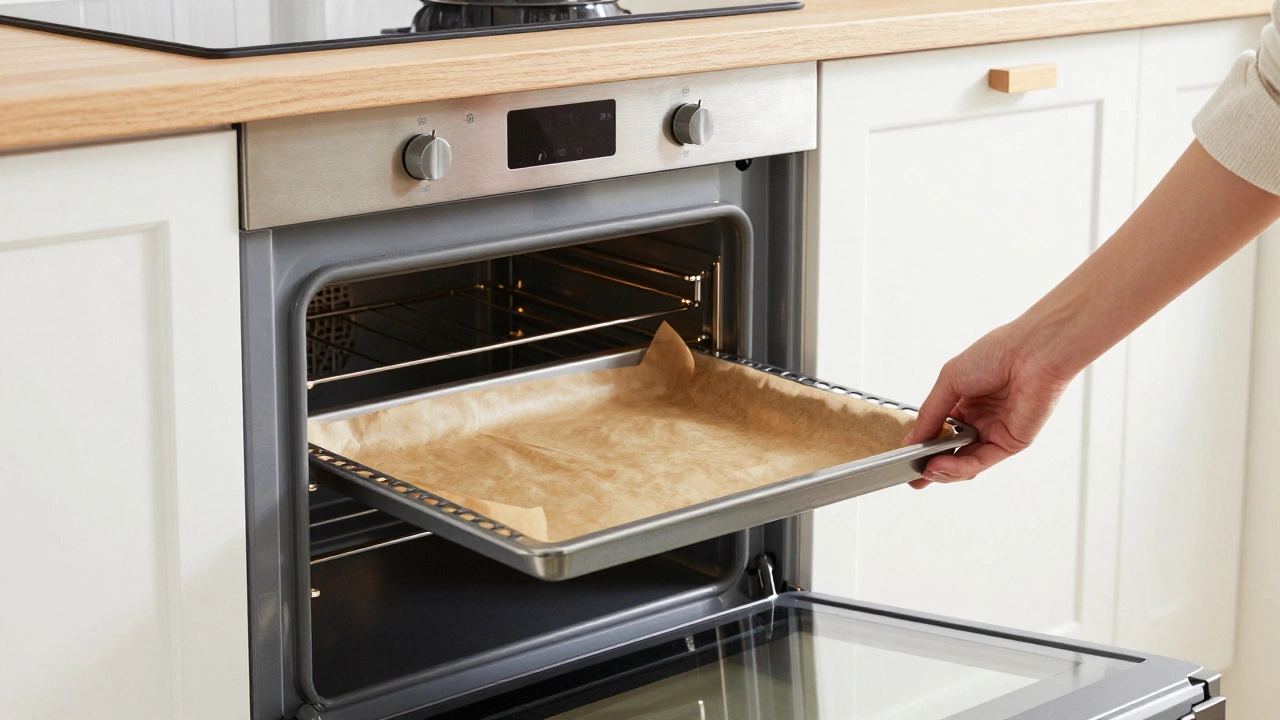
The best way to stop spending your Saturday scrubbing a greasy box is to change how you cook. Using Parchment Paper is a grease-resistant, non-stick paper used for baking to prevent food from sticking to trays or silicone baking mats on your trays prevents 90% of drips. If you're roasting a chicken, use a roasting pan with high sides rather than letting the fat drip directly onto the oven floor.
Also, try a "quick wipe" once a week. When the oven is still slightly warm (but not hot!), a damp cloth can easily remove fresh splatters before they have a chance to bake on and become carbonized. It takes thirty seconds but saves you four hours of scrubbing every six months.
It is generally a bad idea. Most oven interiors are coated in a porcelain enamel. Steel wool is often harder than this coating and can leave deep scratches. Once the enamel is scratched, grease will stick to those grooves even more aggressively, making the oven harder to clean in the future. Stick to nylon scrubbers or a baking soda paste.
If you used a caustic cleaner, the smell can linger. The best way to clear it is to wipe the oven down multiple times with a mixture of water and a small amount of white vinegar. Afterward, run the oven at a medium temperature (around 150°C) for 30 minutes with the windows open to burn off any remaining residue.
Yes, baking soda is safe for almost every oven interior. However, avoid using it on the heating elements themselves. The goal is to clean the walls and floor. If you get paste on the elements, simply wipe it off with a damp cloth before turning the oven on to avoid any strange smells or smoke.
For a typical household, a deep clean every three to six months is usually enough. If you bake frequently or roast fatty meats often, you might want to do it more often. The tell-tale sign it's time for a clean is when you notice smoke during normal cooking or when the oven starts to smell like old grease.
Some people do this by making a paste, and while dishwasher tablets contain strong degreasers, they are designed for the high-pressure environment of a dishwasher. They can be very caustic and may leave a filmy residue if not rinsed perfectly. Baking soda is a safer, more reliable alternative for manual scrubbing.
If you've tried the baking soda method and the grime still isn't moving, don't keep scrubbing. You might be dealing with "carbonized" grease-essentially a layer of charcoal. In this case, you need to increase the "dwell time." Leave the baking soda paste on for 24 to 48 hours instead of 12. The chemical reaction needs more time to penetrate the harder layers.
For those with extremely sensitive lungs or allergies to chemicals, avoid the caustic sprays entirely. Instead, look into professional oven cleaning services. They often use specialized dip-tanks for racks and high-temperature steam cleaners that remove grease without needing any toxic chemicals in your home.