Fill in the details to see the best pressure washer for your home.
Buying the wrong pressure washer is a quick way to accidentally strip paint off your siding or, even worse, blast a hole straight through your vinyl cladding. Most people think more power is always better, but when it comes to your home's exterior, the wrong PSI (pounds per square inch) can turn a Saturday chore into a costly renovation project. You need a balance between enough force to kill mold and a gentle enough touch to keep your home intact.
Before you look at brands, you need to understand the two numbers that actually matter. Think of PSI is the measure of pressure, or the "punching power" of the water stream. It's what breaks the bond between the dirt and your wall. However, PSI alone doesn't clean a house; you need GPM (Gallons Per Minute), which is the volume of water flowing through the machine. If PSI is the strength of the punch, GPM is how many times you punch per second.
If you have a machine with 3,000 PSI but only 1.2 GPM, you'll spend all day cleaning a single wall because you aren't moving enough water to actually rinse the grime away. For a standard two-story home, you want a machine that delivers at least 2.0 GPM. This allows you to clear larger sections of the wall in one pass, cutting your work time in half.
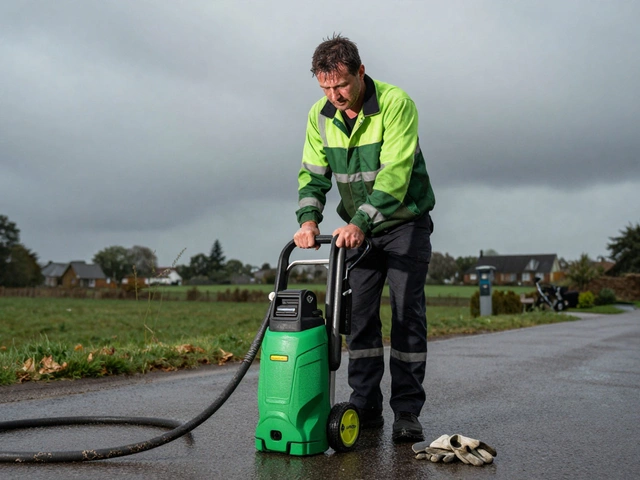
The biggest debate is whether to go with an electric motor or a combustion engine. For most homeowners, an Electric Pressure Washer is a motor-driven pump that plugs into a standard wall outlet, typically offering 1,300 to 2,300 PSI. They are fantastic for vinyl siding, painted wood, and rinsing off porches. You don't have to deal with mixing fuel, and they aren't loud enough to alert the entire neighborhood that you're cleaning your gutters.
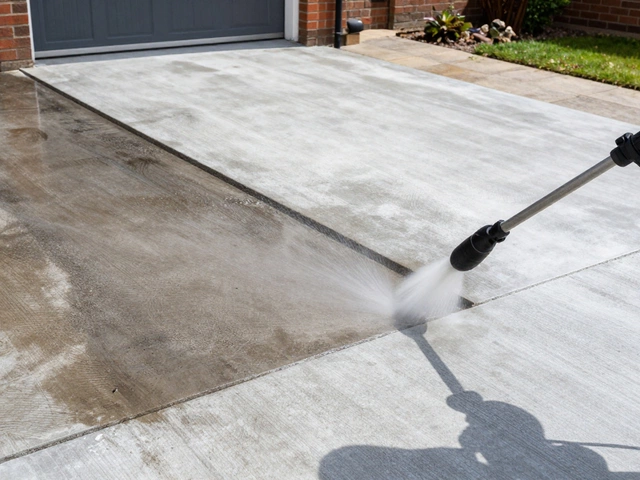
On the other hand, a Gas Pressure Washer uses a gasoline engine to drive a much more powerful pump, often reaching 3,000 to 4,000 PSI. You'll need this if you're dealing with Concrete or heavy stone masonry where deep-seated oil stains or thick lichen have taken over. The downside? They are heavy, loud, and require oil changes and spark plug maintenance.
| Feature | Electric Washers | Gas Washers |
|---|---|---|
| Average PSI | 1,300 - 2,300 | 2,500 - 4,000+ |
| Maintenance | Very Low | High (Fuel/Oil) |
| Noise Level | Moderate | High |
| Best Use Case | Vinyl, Wood, Decks | Driveways, Brick, Siding-deep-clean |
| Portability | High (Lightweight) | Low (Heavy) |
Not all houses are built the same, and using a "one size fits all" approach is how people ruin their homes. If you have Vinyl Siding, you have to be extremely careful. Vinyl is soft. If you use a high-pressure gas machine with a narrow nozzle, you can actually cut right through the plastic or force water behind the panels, leading to mold growth inside your walls. For vinyl, stick to an electric washer or a gas machine with a wide spray tip.
For those with Stucco, the risk is different. Stucco is porous and can crack. Using too much pressure can blast holes in the finish or strip away the paint. A gentle 1,500 PSI is usually plenty. If you're cleaning Brick, you can crank it up. Brick can handle the heat, and since it's more porous, you often need that extra punch to get the green algae out of the crevices.
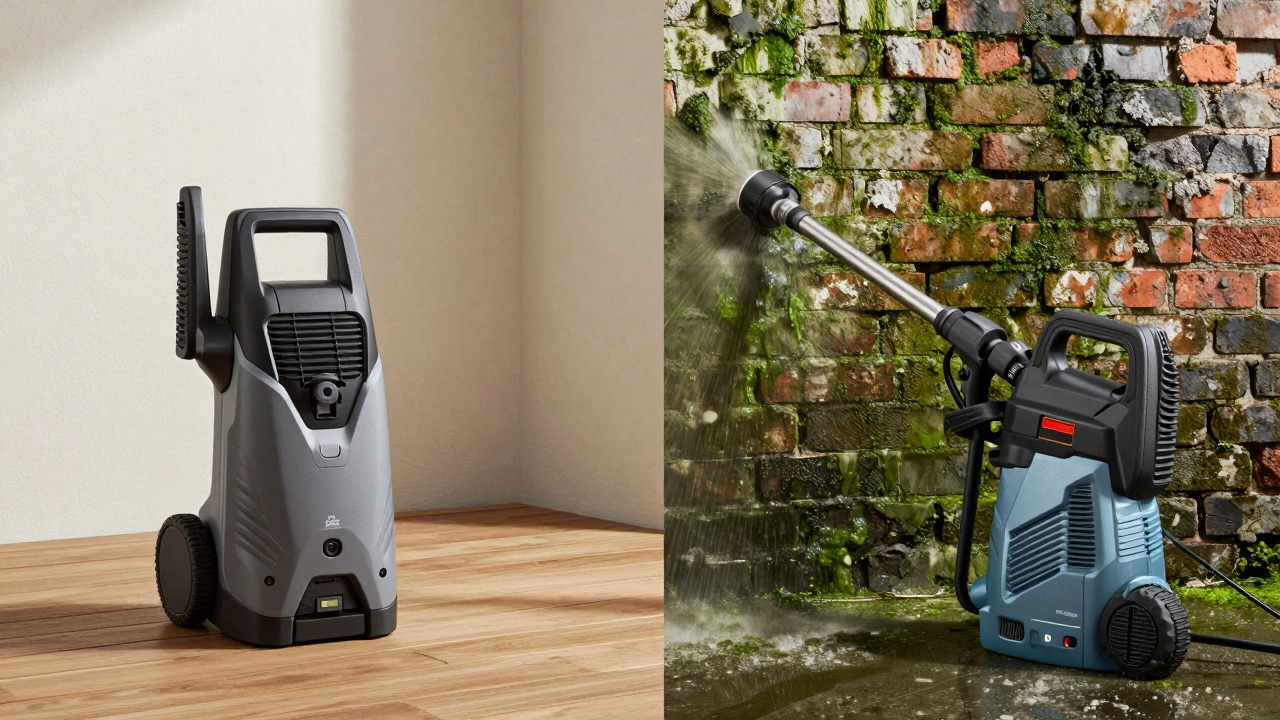
The machine is just the engine; the nozzle is where the magic happens. Most washers come with a set of interchangeable tips. The 0-degree red tip is a "pencil jet"-do not use this on your house unless you want to carve your name into the siding. The 15-degree yellow tip is for stripping paint or cleaning concrete. For house washing, you want the 25-degree green tip or the 40-degree white tip. These spread the water out, giving you a wider cleaning path and reducing the risk of damage.
If you really want to make your life easier, look for a Pressure Washer Surface Cleaner. This is a round attachment with a spinning bar inside. Instead of spraying a line, it cleans a consistent circle. While mostly used for driveways, some smaller versions work for large flat decks, saving you from leaving "zebra stripes" (those annoying lines left by inconsistent overlapping sprays).
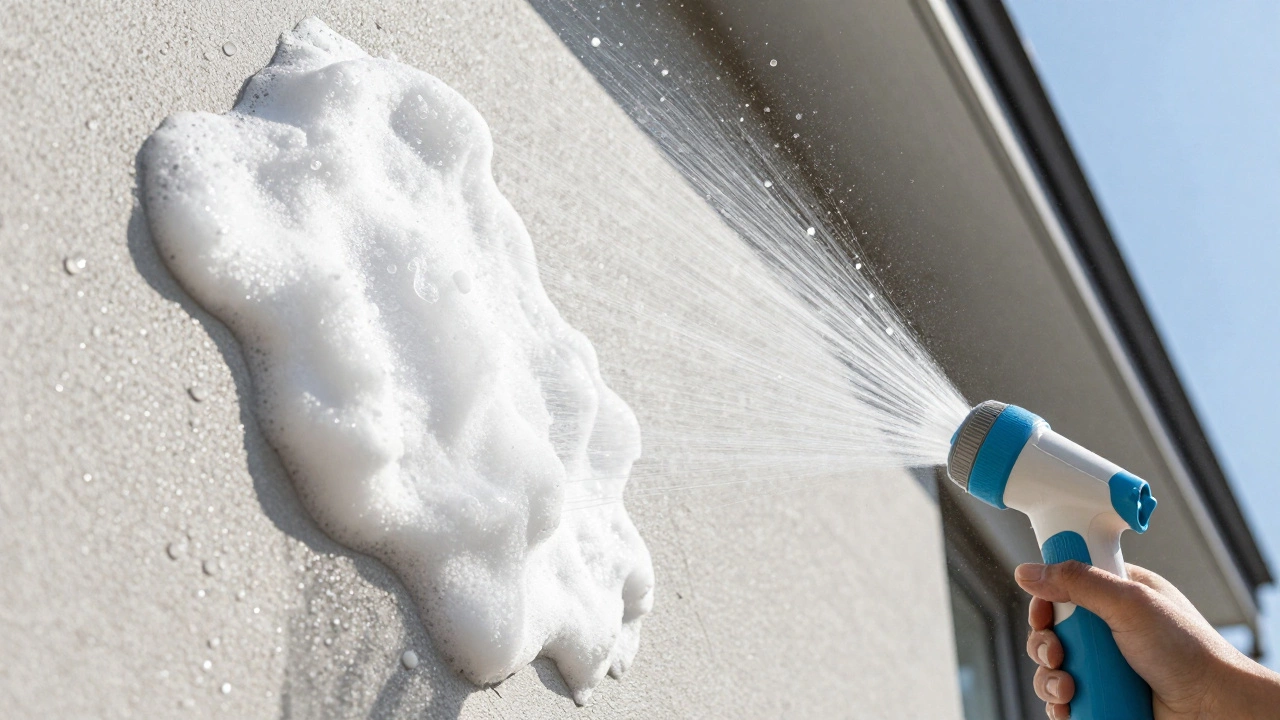
The biggest mistake people make is relying solely on pressure. If you just blast water at a dirty wall, you're essentially sanding the dirt into the surface. The pro secret is "Soap, Scrub, Rinse." Use a Soap Nozzle (usually black) to apply a specialized house wash solution. Let the chemicals break down the organic growth and dirt for 5 to 10 minutes. Then, use the pressure washer from the bottom up to rinse it away. This prevents streaks and means you don't have to use as much pressure, which keeps your home safer.
Another pitfall is spraying upwards. When you spray water up under a lap of siding, you're inviting water into your home's insulation. Always spray slightly downward or straight on. And for the love of your windows, don't blast the seals. Forcing water into the window frames can lead to leaks that you won't discover until the first heavy rain of autumn.
Still not sure? Ask yourself these three questions:
Regardless of your choice, remember that a best pressure washer for house cleaning isn't necessarily the most expensive one, but the one that matches the fragility of your home's materials. When in doubt, start with the lowest pressure setting and the widest nozzle, then work your way up only if the grime refuses to budge.
Generally, no. Pressure washing a roof, especially asphalt shingles, can strip away the protective granules and cause leaks. The best way to clean a roof is "soft washing," which involves applying a chemical cleaner and rinsing it with a garden hose or a very low-pressure setting.
For vinyl siding, you should stay between 1,200 and 1,800 PSI. Using anything over 2,000 PSI with a narrow tip can crack the vinyl or force water behind the siding, which leads to mold and rot in the wooden sheathing.
Yes. Standard dish soap can leave streaks or be too harsh on certain paints. Use a dedicated house wash or a mixture of water and a small amount of bleach (if safe for your siding) to kill algae and mildew before you start spraying.
Zebra stripes happen when you overlap your spray paths inconsistently. The best way to avoid this is by using a surface cleaner attachment, which cleans a uniform circle, or by walking slowly and overlapping each pass by about 2-3 inches.
Cordless washers are great for rinsing off a car or cleaning a small patio, but they lack the sustained power (PSI and GPM) needed to clean an entire house. For a full home exterior, a plug-in electric or gas model is necessary.
Once you've picked your machine, start by cleaning your gutters. There's no point in washing your walls if the gutters are overflowing and dripping dirty water back onto your clean siding. Next, tackle the highest points of the house and work your way down. This ensures that any dirty runoff doesn't soil areas you've already cleaned.
If you find that your siding is still looking dull after a wash, you might be dealing with oxidation-a chalky residue that happens as vinyl ages. Pressure washing won't fix this; you'll need a chemical cleaner specifically designed for vinyl oxidation. Always test a small, inconspicuous area first to make sure your chemicals aren't reacting poorly with the paint.