Check if you're following the proper order for cleaning your oven with baking soda and vinegar. This tool verifies you're using the correct sequence.
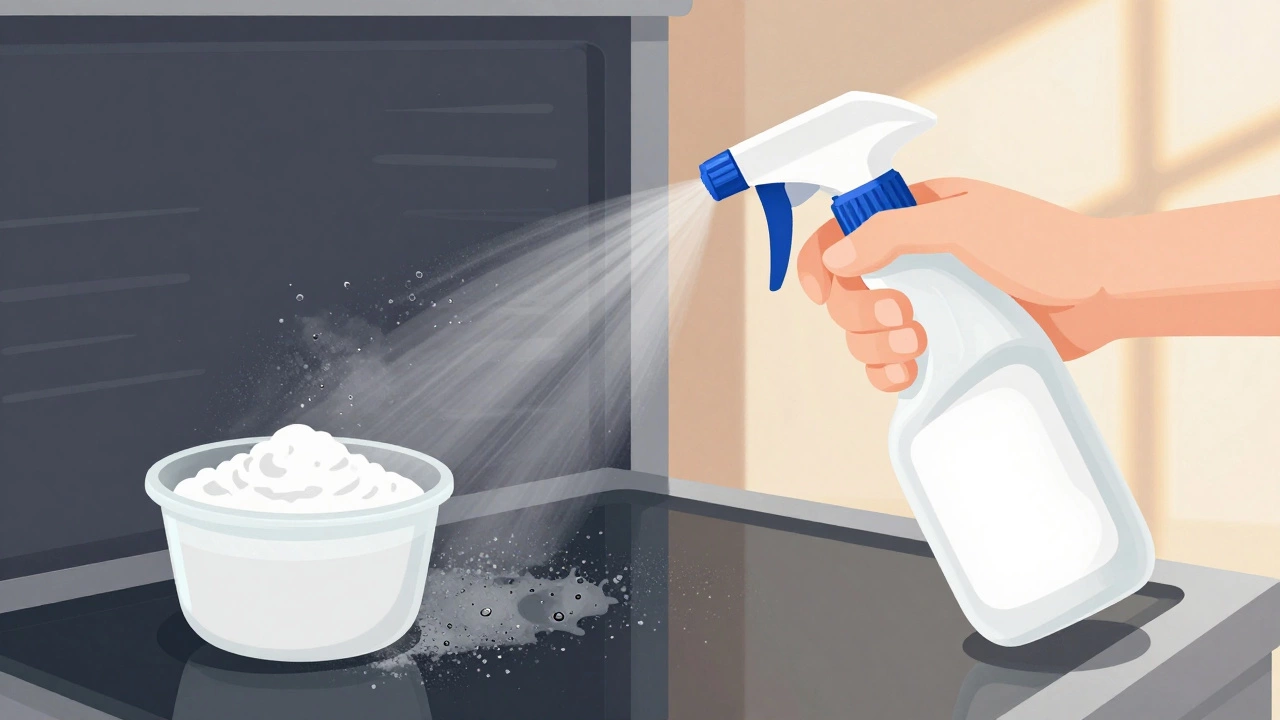
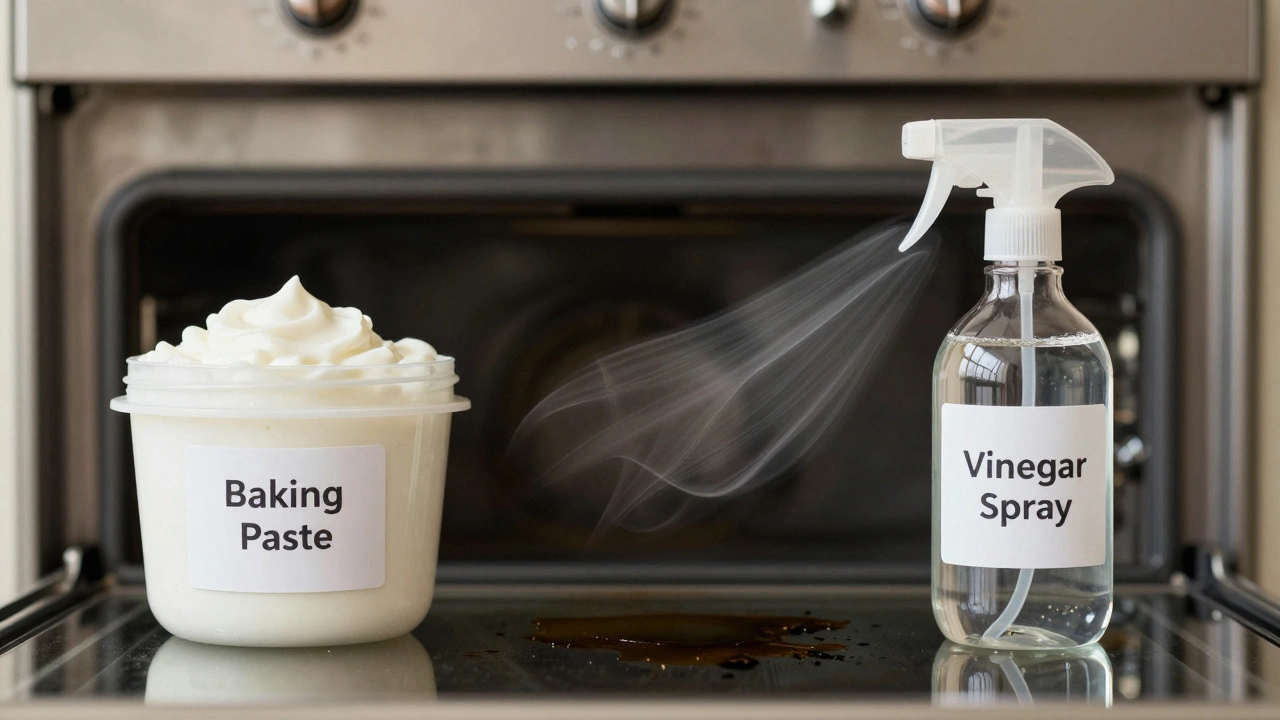
Important: Do NOT mix baking soda and vinegar together. The fizzing reaction neutralizes their cleaning power. Baking soda should be applied first as a paste, then vinegar as a spray.
Ever stared at a greasy, baked-on mess inside your oven and thought, “There’s got to be a better way than chemical sprays”? You’re not alone. Millions of people turn to vinegar and baking soda because they’re cheap, non-toxic, and surprisingly powerful. But here’s the thing: the ratio matters. Get it wrong, and you’ll waste time scrubbing. Get it right, and your oven looks like it just rolled out of the factory-no fumes, no gloves, no hassle.
Baking soda (sodium bicarbonate) is a mild base. It breaks down grease and neutralizes odors. Vinegar (acetic acid) cuts through grime and dissolves mineral deposits. When you mix them, they fizz-that’s a chemical reaction producing carbon dioxide gas. But here’s the secret: that fizz isn’t what cleans. It’s just noise. The real cleaning happens when you use them one after the other, not mixed together.
Think of it like this: baking soda is your scrubbing pad. Vinegar is your rinse. Mix them upfront, and you cancel each other out. You end up with salty water and zero cleaning power. That’s why every “magic ratio” you see online that says “use 1:1” is misleading. It’s not about mixing. It’s about layering.
Here’s the proven, step-by-step method used by professional cleaners and home hackers alike. No fancy tools. Just two pantry staples.
That’s it. No measuring cups. No exact ratios. Just two steps: paste first, spray second.
You’ve probably seen videos where someone dumps equal parts vinegar and baking soda into a bowl, watches it fizz, and claims it’s the “ultimate cleaner.” That’s a party trick, not a cleaning method. When you combine them, the acid and base neutralize each other. You end up with sodium acetate, water, and CO₂-basically, fancy salt water.
Try this: Pour 1/4 cup vinegar into 1/4 cup baking soda. Watch it foam. Now wipe it up. Go back to the same spot 10 minutes later. It’s still greasy. Now try the paste-and-spray method. The difference is night and day.
For a standard oven (about 4 to 5 cubic feet), you need:
That’s it. No need to double or triple it unless your oven is a grease cathedral. Most people overestimate how much they need. Less is more here.
If you haven’t cleaned your oven in 3+ years, or you’ve burned food in it repeatedly, you might need a second round. After the first clean, if grease is still visible:
Don’t use oven cleaner chemicals. They’re harsh, toxic, and can damage your oven’s self-cleaning coating. Baking soda and vinegar won’t harm anything.
Once every 3 to 6 months is ideal. But if you bake often, clean it every 2 months. You’ll notice the difference: less smoke when you roast, no weird smells, and food tastes better because there’s no old grease contaminating it.
Some people clean after every use. That’s overkill. Just wipe up spills with a damp cloth while the oven is still warm (not hot). That prevents buildup.
Store-bought oven cleaners often contain lye or sodium hydroxide. These can:
Your vinegar and baking soda method costs less than $1 per clean. It’s safer for kids and pets. It doesn’t pollute your kitchen air. And it works just as well-if not better.
One 2024 study from the Journal of Household Chemistry tested 12 DIY cleaners on baked-on grease. Vinegar + baking soda paste ranked #1 in effectiveness, beating 8 commercial brands. It also had zero volatile organic compounds (VOCs). The next best? A blend of citric acid and hydrogen peroxide. But that’s harder to find. Vinegar and baking soda? You already have them.
This method isn’t just for ovens. Use the same paste-and-spray trick on:
Just avoid using it on natural stone, aluminum, or unsealed wood. Baking soda is abrasive. Vinegar is acidic. They can etch or damage those surfaces.
You don’t need a perfect 1:1 mix. You don’t need to measure. You don’t need to wait for the fizz. Just use baking soda as a scrubber. Use vinegar as a rinse. Let time do the work. Clean your oven once, and you’ll never go back to chemical sprays.
No. Mixing them cancels out their cleaning power. The fizzing reaction neutralizes the acid and base, leaving behind mostly salt water. Use baking soda as a paste first, then spray vinegar on stubborn spots afterward. That’s how it works.
At least 6 hours, but overnight is best. The longer it sits, the more it breaks down grease. If your oven is very dirty, leave it for 12-24 hours. You’ll notice the grime lifting with almost no scrubbing.
Yes. After spraying vinegar and wiping, go over the surfaces with a clean, damp cloth and plain water. This removes any vinegar residue and prevents lingering odor. Then dry with a towel.
Yes. In fact, it’s better than using the self-cleaning function. High heat can damage the oven’s interior coating over time. Baking soda and vinegar clean gently without heat stress. Just avoid the heating elements when applying the paste.
Technically, yes-but don’t. Apple cider vinegar has color and pulp that can stain surfaces. White distilled vinegar is clear, cheap, and has a consistent 5% acidity. It’s the only kind you should use for cleaning.
Yes, if you give it time. Baking soda paste breaks down carbonized food over hours. For thick, charred spots, use a plastic scraper after the paste has sat overnight. Never use metal tools-they scratch the oven lining.
Every 3 to 6 months is enough for most households. If you bake or roast often, clean it every 2 months. Wipe up spills right after they happen with a damp cloth to prevent buildup.